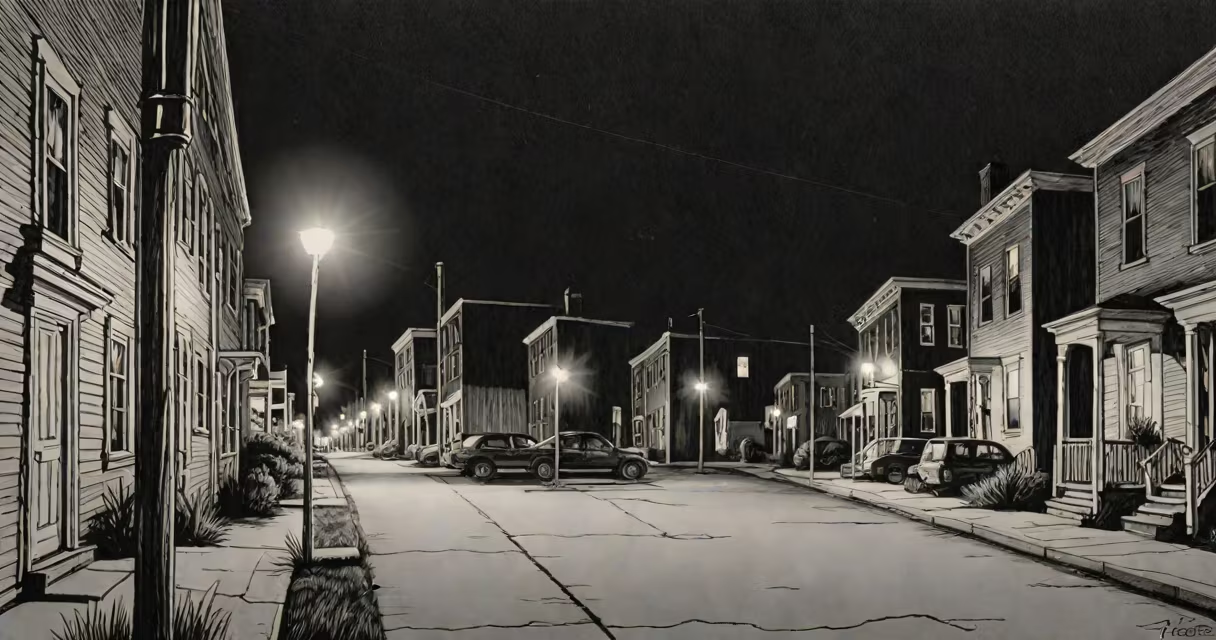
Light trespass is artificial light that extends beyond its intended area, such as a neighbor's security light shining into your bedroom window or a streetlamp illuminating a backyard. It occurs when lighting design fails to contain illumination within boundaries, violating privacy and disturbing natural nighttime conditions.
Unlike ambient glow or skyglow, which affect entire regions, light trespass targets specific locations. It is a measurable issue under many municipal codes, especially in residential zones. The International Dark-Sky Association defines it as "unwanted or uncontrolled light that crosses property lines or enters windows."
Light trespass isn't just about brightness-it's about control. A porch light pointing upward may contribute to skyglow, but if it shines through your bedroom window at 2 a.m., it's light trespass. This distinction matters for enforcement and mitigation.
Light trespass happens when luminaires (light fixtures) aren't shielded, positioned improperly, or set to overly high intensities. Unshielded lights emit light in all directions, including upward and sideways. Even a 100-lumen LED spotlight mounted on a home's exterior wall can cast glare across a neighboring yard if not properly angled.
Design flaws compound the problem. For example, a motion-sensor floodlight mounted too close to a shared fence may activate during a quiet evening and flood the adjacent property with sudden, bright light. This violates both privacy and local ordinances in places like Portland, Oregon, and San Diego, California, where lighting regulations require downward-facing beams and maximum brightness limits.
Modern LED lighting increases the risk. While LEDs are energy-efficient, their blue-rich spectrum is more disruptive to circadian rhythms and wildlife than older sodium vapor lamps. A 5000K LED fixture emits more short-wavelength light than a 3000K bulb, making it more likely to cause trespass and biological disruption.
Light trespass manifests in several common forms:
| Type | Source Example | Typical Impact |
|---|---|---|
| Direct Glare | Unshielded porch light pointing toward a neighbor's window | Disrupts sleep, causes visual discomfort |
| Side Spill | Streetlight casting light across a residential driveway | Reduces visibility for drivers, disturbs nocturnal animals |
| Upward Emission | Unlidded parking lot fixture shining into the sky | Contributes to skyglow, affects astronomy |
| Overhead Reflection | Backyard deck light reflecting off a glass house facade | Creates unintended illuminated zones |
These types often overlap. A poorly designed security light may produce direct glare on a neighbor's window while also contributing to side spill and upward emission.
Light trespass disrupts circadian rhythms in humans and animals. Melatonin suppression due to nighttime light exposure correlates with increased risks of sleep disorders, depression, and even certain cancers, according to research published in The Lancet and supported by the American Medical Association's 2016 policy statement on light pollution.
Wildlife suffers disproportionately. Birds going through by stars collide with lit buildings at rates up to 10 times higher in cities with poor lighting controls. Fireflies rely on bioluminescent signals to mate-artificial light interferes with their communication, reducing reproduction success. A 2022 study in Nature Ecology & Evolution found that light trespass reduced firefly populations by 30% in suburban areas near major highways.
Even ecosystems suffer. Soil microbes and insect populations decline under constant artificial light, altering nutrient cycling and plant pollination. These changes ripple through food webs, affecting species that depend on stable nocturnal environments.
Many people equate light trespass with skyglow-the diffuse brightening of the night sky caused by scattered light. While related, they're distinct. Skyglow results from cumulative emissions across large areas, whereas light trespass is localized and directional. You can have skyglow without light trespass, and vice versa.
Another misconception is that light trespass only affects urban areas. Rural communities face rising issues as remote homes install useful security lights. In rural Vermont, a 2021 survey found that 42% of residents reported light trespass from neighbors' outdoor lighting, despite low population density.
A key correction: light trespass isn't always illegal. Many municipalities lack enforcement mechanisms or clear thresholds. In some towns, a light beam crossing a property line is permitted if it doesn't exceed 10 foot-candles at the boundary. But if the beam reaches a bedroom window and exceeds 5 foot-candles, it becomes actionable under local code.
In 2020, a homeowner in Seattle filed a complaint against a neighbor whose security light shone directly into his bedroom. The light was a 100-watt equivalent LED spotlight mounted on a garage wall, aimed at a nearby alley. Measurements taken at 11 p.m. showed 12 foot-candles inside the bedroom-well above the city's 5-foot-candle limit for indoor light intrusion.
The city's code enforcement officer cited the fixture as a violation of the Seattle Municipal Code § 23.18.040, which prohibits "light that enters another person's dwelling through windows or doors." The neighbor was required to reposition the light downward and install a shield. After compliance, the resident reported improved sleep quality.
This case illustrates that light trespass is enforceable-and measurable. It's not subjective. Foot-candle readings, beam angles, and placement relative to property lines form the basis of legal action.
Use a lux meter or smartphone app (like Light Meter Pro) to measure light levels at property boundaries. If readings exceed local limits-typically 5 foot-candles indoors and 10 outdoors-document the time, location, and intensity. Take photos showing the light source and where it lands.
Start with a polite conversation. Most neighbors are unaware of the impact. Offer solutions: suggest using shielded fixtures, installing timers, or switching to warmer-color LEDs (3000K or lower).
If dialogue fails, contact your city's building or zoning department. Provide evidence. In many cases, officials will inspect and issue warnings or citations. The International Dark-Sky Association provides model lighting ordinances for municipalities seeking to reduce light trespass.
I once helped a friend resolve a light trespass issue by replacing a 5000K floodlight with a 3000K shielded unit. The difference was immediate-his bedroom was dark again, and he slept better. The fix cost less than $30 and took 20 minutes.