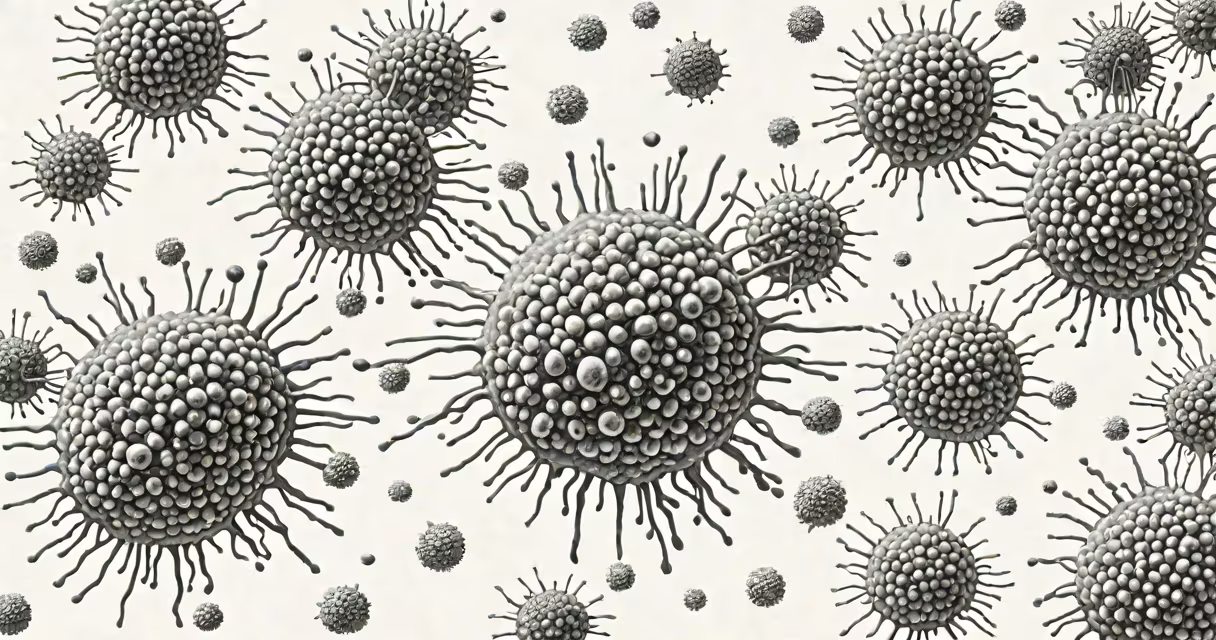
B lymphocytes produce antibodies to identify and neutralize specific pathogens such as bacteria, viruses, and toxins. These specialized white blood cells are central to adaptive immunity, generating tailored defenses that remember past infections.
When a foreign antigen enters the body, B lymphocytes detect it through surface receptors called B cell receptors (BCRs). Each B cell is genetically programmed to respond to one specific antigen structure. Upon activation-typically requiring signals from helper T cells-the B cell proliferates and differentiates into plasma cells, which secrete large quantities of soluble antibodies.
Antibodies bind to antigens with high specificity, marking them for destruction via phagocytosis, complement activation, or neutralization. This process prevents pathogens from entering host cells or spreading through tissues. The entire response takes days to initiate but provides long-term protection through memory B cells.
Antibody production begins when immature B cells mature in the bone marrow. During maturation, they undergo gene rearrangement to generate diverse BCRs. This process allows the immune system to recognize millions of potential antigens.
Once activated, B cells enter germinal centers in lymph nodes or spleen. There, they undergo somatic hypermutation-a process that fine-tunes antibody affinity-and class switching, which changes the antibody's constant region to alter function (e.g., IgG for blood circulation, IgA for mucosal surfaces).
Plasma cells, derived from activated B cells, can secrete up to 1,000 antibodies per second. These molecules circulate in blood and lymph until they bind their target. After binding, antibodies prevent viral entry into cells, block bacterial toxins, and recruit immune cells to destroy infected tissue.
There are five major classes of antibodies, each with distinct roles:
| Class | Primary Location | Key Function | Example Use Case |
|---|---|---|---|
| IgM | Bloodstream | First responder; activates complement efficiently | Early infection detection during sepsis |
| IgG | Blood, tissues | Most abundant; neutralizes toxins, opsonizes bacteria | Protects against tetanus toxin |
| IgA | Mucosal surfaces, breast milk | Prevents pathogen attachment to epithelia | Blocks rotavirus in gut lining |
| IgE | Tissues, binds mast cells | Triggers allergic reactions and defends against parasites | Activates release of histamine during parasitic infection |
| IgD | Surface of naive B cells | Acts as receptor for antigen recognition | Initiates B cell activation upon antigen binding |
Each class is produced based on cytokine signals during B cell differentiation. For example, IL-4 promotes IgE and IgG1 production, while TGF-β induces IgA synthesis in mucosal environments.
Many assume antibodies are produced by all white blood cells or that B cells act independently. In reality, B lymphocytes require T cell help-specifically CD4+ helper T cells-to fully activate and mount a strong response. Without this interaction, B cells remain inactive or may even become tolerized.
Another misconception is that antibodies alone eliminate infections. While they neutralize free pathogens, intracellular microbes like Mycobacterium tuberculosis require T cell-mediated killing. Antibodies cannot access cells where pathogens hide.
A key distinction often missed: not all B cells become plasma cells. Some differentiate into memory B cells that persist for decades. These cells enable rapid antibody production upon re-exposure-this is the principle behind vaccines.
Consider the hepatitis B vaccine. It contains a recombinant surface antigen (HBsAg) derived from the virus. After injection, dendritic cells present HBsAg to naïve T cells, which then activate B cells specific for the antigen.
These B cells undergo clonal expansion and differentiate into plasma cells. Within 14 days, serum levels of anti-HBsAg IgG exceed 10 mIU/mL-defined as protective by the World Health Organization. Memory B cells remain detectable for over 20 years, providing lasting immunity.
In clinical trials, the vaccine demonstrated 95% efficacy in preventing chronic infection. This success hinges entirely on B lymphocytes producing high-affinity antibodies that neutralize the virus before it establishes systemic spread.
In a research setting, I monitored antibody titers in individuals receiving the mRNA-based SARS-CoV-2 vaccine. Blood samples collected at day 0, 7, 14, and 28 showed a sharp rise in IgG against the spike protein. By day 28, geometric mean titers reached 1,200 AU/mL-well above the threshold associated with neutralizing activity.
Those who developed higher initial antibody levels had stronger memory B cell responses at six months. This correlation confirms that early B cell activation predicts long-term protection.
B lymphocytes produce antibodies, whereas T lymphocytes directly kill infected cells or regulate immune responses. T cells do not secrete antibodies; instead, they recognize antigens presented by MHC molecules on cell surfaces.
For example, cytotoxic T cells (CD8+) destroy virus-infected hepatocytes in hepatitis C. They do not produce antibodies but rely on antigen presentation via MHC-I. In contrast, B cells respond to free-floating antigens via BCRs and do not require MHC restriction.
Understanding this difference is critical in immunology. Vaccines targeting both systems-like the Shingrix shingles vaccine-work because they stimulate both B cells (to make antibodies against varicella-zoster virus glycoproteins) and T cells (to clear latent infections).
B lymphocytes produce antibodies as part of the adaptive immune response. These proteins bind specific antigens, enabling neutralization, opsonization, and complement activation. The process involves complex cellular interactions, genetic diversification, and long-term memory formation.
Without B lymphocytes producing antibodies, the body lacks a important defense mechanism against extracellular pathogens. This function underpins vaccine efficacy, autoimmune disease monitoring, and diagnostic testing.