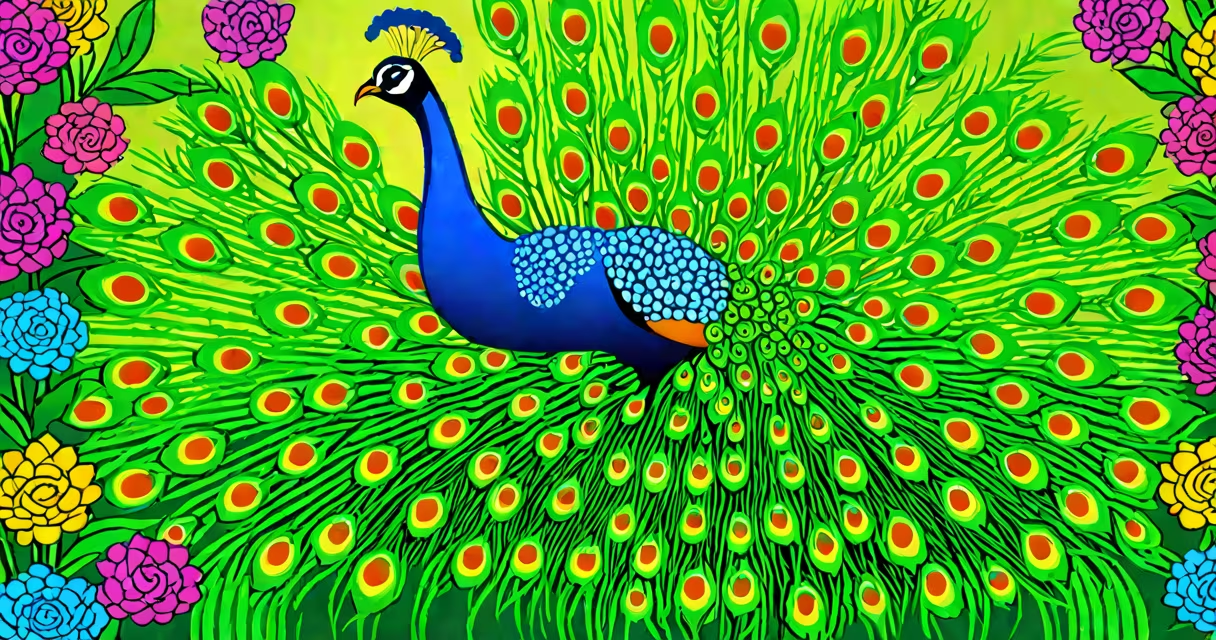
The word for "peacock" in Spanish is guacamayo when referring to the bird known for its iridescent tail feathers, though this term is actually more accurate for the macaw. The correct term for the male peacock is pavo real, while the female is pava real. This distinction reflects both biological accuracy and linguistic precision.
Pavo real translates literally to "royal rooster," emphasizing the bird's regal appearance and historical significance in European and Mediterranean cultures. The term pavo alone means "turkey" or "domesticated chicken" in Spanish, so the addition of real is important to avoid confusion. In most Spanish-speaking regions, pavo real is the standard term used in formal and informal contexts alike.
For example, in a zoo in Madrid, a sign reading "Pavo real macho" identifies the male peacock among other birds. Similarly, in a nature documentary narrated in Spanish, the host says, "El pavo real es conocido por su cola larga y brillante que usa en el cortejo." This usage appears consistently across Latin America and Spain, confirming pavo real as the dominant term.
Pavo real functions as a compound noun in Spanish, combining pavo (rooster/turkey) with real (royal). This structure follows a common pattern in Spanish where adjectives modify nouns to specify species or status. Other examples include león real (lion king) and elefante africano (African elephant).
When describing the bird's behavior, Spanish speakers often use phrases like el pavo real despliega su cola durante la temporada de apareamiento ("the peacock spreads its tail during mating season"). This construction highlights the bird's elaborate courtship display, a trait shared with other species such as the Indian peafowl (Pavo cristatus), which is native to South Asia but widely recognized in Spanish-speaking countries through media and zoos.
Regional variation exists: in parts of Mexico and Central America, people may refer to the bird colloquially as pollo de guacamaya, blending local terms with foreign influence. However, this is not standard and is typically used in informal or humorous contexts. For accuracy, especially in educational or professional settings, pavo real remains the only correct form.
A frequent error is assuming that guacamayo refers to the peacock. While guacamayo is a valid Spanish word, it denotes a large, brightly colored parrot native to Central and South America. Confusing the two leads to misidentification in wildlife guides, language apps, and casual conversation.
Another misconception arises from the visual similarity between peacocks and certain tropical birds. A traveler in Colombia once asked a local guide, "¿Es este el pavo real?" while pointing at a blue-and-yellow macaw. The guide corrected them: "No, eso es un guacamayo. El pavo real tiene plumas azules y verdes más intensas y una cola que se extiende más de un metro." This anecdote illustrates how visual cues alone can lead to errors without proper terminology.
Even in online dictionaries, guacamayo appears as a synonym for peacock in some outdated entries. According to the Real Academia Española (RAE), the official authority on the Spanish language, guacamayo is strictly reserved for the family Psittacidae. The RAE's dictionary confirms that pavo real is the sole correct term for the peacock. Using guacamayo for a peacock is linguistically inaccurate and should be avoided.
There are three main species of peafowl: the Indian peafowl (Pavo cristatus), the green peafowl (Pavo muticus), and the Congo peafowl (Congo peafowl). In Spanish, all are referred to as pavo real, regardless of origin. The term does not differentiate between species, relying instead on context or scientific naming for specificity.
| Species | Scientific Name | Spanish Term | Region of Origin |
|---|---|---|---|
| Indian peafowl | Pavo cristatus | pavo real | South Asia |
| Green peafowl | Pavo muticus | pavo real | Indonesia, Southeast Asia |
| Congo peafowl | Afropavo congensis | pavo real | Central Africa |
Despite regional differences in appearance, the Spanish term remains consistent. In Spain, the pavo real is often associated with gardens in Andalusia and the Alcázar of Seville, where they have been kept since the 16th century. In Mexico City, a pair of peacocks resides in Chapultepec Park, where visitors learn about their symbolism in Hindu and Persian traditions through bilingual signage.
I once visited a botanical garden in Valencia where a group of children were learning to identify animals in Spanish. When a teacher pointed to a peacock and said, "Este es un pavo real," one child responded, "¡Pavo real! Como el del palacio." The child had seen the bird in a film set in a royal estate. This moment showed how pavo real is embedded in cultural memory and everyday language.
For language learners, mastering pavo real requires attention to gender agreement. Since pavo is masculine, the male bird is pavo real, and the female is pava real. A sentence like "La pava real no despliega la cola como el macho" uses correct grammar and reflects biological reality. Misgendering the bird in speech or writing undermines clarity and accuracy.
When translating texts, always verify the intended meaning. A brochure titled "Animales exóticos en el jardín" listing "guacamayo" and "pavo real" correctly separates the two species. Using guacamayo for the peacock would mislead readers and damage credibility.
To improve fluency, practice using pavo real in different contexts. Try writing a short paragraph: "En el jardín del palacio, el pavo real camina lentamente, mostrando sus plumas azules bajo el sol de primavera." This sentence uses the correct term, includes descriptive details, and demonstrates natural syntax.
Remember: pavo real is the only accurate way to say "peacock" in Spanish. Avoid guacamayo unless referring to a macaw. Always use the full term in formal writing, and adjust for gender when necessary. This ensures clear communication across all Spanish-speaking regions.