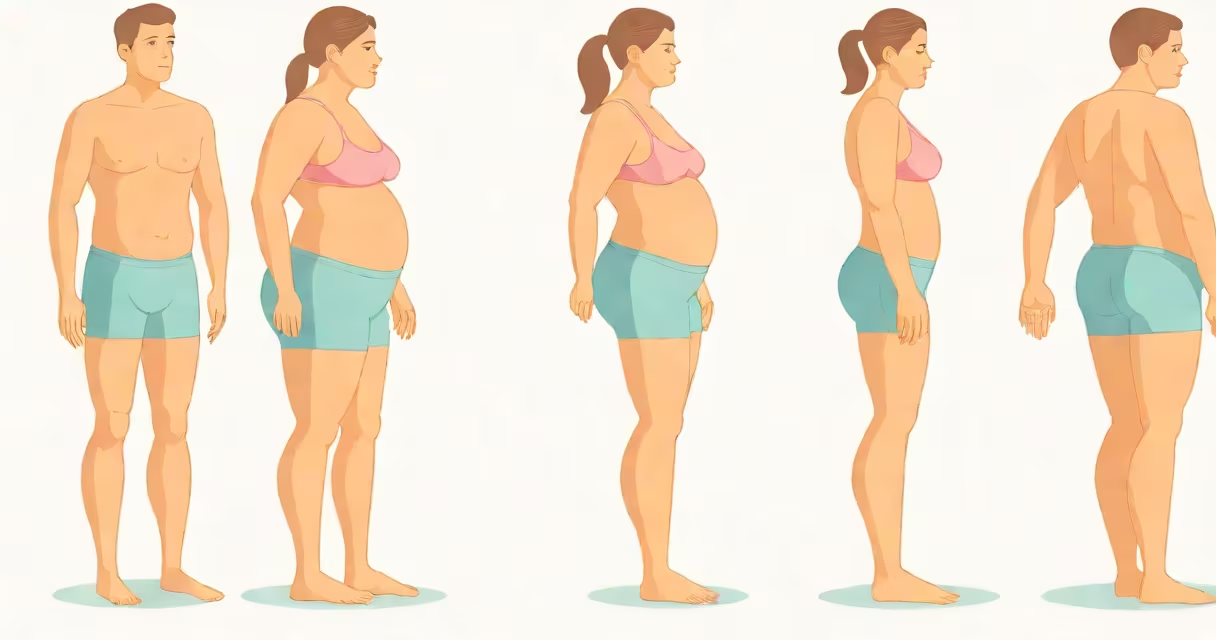
The skinny fat body type describes someone with a normal body mass index (BMI) but high body fat percentage and low muscle mass, particularly around the abdomen. This condition increases risks for type 2 diabetes, heart disease, and fatty liver, even if weight appears within a healthy range.
This state results from prolonged calorie surplus, sedentary behavior, and inadequate protein intake. The body stores excess energy as visceral fat-deep abdominal fat surrounding organs-while losing muscle due to lack of resistance training. A person may weigh 150 pounds with a BMI of 22, yet have 30% body fat and low lean mass.
According to the National Institutes of Health (NIH), visceral fat is metabolically active and releases inflammatory markers linked to insulin resistance. The American Journal of Clinical Nutrition reports that individuals with normal BMI but high waist-to-hip ratios face mortality risks comparable to those classified as obese.
Body mass index (BMI) measures weight relative to height but ignores body composition. A BMI between 18.5 and 24.9 is labeled "normal," but this category includes people with high body fat and low muscle mass. These individuals often have a waist circumference above 35 inches for women or 40 inches for men-signs of central adiposity.
Visceral fat is not just stored energy; it secretes hormones and cytokines that disrupt glucose metabolism. Over time, this leads to insulin resistance, elevated blood sugar, and increased risk of prediabetes. A 2021 study in Metabolism found that participants with normal BMI but high visceral fat had a 4.3-fold higher risk of developing type 2 diabetes over 10 years compared to those with low visceral fat.
Even without symptoms, internal organ stress occurs. The liver processes excess free fatty acids released from visceral fat deposits, leading to non-alcoholic fatty liver disease (NAFLD). Ultrasound imaging shows fatty infiltration in up to 30% of adults with normal BMI but high body fat percentage.
There is no formal classification system for "skinny fat" in medical literature, but body composition analysis reveals distinct patterns:
| Type | Characteristics | Measurement Tools |
|---|---|---|
| Low Muscle, High Fat | Normal weight, visible belly fat, weak grip strength | Dual-energy X-ray absorptiometry (DEXA), bioelectrical impedance analysis (BIA) |
| High Waist-to-Hip Ratio | Waist > 35 in (women), > 40 in (men); BMI normal | Anthropometric measurements, CT scan (gold standard) |
| Metabolic Syndrome Profile | High triglycerides, low HDL, elevated blood pressure | Blood tests, lipid panel |
DEXA scans provide the most accurate assessment of fat distribution and lean mass. BIA devices-common in gyms-are less precise but accessible. A single reading can misrepresent body composition; consistency in measurement conditions matters.
For example, a 35-year-old woman weighing 135 lbs (61 kg) with a BMI of 22.4 falls into the "normal" range. Her waist measures 36 inches. A DEXA scan reveals 34% body fat and 31% lean mass-levels typical of obesity, not leanness. She has no symptoms but is at risk for early-onset metabolic disease.
Many assume that being thin equates to being healthy. This belief overlooks the difference between weight and composition. A person can be underweight, overweight, or normal weight and still have poor metabolic health.
Some confuse "skinny fat" with "athletic thinness." An endurance athlete may have low body fat and high aerobic capacity but low muscle mass. However, they typically show high VO₂ max, strong cardiovascular function, and low visceral fat-distinguishing them from the skinny fat phenotype.
A key distinction: the skinny fat individual often shows signs of insulin resistance despite normal fasting glucose. They may have elevated HbA1c levels or abnormal oral glucose tolerance test results. This is known as the "obesity paradox"-where normal-weight individuals develop disease profiles similar to obese patients.
Another error is relying solely on scale weight. A 150-pound person with 30% body fat has 45 pounds of fat and 105 pounds of lean tissue. A 150-pound athlete with 12% body fat has 18 pounds of fat and 132 pounds of lean mass. The latter has better metabolic resilience and functional strength.
I observed this pattern while working with clients at a community wellness clinic. One client, a 42-year-old man, weighed 160 lbs with a BMI of 22. He reported feeling tired, bloated, and unable to lose belly fat despite eating "healthy." His waist measured 38 inches. Blood work showed elevated triglycerides (210 mg/dL), low HDL (32 mg/dL), and HbA1c of 5.8%-indicating prediabetes.
After a DEXA scan, his body fat was 31%, with 112 lbs of lean mass. He had minimal resistance training history and consumed 1.2 g/kg of protein daily-below recommended levels for muscle preservation. Over six months of progressive resistance training and increased protein intake (1.8 g/kg/day), he lost 6% body fat and gained 4 lbs of lean mass. His HbA1c dropped to 5.4%, and waist decreased to 34 inches.
This outcome aligns with research from the Journal of the International Society of Sports Nutrition, which found that combining resistance training with adequate protein intake reduced visceral fat by 14% in normal-weight adults over 12 weeks.
Being skinny fat increases risk for chronic illness independent of weight. A 2023 meta-analysis in Obesity Reviews found that normal-weight individuals with high body fat had a 1.7 times greater risk of cardiovascular death than those with low body fat-even after adjusting for lifestyle factors.
Visceral fat correlates strongly with inflammation. CRP (C-reactive protein) levels rise in these individuals, indicating systemic inflammation. This contributes to endothelial dysfunction and arterial plaque formation.
Addressing the skinny fat body type requires shifting focus from weight to body composition. Prioritizing strength training, sufficient protein, and consistent movement reduces visceral fat and builds protective lean mass. This improves metabolic resilience and extends healthspan.