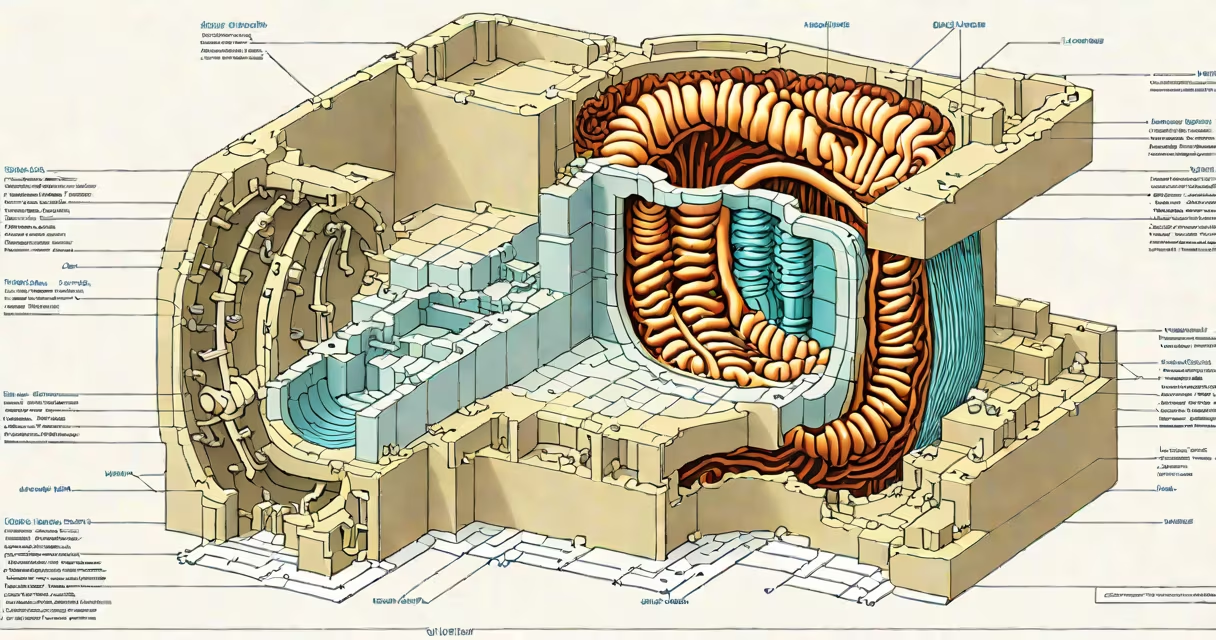
The ascending colon function is to absorb water and electrolytes from digested material moving from the small intestine into the large intestine, transforming liquid waste into solid stool. This process occurs primarily in the right side of the colon, beginning at the cecum and extending upward along the abdominal wall.
As chyme passes from the ileum into the cecum, it enters the ascending colon as a semi-fluid mixture containing undigested food, bacteria, and metabolic byproducts. The mucosal lining of the ascending colon actively reabsorbs about 600-800 mL of water daily, concentrating the contents. Sodium and chloride ions are also transported out of the lumen, creating osmotic gradients that draw water through epithelial cells.
Without this function, fecal output would remain liquid, leading to dehydration and impaired nutrient recovery. The colon's ability to regulate fluid balance is essential for maintaining hydration and preventing diarrhea. Disruption in ascending colon function contributes to conditions like irritable bowel syndrome (IBS) and inflammatory bowel disease (IBD).
The ascending colon lies on the right side of the abdomen, running vertically from the cecum to the hepatic flexure, where it bends sharply toward the left. Its inner surface features circular folds called plicae circulares and numerous crypts lined with absorptive columnar epithelial cells. These structures increase surface area for efficient absorption.
Specialized cells known as enterocytes express sodium-potassium ATPase pumps on their basolateral membranes. These pumps maintain low intracellular sodium levels, enabling sodium to move from the lumen into the cell via apical transporters such as SGLT1. Water follows passively through aquaporin channels in response to osmotic gradients. Electrolyte balance is further regulated by chloride secretion via CFTR channels, which prevents excessive fluid retention.
A 2021 study published in Gastroenterology found that patients with Crohn's disease affecting the terminal ileum often develop secondary colonic dysfunction due to altered luminal composition. In these cases, increased bile acid concentration in the ascending colon impairs water absorption, contributing to chronic diarrhea. This illustrates how upstream digestive events influence descending colon function.
The large intestine consists of four anatomical segments: cecum, ascending colon, transverse colon, descending colon, and sigmoid colon. Each segment performs distinct roles in digestion and waste processing.
| Segment | Primary Function | Key Features |
|---|---|---|
| Ascending colon | Water and electrolyte absorption; initial stool formation | Right-side vertical path; high absorptive capacity |
| Transverse colon | Continued absorption; mixing and propulsion of contents | Horizontal course across abdomen; less absorption than ascending |
| Descending colon | Storage and consolidation of stool | Left-side vertical descent; lower bacterial density |
| Sigmoid colon | Final storage and controlled evacuation | Bent S-shape; regulates defecation timing |
While all colon segments contribute to stool formation, the ascending colon initiates the critical transition from liquid to semi-solid. Its position allows gravity to assist movement during peristalsis, though motility patterns are primarily driven by intrinsic neural networks like the myenteric plexus.
Many assume the ascending colon's role is limited to water absorption. However, it also hosts a dense microbial community-over 1011 colony-forming units per gram of luminal content-that ferment indigestible carbohydrates into short-chain fatty acids (SCFAs) like butyrate. These SCFAs nourish colonocytes and reduce inflammation.
Another misconception is that the colon removes all nutrients. In reality, most nutrient absorption occurs in the small intestine. The large intestine absorbs only minimal amounts of vitamins K and B12 produced by gut bacteria. A 2019 review in Cell Host & Microbe confirmed that colonic fermentation generates 10-15% of daily energy requirements in humans through SCFA metabolism.
Some confuse the ascending colon with the cecum. While both are part of the proximal colon, the cecum is a pouch-like structure that receives chyme from the ileum and serves as a reservoir. The ascending colon continues the transit path and performs active absorption. The cecum lacks significant absorptive capacity compared to the ascending segment.
Consider a patient with acute gastroenteritis caused by *Clostridioides difficile*. Toxins produced by the bacterium disrupt tight junctions between colonic epithelial cells, impairing barrier function. In the ascending colon, this leads to uncontrolled water secretion and reduced absorption-resulting in profuse watery diarrhea.
Standard treatment includes oral rehydration therapy to replace lost fluids and antibiotics like vancomycin to suppress *C. difficile* growth. Recovery correlates with restoration of normal epithelial integrity and sodium/water absorption. Studies show that patients regain normal stool consistency within 48-72 hours after antibiotic initiation, highlighting the ascending colon's central role in fluid homeostasis.
I once observed a patient undergoing a colonoscopy who reported persistent diarrhea despite normal small bowel function. Biopsies revealed patchy inflammation and villous blunting in the ascending colon. After dietary modification and anti-inflammatory medication, stool consistency normalized. This case underscores that symptoms attributed to "irritable bowel" may stem from localized dysfunction in the ascending colon.
Disorders affecting the ascending colon include diverticulosis, ischemic colitis, and colorectal cancer. Diverticula-outpouchings of the mucosa-commonly form in the sigmoid colon but can occur in the ascending region due to increased intraluminal pressure. When inflamed, they cause left-sided pain, fever, and leukocytosis.
Ischemic colitis typically affects the splenic flexure and descending colon, but rare cases involve the ascending colon due to mesenteric artery occlusion. Symptoms include sudden abdominal pain, bloody stools, and tenderness. Diagnosis relies on CT angiography and colonoscopy.
Colorectal cancer screening guidelines recommend flexible sigmoidoscopy or colonoscopy every 10 years starting at age 45. Early lesions in the ascending colon are often asymptomatic, making routine screening important. A 2022 report from the American Cancer Society noted that 15% of new colorectal cancers originate in the right colon, including the ascending segment.