Do our dreams mean anything? Not in the way people assume-dreams aren't prophetic messages or symbolic codes from the unconscious. They're physiological events tied to brain activity during REM sleep, shaped by memory consolidation, emotional processing, and neural noise. The idea that dreams carry deep personal meaning is widespread, but scientific evidence shows they're better understood as side effects of how the brain organizes information while asleep.
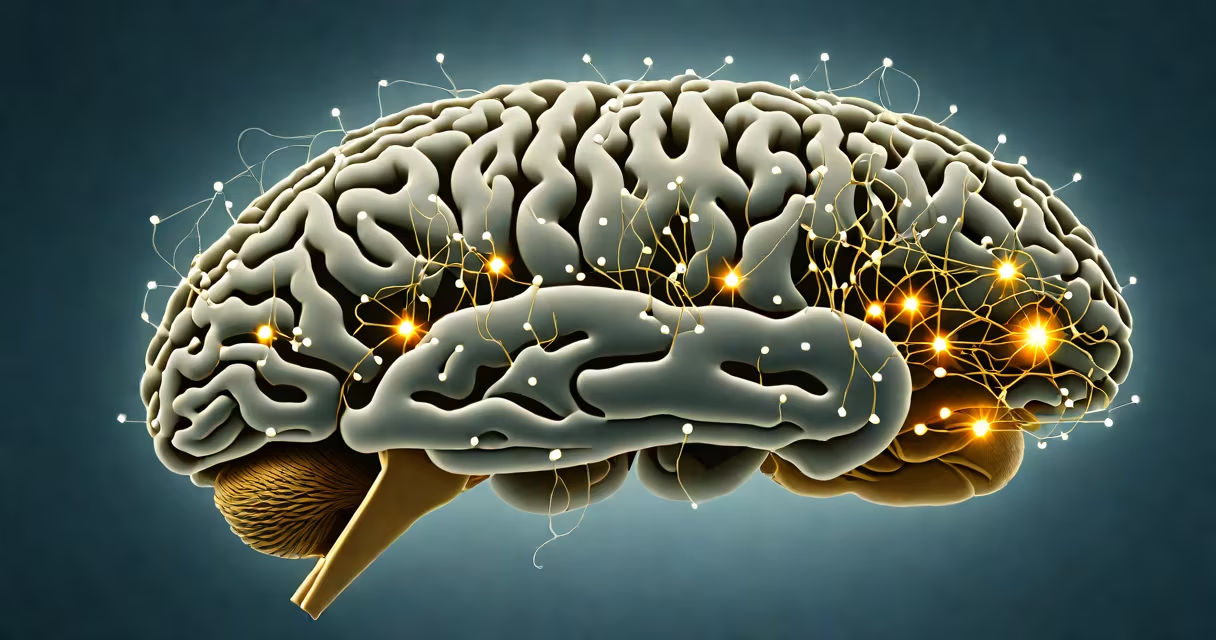
During rapid eye movement (REM) sleep, which occurs in cycles throughout the night, the brain's limbic system becomes highly active. This region governs emotion, memory, and motivation. At the same time, the prefrontal cortex-the area responsible for logical reasoning and decision-making-quiets down. The result is a mental state where emotions run high, logic is suppressed, and memories merge unpredictably. This biological setup explains why dreams often feel vivid, emotionally intense, and illogical.
Neuroscientists have mapped brain activity during dreaming using fMRI scans. A 2013 study published in Nature Neuroscience showed that specific patterns of neural firing in the visual and emotional centers of the brain correlate strongly with dream content. When participants reported dreaming of falling, researchers saw activation in the parietal lobe, involved in spatial awareness. When dreams involved fear, the amygdala lit up. These findings suggest dreams reflect ongoing brain processes-not external signals.
Dreams happen primarily during REM sleep, which accounts for about 20-25% of a typical night's sleep. Most people cycle through four to five REM periods, each lasting longer as the night progresses. The first REM episode lasts around 10 minutes; the last may stretch to an hour. Dreams are most vivid and complex during these later stages.
The brain doesn't store dreams like memories. Instead, dream content emerges from the brain's attempt to make sense of random neural firings. During REM, neurons fire in bursts without clear input from the senses. The brain tries to weave these signals into a narrative, pulling from recent experiences, long-term memories, and emotional states. This process is called "activation-synthesis," proposed by Harvard psychiatrists Allan Hobson and Robert McCarley in the 1970s. Their model remains foundational in sleep science.
A 2020 study from the University of Wisconsin-Madison tracked dream reports alongside EEG readings. Researchers found that dream content correlated with activity in the medial temporal lobe, a region linked to autobiographical memory. Participants who had recently experienced stress were more likely to report dreams involving threats or being chased-suggesting dreams reflect emotional regulation, not prediction.
Dreams fall into broad categories based on content and context. While none carry universal symbolic meanings, their themes can indicate underlying mental states.
| Type | Frequency | Common Triggers | Scientific Interpretation |
|---|---|---|---|
| Lucid dreams | 10-20% of adults report them | Meditation, sleep training, REM stability | Occur when the prefrontal cortex partially activates during REM. Not predictive-they're a sign of heightened self-awareness during sleep. |
| Recurring dreams | 60% of people experience them | Unresolved stress, trauma, anxiety | Linked to persistent emotional concerns. A 2018 study in Sleep Medicine found recurring nightmares were common in individuals with PTSD. |
| False awakening dreams | ~30% report at least one | High stress, poor sleep hygiene | Signal disrupted sleep architecture. The brain simulates waking up to test readiness-but fails, leading to repeated dream cycles. |
| Sexual dreams | Common in adolescence and young adulthood | Hormonal fluctuations, REM cycle timing | Not indicative of desire. They reflect normal sexual brain activity during REM, even in celibate individuals. |
One non-obvious fact: dreams don't require sleep to occur. People can experience dream-like hallucinations during wakefulness under conditions like sleep deprivation, sensory overload, or neurological disorders such as Charles Bonnet syndrome. This shows that dream-like imagery stems from brain circuitry, not sleep itself.
Many believe dreams predict the future or contain hidden messages from the subconscious. Sigmund Freud popularized the idea that dreams are disguised wishes. Carl Jung expanded this into archetypes-universal symbols representing collective human experiences. But neither theory has held up under empirical testing.
Modern neuroscience shows that dream content is shaped by recent experiences, not ancient myths. A 2017 study in Current Biology demonstrated that participants who played a video game before bed were more likely to dream about going through similar environments. The brain didn't interpret the game as symbolic-it replayed the mechanics.
Another misconception: dreams are always meaningful. Some dreams are pure noise. Random neural firings in the visual cortex can produce images with no connection to memory or emotion. These are called "narrative-free" dreams and account for up to 30% of reported dreams in controlled studies.
Dreams don't tell you what to do, but they can reveal patterns in your emotional life. If you frequently dream of being unprepared for exams, it may reflect real-world anxiety about performance. If you dream of losing loved ones, it could signal unresolved grief or fear of loss.
I once kept a dream journal for six weeks after moving to a new city. I repeatedly dreamed of getting lost in unfamiliar streets. Only after tracking my waking behavior did I realize I was avoiding social interactions due to loneliness. The dream wasn't a message-it was a reflection of my internal state. When I started attending local meetups, the dreams stopped.
For insight, focus on consistency, not symbolism. Ask: "When did this dream start?" "What was happening in my life then?" "Is this theme repeating?" The answer lies in context, not code.
Do our dreams mean anything? Not in the way folklore suggests. They're not omens, not cryptic puzzles. They're windows into how your brain processes emotion, memory, and stress while you rest. Understanding them requires shifting from myth to mechanism-and seeing dreams not as signs, but as symptoms of a working mind.