Fidelity is the degree to which a copy, representation, or reproduction accurately reflects the original source. In technical contexts, it describes how faithfully a system reproduces input signals-whether audio, video, or data-without introducing distortion, loss, or alteration.
In audio, high fidelity means a recording captures and plays back sounds as they were originally performed, preserving nuances like instrument timbre, vocal texture, and spatial depth. The term originated in the 19th century with telegraphy and later became central to electronics and media.
According to the Oxford Learner's Dictionary, fidelity is "the quality of being faithful or accurate." This core idea applies across domains: engineering, music, photography, and even interpersonal relationships. In each case, higher fidelity implies greater accuracy and trustworthiness.
Fidelity in electronic systems depends on minimizing noise, distortion, and data loss during transmission or storage. A low-fidelity system may compress audio to reduce file size, removing subtle frequencies. A high-fidelity system retains those details.
For example, a CD stores audio at 44.1 kHz sampling rate and 16-bit resolution. This format captures nearly all audible frequencies (up to 20 kHz), matching human hearing limits. A compressed MP3 at 128 kbps discards data deemed less perceptible-reducing file size but lowering fidelity.
Signal fidelity degrades when components fail or environments introduce interference. A weak Wi-Fi signal distorts video streaming; old analog tapes lose high-frequency content over time. These losses reduce faithfulness to the original.
Fidelity appears in several forms depending on context. The most common are audio, video, and data fidelity.
| Type | Definition | Example | Common Use Case |
|---|---|---|---|
| Audio Fidelity | Accuracy of sound reproduction | High-resolution FLAC files vs. compressed MP3s | Music production, audiophile listening |
| Video Fidelity | Clarity and detail in visual output | 4K UHD vs. standard-definition broadcast | Streaming, cinema, surveillance |
| Data Fidelity | Integrity of transmitted or stored information | Checksum validation in file transfers | Software updates, medical imaging |
High-fidelity audio systems often use analog-to-digital converters (ADCs) with 24-bit depth and sample rates above 96 kHz. These exceed CD standards and capture more changing range and frequency detail. A professional studio recording session might use 24-bit/192 kHz capture-preserving subtle breaths, string vibrations, and room acoustics.
Video fidelity depends on resolution, frame rate, color depth, and compression. A 1080p video streamed at 30 fps with 8-bit color may look acceptable on a phone but lacks the clarity of a 4K HDR film projected in a theater. The difference lies in how much of the original scene is preserved.
Fidelity is not synonymous with loudness or volume. A system can play music very loudly while still distorting details-this reduces fidelity, not increases it. Similarly, high bitrate does not guarantee high fidelity. An MP3 encoded at 320 kbps may still remove psychoacoustically masked frequencies, reducing perceptual accuracy.
Another misconception: high fidelity always requires expensive gear. While premium equipment improves performance, a well-designed digital audio workstation (DAW) with proper monitoring can achieve high fidelity on modest hardware. The key is proper signal chain management-not just cost.
A non-obvious fact: fidelity is subjective. What sounds "accurate" to one listener may feel "cold" or "sterile" to another. Audiophiles often prefer slightly warm, analog-like tonal characteristics-even if they deviate from perfect mathematical accuracy. The NPR reported that many listeners perceive analog recordings as more emotionally engaging, despite lower technical fidelity.
Consider a jazz album recorded live in 1958. The original master tape was mixed at 4-track analog. Today, it's available on vinyl and via Spotify.
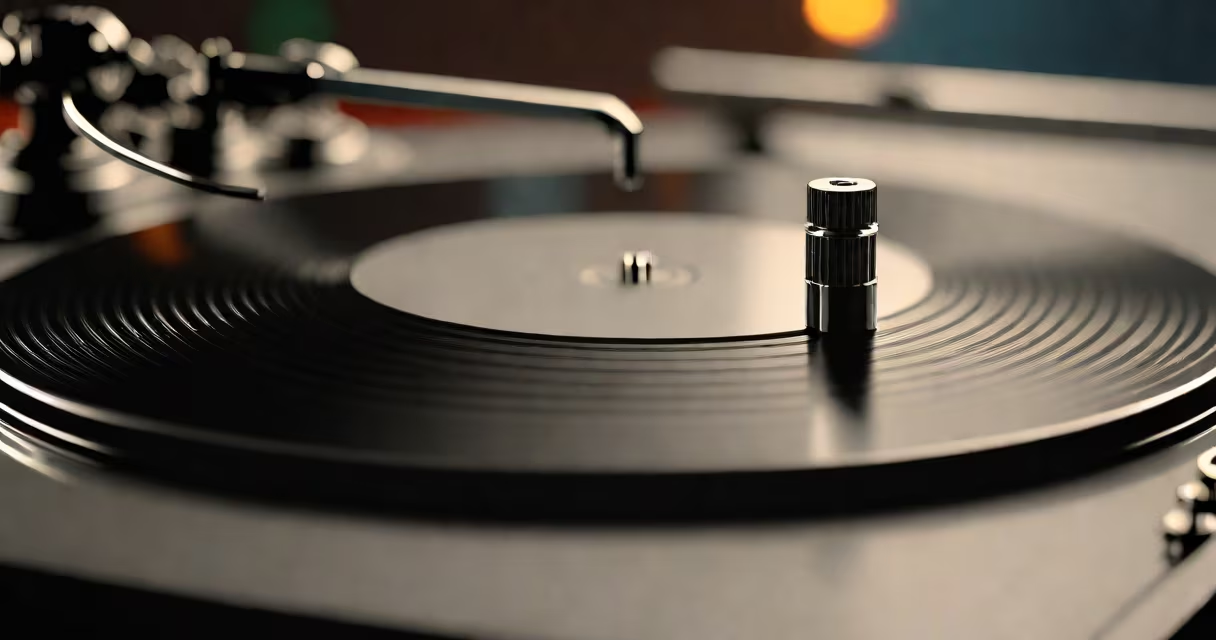
The vinyl pressing uses a lacquer cut at 33⅓ rpm, capturing the full changing range and analog warmth. The mastering engineer adjusts EQ to compensate for vinyl's physical limitations. The result is high audio fidelity-though not perfect due to surface noise and groove wear.
Spotify streams the same track at 320 kbps AAC. The file is compressed using perceptual coding. Frequencies below 20 Hz and above 15 kHz are removed. Some transient details (like cymbal crashes) are smoothed. While the song remains intelligible, fidelity is reduced compared to the original or vinyl version.
Testing both side-by-side on a high-quality stereo system reveals differences: the vinyl version has more depth, presence, and natural decay. The digital stream sounds flatter and more uniform. This illustrates how fidelity varies even when the source material is identical.
High fidelity ensures reliability in critical applications. Medical imaging systems require pixel-perfect fidelity to detect tumors. Legal recordings must preserve speech accurately for courtroom evidence. In music, fidelity affects emotional impact-listeners connect more deeply with recordings that reflect the artist's intent.
I once tested a pair of studio monitors against a budget home speaker. Playing a live recording of a string quartet, the monitors revealed individual bow pressure changes and slight timing shifts between players. The budget speakers blurred these details into a single, homogeneous sound. The difference wasn't in volume-it was in fidelity.
When choosing equipment or formats, evaluate fidelity based on your purpose. For casual listening, moderate fidelity suffices. For archiving, mastering, or professional work, prioritize high fidelity to maintain authenticity.
Understanding the definition of fidelity helps clarify trade-offs in technology choices. Whether assessing audio gear, selecting a backup method, or evaluating data integrity, fidelity is the benchmark for accuracy and trust.