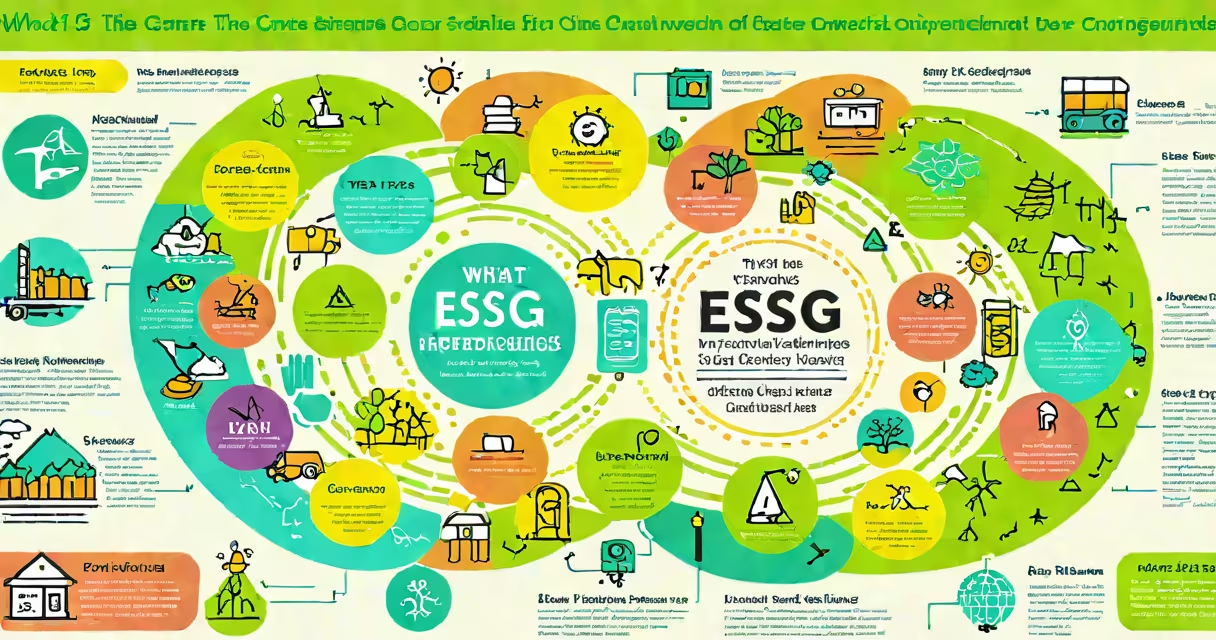
ESG stands for Environmental, Social, and Governance-three core criteria used to evaluate a company's ethical impact and sustainability performance. Investors and analysts use ESG scores to assess long-term risks and opportunities beyond traditional financial metrics.
ESG originated as a structure for measuring non-financial performance in public companies. It emerged from growing investor demand for transparency around climate risk, labor practices, and executive accountability. The concept gained traction after the UN Principles for Responsible Investment launched in 2006, setting global standards for integrating ESG into investment decisions.
Environmental factors include carbon emissions, waste management, water usage, and biodiversity protection. Social elements cover employee well-being, diversity, supply chain ethics, and community engagement. Governance involves board independence, executive compensation, anti-corruption policies, and shareholder rights. These dimensions collectively reveal how responsibly a company operates.
Investors don't rely solely on annual earnings reports. Instead, they analyze ESG data to anticipate systemic risks. For example, a manufacturing firm with high greenhouse gas output may face regulatory fines or consumer backlash in regions with strict climate laws. Similarly, a tech company with poor workplace diversity may struggle to attract talent or face litigation.
Rating agencies such as MSCI and Sustainalytics collect data from public filings, news reports, and direct company disclosures. They assign scores based on standardized indicators. A company scoring high on ESG may receive better credit ratings or lower borrowing costs due to perceived stability.
Consider Unilever. In 2022, it scored 85 out of 100 on MSCI's ESG rating. Its environmental score was boosted by commitments to net-zero emissions by 2039 and eliminating plastic waste from packaging. Social indicators improved through gender pay equity programs and supplier code enforcement. Governance strength came from independent board oversight and transparent reporting.
There's no single global standard for ESG measurement. Different frameworks prioritize different aspects. The Global Reporting Initiative (GRI) focuses on detailed disclosure across economic, environmental, and social dimensions. The Sustainability Accounting Standards Board (SASB) provides industry-specific metrics tailored to material risks.
| Structure | Primary Focus | Use Case |
|---|---|---|
| GRI | Complete sustainability reporting | Public sector and multinational corporations |
| SASB | Industry-specific materiality | Investor analysis and portfolio construction |
| TCFD | Climate-related financial disclosures | Banks and energy firms preparing for climate regulation |
TCFD recommendations, developed by the Financial Stability Board, require firms to disclose climate risks in their financial statements. Over 2,000 organizations globally now follow TCFD guidance, including major banks like JPMorgan Chase and energy firms such as BP.
Many assume ESG means sacrificing returns for ethics. That's incorrect. Research from Harvard Business School shows funds with high ESG scores outperformed low-ESG peers by 1.5% annually over ten years, even after adjusting for market volatility.
Another myth is that ESG applies only to large corporations. Small and medium enterprises (SMEs) increasingly adopt ESG principles. A 2023 survey by Deloitte found 63% of U.S.-based SMEs reported implementing at least one ESG initiative, including remote work policies, renewable energy use, or supplier audits.
Some critics claim ESG is "greenwashing"-using vague terms to appear sustainable without real action. This is valid concern, but not inherent to ESG itself. The issue lies in inconsistent reporting. A company claiming "carbon neutrality" without verified offsets or third-party audits fails to meet credible ESG benchmarks.
As of Q1 2024, the ETF held 147 securities with a median ESG score of 7.2 out of 10. Top holdings included Nestlé, Novo Nordisk, and ASML. These companies demonstrated strong environmental stewardship, inclusive leadership teams, and board diversity. The fund's turnover rate was 18%, reflecting a long-term strategy rather than speculative trading.
Performance data shows the ETF returned 7.3% annualized over five years, slightly above the MSCI EAFE Index return of 6.9%. This illustrates that ESG integration doesn't compromise returns-it can improve them through disciplined risk selection.
Regulatory pressure is increasing. The European Union's Corporate Sustainability Reporting Directive (CSRD) mandates ESG disclosures for over 50,000 companies by 2025. In the U.S., the SEC proposed new rules requiring public companies to report climate-related risks in their registration statements. These changes make ESG not optional-it's part of compliance.
Consumer behavior also drives adoption. A 2023 NielsenIQ study found 66% of U.S. consumers are willing to pay more for products from companies with strong ESG records. This shifts purchasing power toward sustainable brands, influencing supply chains and business models.
One insight often missed: ESG isn't about perfection. No company meets all criteria perfectly. The goal is continuous improvement. A firm with moderate ESG scores but a clear roadmap for reducing emissions or improving board representation can still be a sound investment.
When evaluating what is the ESG, remember it's not a checklist but a changing assessment tool. It reflects how well a company manages external pressures-climate change, social inequality, political instability-and internal controls. It's a lens for identifying resilience, not just profitability.