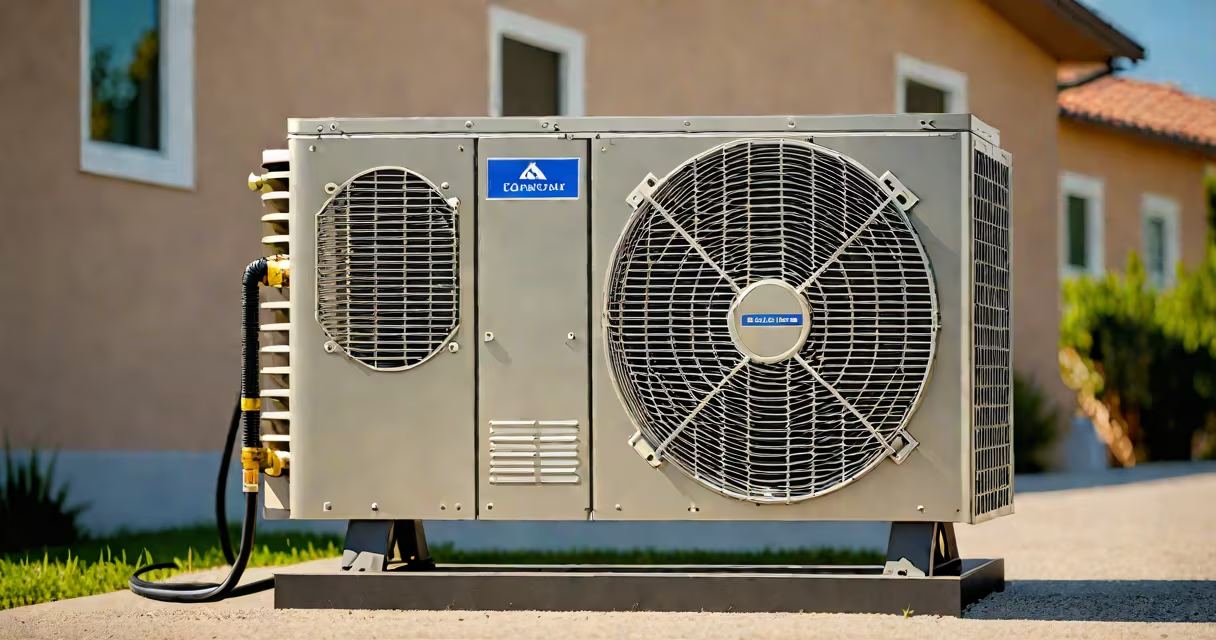
The outdoor HVAC unit is called a condenser unit or, when part of a heat pump system, a heat pump outdoor unit. It contains the compressor, condenser coil, and fan, and is responsible for releasing heat during cooling mode or absorbing heat during heating mode.
This component sits outside the home, typically on a concrete pad or mounting frame, and operates under high pressure and temperature. It's a core part of central air conditioning and heat pump systems, working in tandem with the indoor evaporator coil to regulate indoor climate.
For homes using a split-system HVAC setup, the outdoor unit is paired with an indoor furnace or air handler. The refrigerant circulates between both units, transferring heat from inside to outside during cooling and reversing the process in heating mode.
The outdoor unit functions through a closed-loop refrigeration cycle. When cooling, the compressor pressurizes refrigerant gas, turning it into a hot, high-pressure vapor. This vapor flows into the condenser coil, where the fan blows air across the coil to dissipate heat. As the refrigerant cools, it condenses into a liquid and travels to the indoor evaporator coil.
In heating mode-common in heat pump systems-the process reverses. The refrigerant absorbs heat from the outside air, even in cold weather, then releases it indoors via the indoor coil. The outdoor unit's fan ensures airflow across the coil to maximize heat transfer.
A typical residential condenser unit runs at 240 volts and draws 20-40 amps depending on size. A 3-ton system (36,000 BTU/hour) may have a compressor rated at 3.5 horsepower and a fan motor consuming about 1.5 amps.
There are two primary types of outdoor HVAC units, each designed for different climate conditions and system configurations:
| Type | Use Case | Key Features | Efficiency Rating |
|---|---|---|---|
| Condenser Unit | Standard air conditioning systems | Releases heat; paired with indoor evaporator coil | SEER 14-26 (higher = more efficient) |
| Heat Pump Outdoor Unit | Both cooling and heating; common in mild climates | Reverses refrigerant flow; includes reversing valve | SEER 16-25, HSPF 8-10 |
Condenser units are standard in homes with gas furnaces. They do not provide heat in winter unless paired with a supplemental heat source. Heat pumps, however, can extract heat from outdoor air down to 20°F (-6°C), making them viable in regions with moderate winters.
Some models feature variable-speed compressors and fans, which adjust output based on demand. These improve energy efficiency and reduce noise. For example, a 16 SEER heat pump with a variable-speed compressor can maintain comfort while using 30% less electricity than a single-speed model.
Many people confuse the outdoor unit with the furnace or air handler, which are indoor components. The outdoor unit is not the source of cool air-it only facilitates heat rejection. Cool air is produced indoors when cold refrigerant passes through the evaporator coil.
Another misconception is that the outdoor unit must always run when the thermostat calls for cooling. In reality, modern systems use smart controls that delay startup until the outdoor temperature stabilizes. This prevents short-cycling and reduces wear on the compressor.
A key distinction often missed: the outdoor unit is not the same as a "condensing unit" in industrial settings. Industrial condensing units handle large volumes of refrigerant and operate at higher pressures. Residential units are scaled for home use and regulated by ASHRAE Standard 34 for refrigerant safety.
I replaced a 15-year-old condenser unit on a 3-ton heat pump system in a suburban home in Atlanta. The original unit had a SEER rating of 13 and was losing refrigerant due to a corroded copper line. After installing a new 16 SEER model with a scroll compressor and variable-speed fan, the homeowner reported a 22% drop in cooling-season electricity usage.
The new unit included a digital thermostat interface and fault diagnostics. During installation, I verified refrigerant charge using a manifold gauge set. The system required 3.5 pounds of R-410A refrigerant, as specified in the manufacturer's manual.
After startup, the system maintained 72°F indoor temperature at 85°F outdoor ambient, with the outdoor coil operating at 120°F. The fan ran at 60% speed during most of the cooling cycle, reducing noise and power draw.
Outdoor units degrade faster than indoor components due to exposure to weather. Dust, debris, and moisture can clog the condenser coil and reduce airflow. A dirty coil can reduce efficiency by up to 30%, according to the U.S. Department of Energy.
Regular maintenance includes cleaning the fins with a soft brush, clearing vegetation around the unit, and checking electrical connections. Most manufacturers recommend servicing the outdoor unit at least once per year, ideally before peak cooling season.
When replacing an outdoor unit, match the tonnage and SEER rating to the indoor equipment. Mismatched components cause inefficiency and premature failure. For example, pairing a 3-ton condenser with a 2.5-ton indoor coil leads to short-cycling and poor humidity control.
Understanding the function and proper care of the outdoor HVAC unit improves system performance and extends lifespan. A well-maintained unit lasts 12-15 years, compared to 8-10 years for neglected systems.