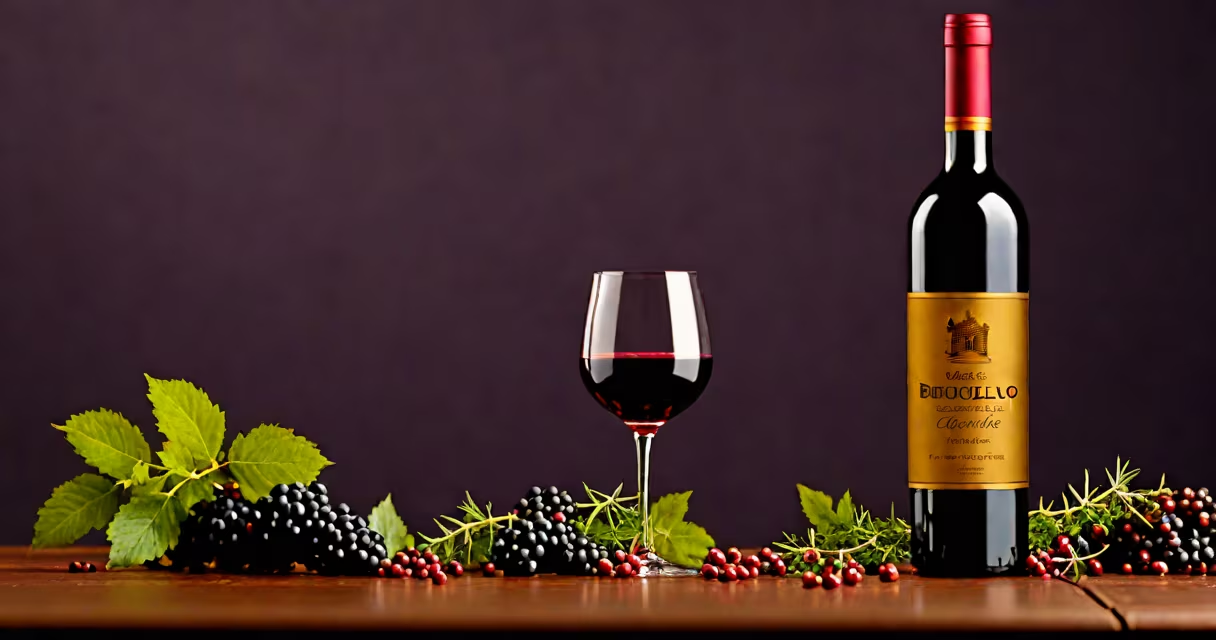
Brunello di Montalcino Riserva is a high-end Italian red wine made exclusively from 100% Sangiovese grapes grown in the Montalcino region of Tuscany. It must be aged a minimum of five years-four in oak barrels and one in bottle-before release, exceeding the standard Brunello's three-year requirement. This extended aging produces deeper structure, greater complexity, and enhanced longevity.
The wine is produced under Italy's highest wine classification, Denominazione di Origine Controllata e Garantita (DOCG), which enforces strict quality controls. Only wines meeting these standards may carry the "Riserva" designation. The region's unique terroir-high-altitude vineyards, clay-limestone soils, and Mediterranean climate-contributes to the wine's intense color, firm tannins, and balanced acidity.
Each Riserva vintage is released only after a mandatory aging period. For example, the 2016 Riserva was not available until 2022. This ensures maturity and integration of flavors. Wines from strong vintages, such as 2010 or 2016, often develop notes of dried cherry, leather, tobacco, and earth, evolving into complex profiles over decades.
Brunello di Montalcino Riserva follows a precise production cycle. After harvest, the wine undergoes fermentation and maceration, then spends at least four years in large Slavonian oak casks. These casks allow slow oxygen exchange, promoting softening of tannins without overwhelming the fruit. The final year occurs in bottle, during which the wine stabilizes and integrates.
Regulations set by the Consorzio del Vino Brunello di Montalcino mandate that Riserva wines must be bottled no earlier than January 1st of the fifth year following harvest. This rule prevents premature release and ensures consistency. The winery must submit samples for official tasting and chemical analysis before bottling.
A key distinction: while all Brunello di Montalcino must be aged three years total, only those meeting additional criteria-higher alcohol levels, lower acidity, and extended barrel time-qualify as Riserva. The term "Riserva" is not a marketing label-it's legally binding.
There are two primary categories within the Brunello family:
| Category | Minimum Age | Barrel Time | Release Date | Typical Price Range (USD) |
|---|---|---|---|---|
| Brunello di Montalcino | 3 years | 24 months | January 1st, 4th year post-harvest | $60-$120 |
| Brunello di Montalcino Riserva | 5 years | 48 months | January 1st, 6th year post-harvest | $120-$300+ |
Wines labeled Riserva are typically riper, more structured, and better suited for long-term cellaring. They show greater concentration and tertiary development. A 2013 Riserva, for instance, exhibited notes of blackberry, dried rosemary, and warm spice after ten years in bottle-flavors absent in younger releases.
Some producers, like Biondi-Santi, have historically released Riserva wines even later than required. Their 1970 Riserva was bottled in 1978 and is still drinkable today, demonstrating the wine's potential lifespan of 40+ years.
Brunello di Montalcino Riserva is consumed primarily as a celebratory or collectible wine. It pairs well with rich dishes such as braised beef, wild boar stew, or aged cheeses. Its high tannin and acid profile cut through fat and improve umami-rich foods.
It is also used in investment-grade wine collections. In 2021, a case of 1997 Biondi-Santi Riserva sold for $14,000 at auction. The wine's scarcity, provenance, and aging potential drive demand among collectors.
Despite its prestige, Riserva is not universally preferred. Some drinkers find the extended aging makes the wine less expressive in youth. Others appreciate the patience required to enjoy it fully. As one sommelier noted after tasting a 2001 Riserva: "It wasn't about the fruit-it was about the story."
Many assume Riserva means "better" than regular Brunello. That's not always true. A 2015 Riserva may outshine a 2015 standard Brunello in structure and ageability-but the reverse can happen if the vintage was poor. Quality depends on both grape quality and winemaker skill.
Another error: confusing Riserva with "reserve" in other countries. In France or California, "reserve" is a marketing term with no legal meaning. In Italy, "riserva" is protected by law. The term cannot be used unless the wine meets DOCG requirements.
A lesser-known fact: Riserva wines are often produced in smaller quantities. Producers may make only 10,000 to 15,000 bottles annually. This limits availability and increases scarcity. In contrast, standard Brunello may reach 50,000 bottles per vintage.
Consider the 2016 Poggio Antico Brunello di Montalcino Riserva. Harvested in October 2016, it spent 48 months in 30-hectoliter Slavonian oak. Bottled in January 2022, it showed deep garnet color, aromas of dried fig, cedar, and baking spice. On the palate, it had firm tannins, balanced acidity, and a finish lasting over 40 seconds.
At a vertical tasting in 2023, this wine scored 94 points from Wine Spectator. It was described as "elegant but useful," with "the balance of a well-tuned engine." The producer noted that the 2016 vintage had ideal ripeness and low yields-key factors in producing a successful Riserva.
For comparison, the 2016 standard Brunello from the same estate scored 90 points-still excellent, but lacking the depth and aging potential of the Riserva.
Brunello di Montalcino Riserva is not merely a wine-it's a statement of place, tradition, and time. Its five-year aging requirement, strict regional laws, and reliance on Sangiovese make it one of Italy's most authentic expressions of terroir. To consume it is to engage with centuries of viticultural practice. Understanding its rules reveals why it commands respect and price.