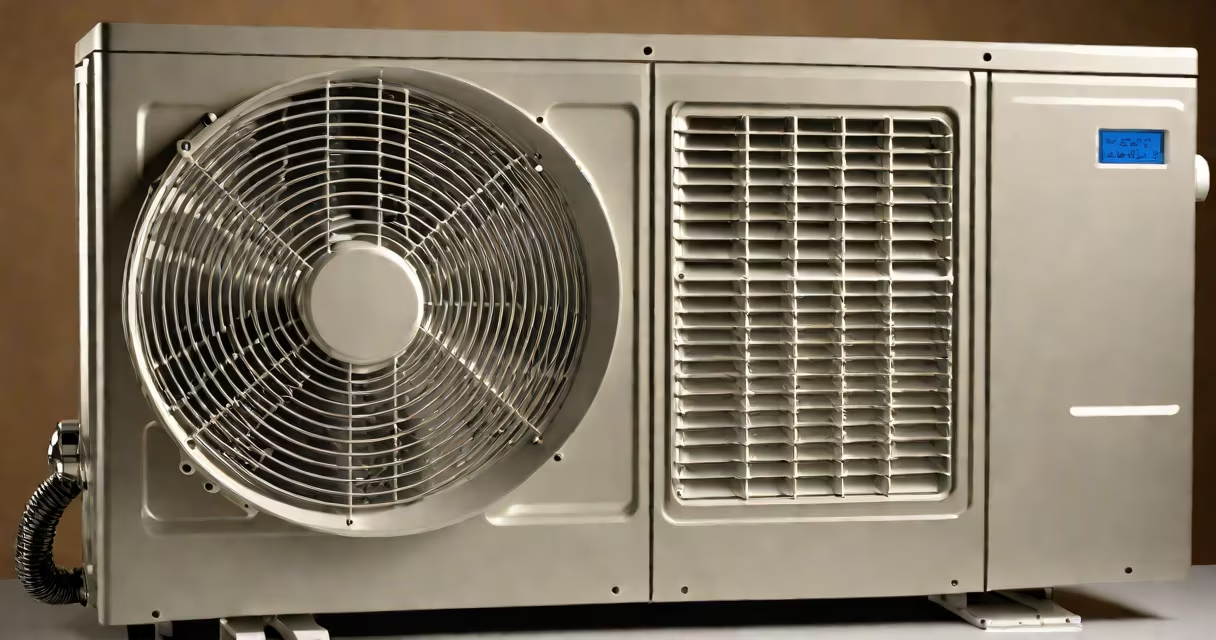
When your central air system blows warm air instead of cool, it indicates a breakdown in the cooling process-commonly caused by incorrect thermostat settings, low refrigerant levels, clogged air filters, or compressor failure. The issue typically arises during peak summer heat and disrupts indoor comfort.
Central air conditioning cools homes by circulating cold refrigerant through indoor coils. As warm indoor air passes over these chilled coils, heat transfers out and the air exits cooler. If any part of this cycle fails, the output becomes warm or lukewarm air.
Most cases stem from simple fixes-like adjusting the thermostat mode or replacing a filter-but persistent warm air suggests deeper mechanical problems requiring professional attention. Ignoring the symptom risks compressor damage and higher energy bills.
A central air system uses a refrigeration cycle driven by a compressor, condenser coil, expansion valve, and evaporator coil. The process begins when the thermostat signals the system to cool. The compressor pressurizes refrigerant gas, turning it into hot vapor. This vapor flows to the outdoor condenser coil, where it releases heat and condenses into liquid.
The liquid refrigerant then moves through an expansion valve, which reduces pressure and temperature. It enters the indoor evaporator coil, absorbing heat from the air blown over it by the blower fan. The cooled air circulates through ducts and returns to the room. The refrigerant then cycles back to the compressor.
If any component fails-such as a blocked condenser coil or a leaky refrigerant line-the system cannot absorb heat effectively. The result: warm air exits vents despite the AC running.
Several issues can trigger warm air from central air systems. The most frequent are:
For example, a homeowner in Phoenix reported their central air blew warm air after a 3-day heatwave. The unit had run continuously, but the filter hadn't been changed in 110 days. After replacing the filter, cooling returned within 20 minutes. The system was otherwise functional.
Many assume warm air means the AC is broken or needs replacement. That's rarely true. A system can still function with minor faults. For instance, a thermostat set to "fan on" may appear to fail because it blows air constantly-but the air is not cooled.
Another myth: "Central air uses gas." It does not. Central air conditioning relies on electricity to power the compressor and blower. Gas furnaces handle heating; they're separate from cooling. Confusing the two leads to unnecessary repairs.
Also, warm air isn't always a sign of failure. During startup, especially after long periods of inactivity, the system may blow warm air briefly as it stabilizes. This lasts 3-5 minutes and is normal.
Start with the simplest checks before calling a technician. Follow this sequence:
If these steps don't resolve the issue, contact a licensed HVAC technician. Refrigerant handling requires EPA certification. Attempting to recharge refrigerant without proper training risks environmental harm and equipment damage.
For example, a technician in Atlanta diagnosed a leaking refrigerant line in a 2015 model system. The system had lost 30% of its charge over six months. After sealing the leak and refilling, cooling returned to normal. The fix cost $620-less than half the price of a new unit.
Failures fall into three categories: electrical, mechanical, and airflow-related. Each has distinct symptoms.
| Type | Common Signs | Typical Fix |
|---|---|---|
| Airflow issues | Warm air from vents, frozen evaporator coil, uneven cooling | Replace filter, clean blower wheel, check duct integrity |
| Refrigerant problems | Weak cooling, hissing noise, ice on refrigerant lines | Locate and repair leak, recharge refrigerant (by licensed pro) |
| Electrical/motor failures | Noisy operation, system won't start, tripping breakers | Test capacitor, inspect wiring, replace faulty motor |
One key distinction: a frozen evaporator coil doesn't mean the system is cooling-it means it's failing to transfer heat. When the coil freezes, airflow drops, and warm air bypasses cooling entirely.
I once observed a homeowner in Denver who believed their central air wasn't working. The unit ran, but air was warm. Upon inspection, the evaporator coil was completely frosted. The cause? A clogged filter restricting airflow. After replacing the filter, the coil thawed in 12 minutes and cooling resumed.
Call a licensed HVAC technician if:
Attempting to service refrigerant lines or compressors without certification violates federal regulations under the Clean Air Act. Unauthorized refrigerant handling can result in fines and environmental penalties.
When your central air blows warm air, act quickly. Most issues are solvable at low cost. But delaying repairs increases energy waste and shortens equipment life. Identify the root cause early to restore comfort and avoid bigger expenses later.