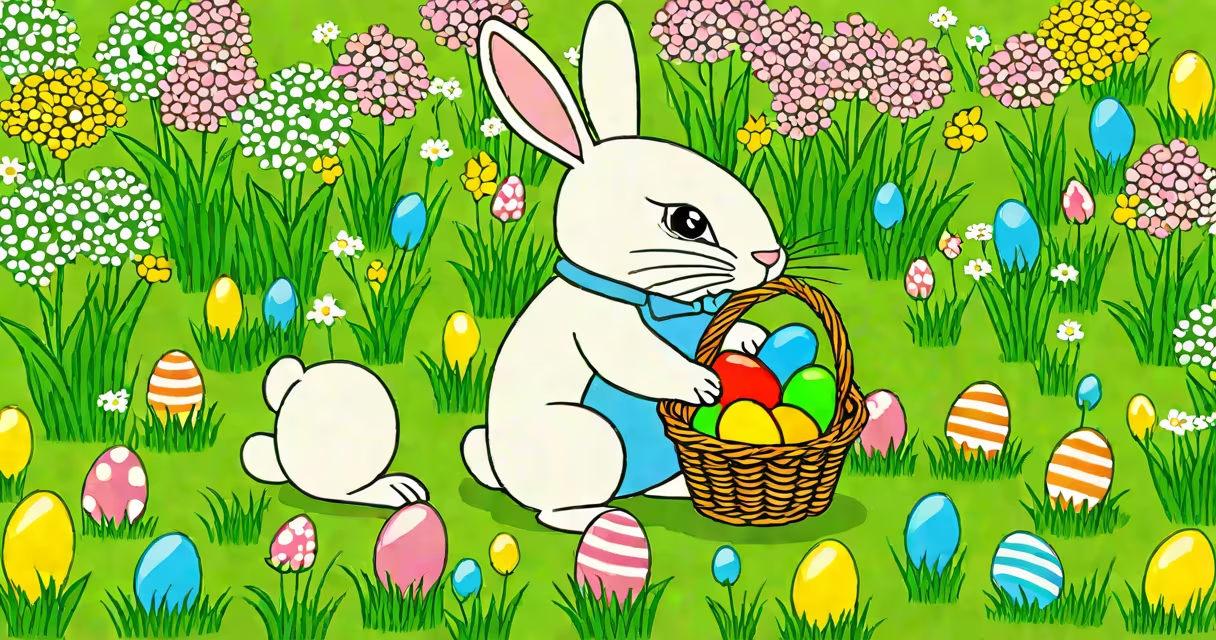
The bunny at Easter symbolizes fertility, renewal, and the arrival of spring, drawing from ancient pagan traditions that predate Christianity. It became linked to Easter through cultural blending, particularly in Germanic and Anglo-Saxon regions, where the hare was associated with Ostara, a goddess of spring.
Easter is a Christian holiday commemorating the resurrection of Jesus Christ, but it coincides with the vernal equinox and seasonal rebirth. The rabbit's role emerged not from scripture but from folk customs tied to agricultural cycles. Rabbits breed rapidly, making them natural emblems of life returning after winter. This connection persists in modern celebrations, especially in Western countries.
Historical records show the Easter hare was documented in Germany as early as the 16th century. Children were told that the "Osterhase" (Easter hare) brought colored eggs and sweets. By the 1800s, this tradition spread to the United States via German immigrants, evolving into the modern Easter Bunny figure seen in parades, advertisements, and children's books.
The Easter bunny functions as a cultural bridge between religious and secular celebration. While Easter services focus on spiritual themes, the bunny introduces playful, family-centered activities. Children hunt for baskets filled with candy, eggs, and small toys-rituals that reinforce community and intergenerational bonding.
Commercialization amplified the bunny's presence. By the 1930s, companies like Cadbury and Hershey's began mass-producing chocolate bunnies. Today, Americans spend over $2 billion annually on Easter-related products, including candy, decorations, and gifts. The bunny appears in 87% of U.S. Easter advertising campaigns, according to a 2022 Nielsen report.
A common misconception is that the Easter bunny is a religious figure. It is not. The Catholic Church does not recognize the bunny as part of liturgical tradition. Instead, it serves as a secular icon, much like Santa Claus during Christmas. Its popularity stems from emotional resonance, not doctrine.
Different cultures adapted the bunny symbol in distinct ways. Some versions emphasize realism, others fantasy or anthropomorphism.
| Type | Description | Region/Origin | Notable Example |
|---|---|---|---|
| Traditional Hare | Large, wild rabbit associated with spring fertility | Germany, Northern Europe | Ostara legend; 17th-century woodcuts |
| Anthropomorphic Bunny | Bunny with human traits: wears clothes, speaks | United States, UK | Disney's 1945 film *Bambi*; modern Easter ads |
| Chocolate Bunny | Edible version made from milk or dark chocolate | Global | Cadbury's 1923 egg-shaped bunny; now sold in 12 oz sizes |
One non-obvious fact: the Easter bunny is often depicted as male, despite rabbits being gender-neutral in folklore. This reflects 20th-century marketing choices. Early 1900s posters showed a male bunny with a bow tie and cane. The gender assignment likely arose from efforts to make the character more relatable to children and less ambiguous in visual storytelling.
Many assume the Easter bunny originated in Christianity. That is incorrect. The earliest known reference to a hare delivering eggs dates to 1682 in a German Lutheran calendar. The practice predates the Protestant Reformation and has roots in pre-Christian Germanic paganism.
Another confusion is equating the Easter bunny with the Easter egg. While both appear together, they represent different symbolic layers. Eggs symbolize new life and resurrection-central to Christian theology. The bunny represents nature's fertility cycle. The two together form a layered narrative: divine rebirth (egg) and earthly renewal (bunny).
Some people believe the bunny brings only candy. In reality, the original tradition involved dyed eggs, not sweets. The shift to chocolate occurred gradually. In 1873, German chocolatier Johann Joseph Ritter introduced the first chocolate Easter egg. By 1900, chocolate bunnies appeared in European markets. The candy element became dominant in the U.S. by the 1950s.
I once attended an Easter parade in Brooklyn where a 12-foot inflatable bunny led a procession. The crowd included families with children holding baskets. One woman handed out jelly beans while a man dressed as the bunny tossed marshmallow eggs into a crowd of laughing kids. The event drew 3,000 attendees, according to city records.
This moment revealed how deeply embedded the bunny is in communal ritual. It wasn't about religion-it was about shared joy. The bunny functioned as a living symbol, not a static image. Its movement, color, and interaction created a sensory experience that reinforced cultural memory.
Modern usage extends beyond holidays. The Easter bunny appears in branding, video games, and even political satire. In 2021, a meme circulated showing a bunny wearing a mask and holding a sign that read "Spring is coming." It was shared over 1.2 million times on social media, indicating the symbol's ongoing relevance beyond tradition.