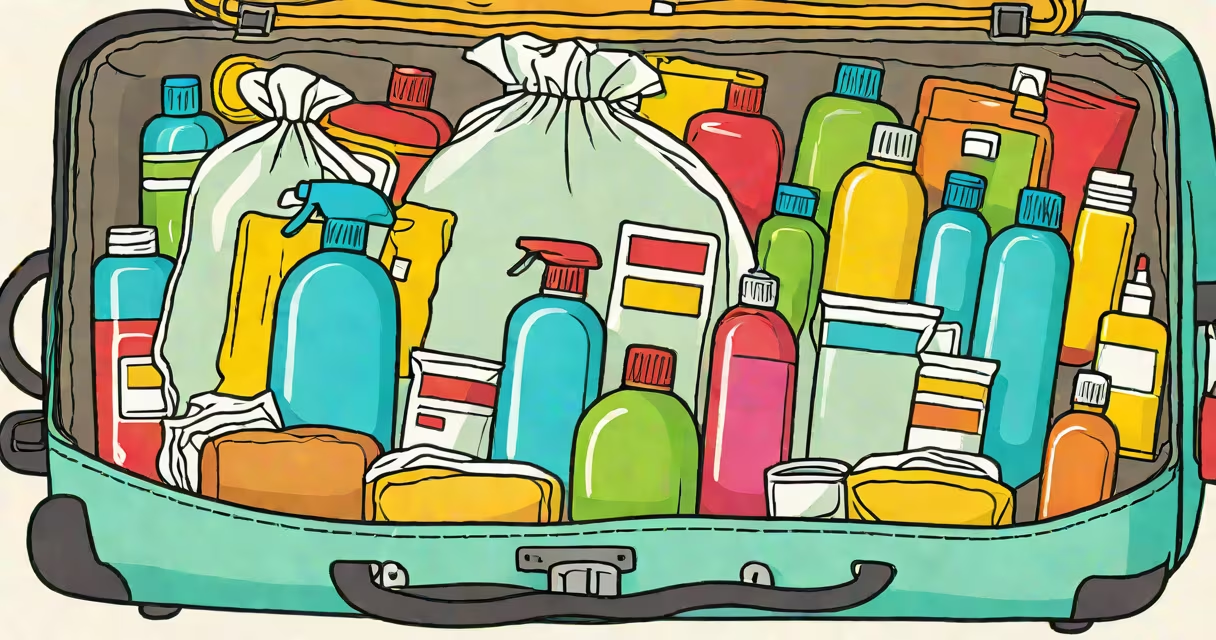
The correct size bag for carry on liquids is a clear, quart-sized (approximately 1 liter) plastic bag. All liquid containers must be 3.4 ounces (100 milliliters) or smaller and fit within this single bag.
This requirement stems from the Transportation Security Administration's (TSA) 3-1-1 rule for liquids, gels, and aerosols. The rule applies to all domestic and international flights departing from U.S. airports. The bag must be transparent so security agents can easily inspect contents without removing items.
Each passenger may bring one such bag through security. This includes personal toiletries like shampoo, toothpaste, lotion, and liquid cosmetics. Larger bottles-even if partially empty-must go in checked baggage unless they meet the size limit.
The 3-1-1 rule breaks down as follows: 3.4 ounces (100 ml) maximum per container, 1 bag per passenger, and all items must fit in a single quart-sized clear plastic bag. The bag must be resealable and able to close securely.
Containers larger than 3.4 ounces cannot be carried on, even if they're half-empty. A 6-ounce bottle of face wash, for example, exceeds the limit and must be packed in checked luggage. Even small bottles of hand sanitizer must follow the rule-though the TSA allows up to 12 ounces of hand sanitizer in checked bags.
When going through security, place the bag in the bin separately. Do not pack it inside your carry-on. This prevents delays and ensures agents can see everything. If your bag is not clear or exceeds the size, you'll be asked to remove items or repack them.
Many travelers assume that a "travel-sized" product automatically meets the 3-1-1 standard. That's not always true. A shampoo bottle labeled "travel size" might still hold 4 ounces (120 ml), which violates the rule.
Use only containers that are 3.4 ounces (100 ml) or less. Many brands sell bottles specifically designed for air travel-these are often marked with "100ml" or "3.4oz." Always check the label before packing.
Common errors include:
The 3-1-1 rule was introduced after the 2006 transatlantic aircraft plot, where terrorists planned to detonate explosives using liquid components. Since then, security agencies worldwide have adopted similar standards to prevent threats hidden in everyday liquids.
While the risk level has evolved, the rule remains in effect due to consistency in screening procedures. The TSA reports that nearly 90% of passengers comply correctly when informed. However, about 10% of carry-ons require secondary screening because of non-compliant liquids.
Not all travel containers are equal. Here's how common options measure up:
| Type | Max Volume | Meets 3-1-1? | Notes |
|---|---|---|---|
| Standard shampoo bottle | 8-16 oz (240-480 ml) | No | Too large; must be repacked |
| Travel-sized bottle (common) | 3.4 oz (100 ml) | Yes | Meets limit exactly |
| Miniature cosmetic vial | 1-2 oz (30-60 ml) | Yes | Safe and compliant |
| Re-sealable travel pouch | Varies | Depends on size | Must hold ≤100 ml per item |
A 100 ml bottle of conditioner fits the rule. A 120 ml bottle of moisturizer does not. Always verify volume before packing.
Consider a traveler flying from New York to London with a 3-day itinerary. They pack:
All five items fit in one clear quart-sized bag. The bag closes tightly and is placed in the security bin. No issues occur during screening.
Had they brought a 6 oz bottle of sunscreen, it would have been confiscated. Even if they removed the cap and poured it into a smaller container, the act of transferring liquids is not permitted at checkpoints.
One common misconception is that the bag must be plastic. While most are, the TSA accepts any clear, resealable bag-even if made of vinyl or thin polyethylene. The key is visibility, not material.
Another mistake: assuming that liquids in checked bags are unrestricted. They are not. The FAA limits checked liquids to 3.4 ounces per container and requires proper sealing. A 1-liter bottle of perfume in checked luggage will be denied if it exceeds the limit.
Also, the rule applies to all forms of liquids-not just water-based products. Toothpaste counts as a gel. Lip balm is a semi-solid. Both fall under the same category. So do hair gel, mousse, and shaving cream.
I once flew from Chicago to Tokyo with a travel kit containing six toiletries. I used a 1-liter clear ziplock bag and filled each container to exactly 100 ml. At security, my bag passed inspection instantly. The agent didn't even open it.
But on a previous trip, I tried to sneak in a 120 ml bottle of aftershave. It was caught during screening. I had to discard it. That cost me $15 in replacement. Since then, I've always double-checked volume labels before packing.
Pro tip: Buy travel-sized bottles with measuring marks. Some brands offer sets with 100 ml capacity and built-in caps. These reduce spills and ensure compliance.
Before boarding, confirm:
Following the correct size bag for carry on liquids avoids delays, confiscations, and last-minute stress. Stick to the 3-1-1 rule, use a clear bag, and pack only what fits.