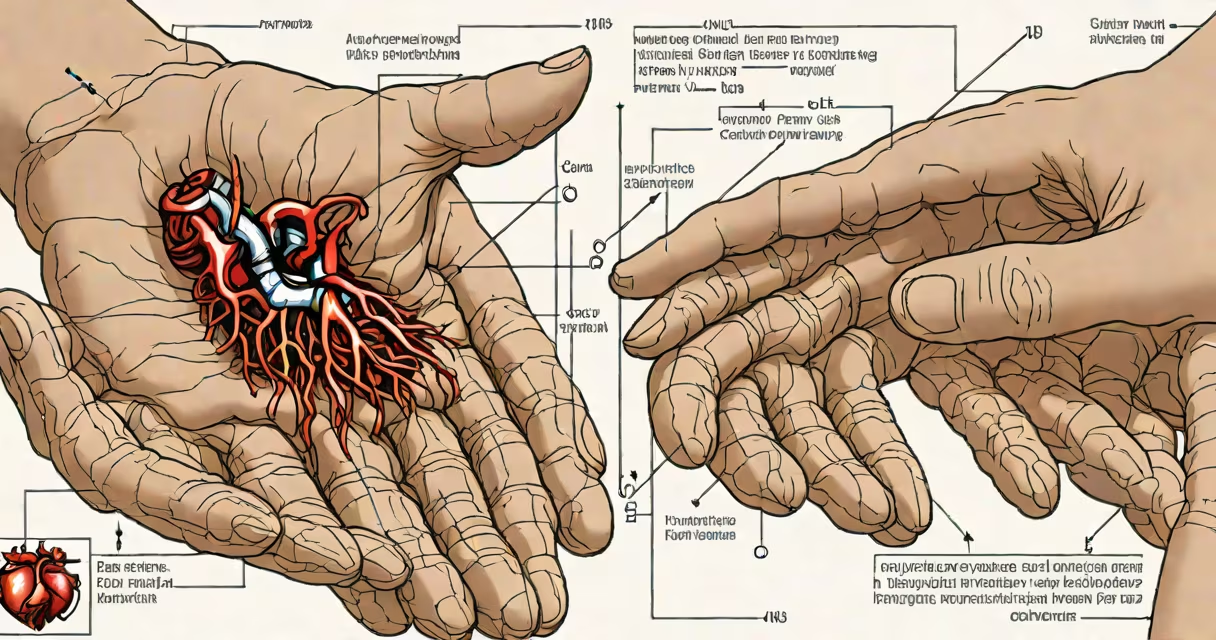
Hand swelling in heart failure occurs when the heart cannot pump effectively, causing fluid to accumulate in the extremities. This symptom often indicates worsening cardiac function and requires prompt medical evaluation.
Heart failure weakens the heart's ability to circulate blood efficiently. When the left side fails, pressure builds in the lungs. When the right side fails, pressure backs up into the veins returning blood to the heart. This elevated venous pressure forces fluid out of capillaries and into tissues, especially in dependent areas like the hands and feet.
Swelling typically begins in the feet and ankles, progressing upward. Hand swelling appears later, often during prolonged sitting or standing. It may be subtle at first-tighter rings, dimpled skin when pressed (pitting edema)-but worsens with inactivity or high salt intake.
The process starts with reduced cardiac output. As the heart pumps less forcefully, blood pools in the systemic circulation. Veins dilate under increased pressure, and fluid leaks into surrounding tissues. The kidneys respond by retaining sodium and water to maintain blood volume, further increasing fluid load.
Fluid accumulation follows gravity. In upright positions, it settles in the lower limbs. In reclined or seated positions, it redistributes to the upper body. Hands swell when fluid shifts into the arms and wrists, particularly during evening hours or after long periods of inactivity.
A 2021 study published in Circulation: Heart Failure found that 68% of patients with New York Heart Association (NYHA) Class III or IV heart failure reported peripheral edema, including hand swelling, as a key symptom of disease progression.
Not all swelling is due to heart failure. Differentiating causes is essential. The table below outlines common types of edema and their distinguishing features.
| Type | Origin | Common Locations | Distinguishing Features |
|---|---|---|---|
| Cardiac edema | Right-sided heart failure | Feet, legs, hands, sacrum | Pitting, symmetric, worsens with activity, improves with elevation |
| Nephrotic edema | Kidney disease | Eyes, face, hands | Non-pitting, often morning swelling, associated with proteinuria |
| Medication-induced | Calcium channel blockers, NSAIDs | Hands, feet, face | Onset within weeks of starting drug, resolves after discontinuation |
| Lymphedema | Lymphatic system damage | One limb, often arm after surgery | Non-pitting, firm, chronic, usually unilateral |
Cardiac edema is typically bilateral and pitting. Pressing a finger into the swollen area leaves a temporary dent. Non-pitting swelling suggests kidney or lymphatic issues. A single swollen hand may indicate localized injury or infection, not heart failure.
High-sodium diets increase fluid retention. One study showed that reducing daily sodium intake to less than 2,000 mg decreased leg and hand swelling in 72% of heart failure patients over six weeks.
Hand swelling alone doesn't confirm heart failure. But when combined with other signs-shortness of breath, fatigue, weight gain, or nighttime cough-it raises concern. These symptoms suggest decompensation, meaning the heart can no longer compensate for reduced function.
For example, a 64-year-old man with known systolic heart failure developed hand swelling after eating a restaurant meal high in salt. He noticed his wedding ring felt tight, and his fingers were stiff. Over two days, he gained 3.5 pounds. His primary care provider ordered a BNP test, which returned 850 pg/mL-well above the threshold of 100 pg/mL indicating significant cardiac strain.
Hand swelling is not a minor issue. It reflects ongoing fluid overload, which increases hospitalization risk. According to the American Heart Association, patients with new or worsening edema have a 3.2-fold higher risk of hospital admission within 90 days compared to those without.
Many assume hand swelling is always due to heart failure. That's incorrect. Arthritis, carpal tunnel syndrome, or even pregnancy can cause similar swelling. But heart-related swelling tends to appear symmetrically and progress slowly over days.
Another misconception: swelling only happens in the legs. In reality, fluid redistribution affects the entire body. A 2020 review in JAMA Cardiology noted that 41% of patients with advanced heart failure report hand swelling as a presenting symptom, often overlooked because it's less dramatic than shortness of breath.
Hand swelling does not always correlate with ejection fraction. Some patients with preserved ejection fraction (HFpEF) develop severe edema despite normal pumping strength. This form of heart failure involves stiff ventricles that don't relax properly, leading to elevated filling pressures and fluid leakage.
I once observed a patient with HFpEF who had persistent hand swelling despite stable medications. An echocardiogram showed normal ejection fraction (55%), but elevated left atrial pressure. After adding spironolactone, swelling improved -proof that fluid retention can occur even without low pump function.
If hand swelling develops or worsens, seek medical attention. Do not adjust diuretics without guidance. Self-treatment risks electrolyte imbalance or kidney strain.
Management includes sodium restriction (<2,000 mg/day), daily weight tracking, and regular follow-up. Patients should monitor for sudden weight gain (>2 lbs in 24 hours) or new swelling, as these indicate fluid accumulation.
Hand swelling in heart failure is a visible sign of internal stress. It's not cosmetic. It's physiological. Addressing it early prevents hospitalization and improves survival.