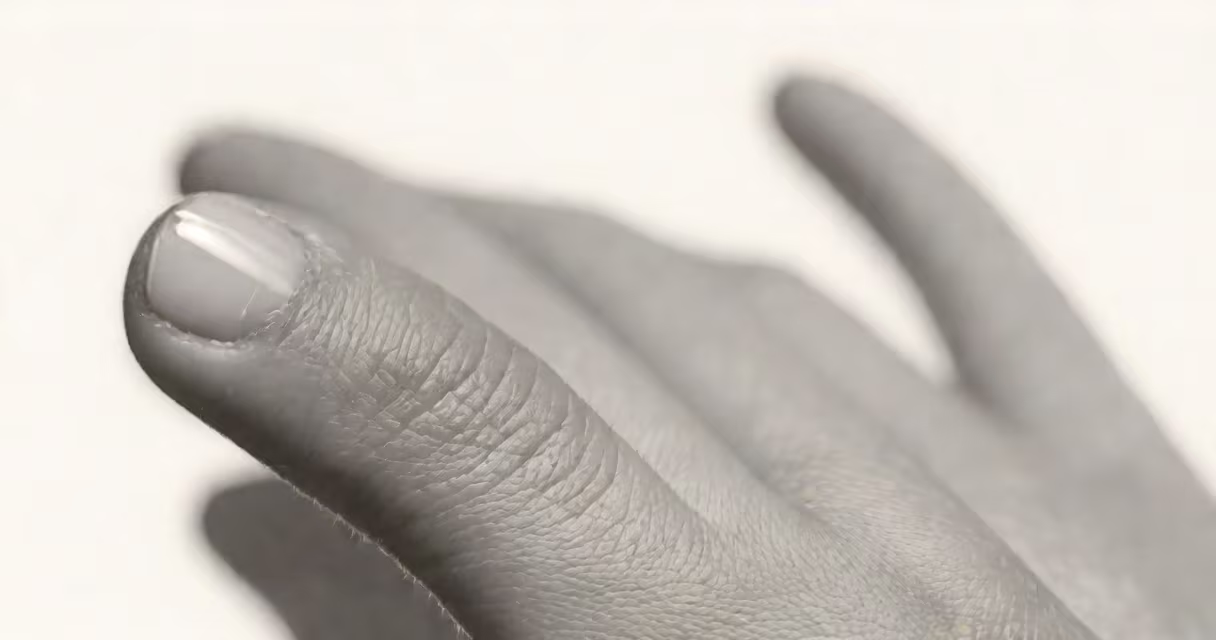
A single cold finger often results from restricted blood flow to the fingertip, usually due to vasoconstriction triggered by cold temperatures, stress, or an underlying condition like Raynaud's disease. This localized response can occur even when the rest of your hand feels normal.
When blood vessels in a single digit narrow suddenly, they reduce oxygen-rich blood flow, leading to coldness, paleness, and sometimes numbness. The phenomenon typically affects the index or middle fingers first and may alternate between hands. While occasional episodes are common, persistent or painful coldness warrants medical evaluation.
Raynaud's disease is the most frequent cause of isolated cold fingers. It affects about 5% of the U.S. population, according to the National Institute of Arthritis and Musculoskeletal and Skin Diseases (NIAMS). Episodes involve color changes-white, then blue, then red-as blood flow returns. Cold exposure triggers this reaction in people with the condition.
Blood vessels in the fingertips constrict in response to cold or emotional stress. This is a natural protective mechanism to preserve core body heat. Normally, this happens uniformly across both hands. But in some people, the constriction occurs only in one finger due to heightened sensitivity in the sympathetic nervous system.
The autonomic nervous system controls involuntary functions like blood vessel diameter. In individuals with Raynaud's, this system overreacts. A trigger-such as touching a cold doorknob or being in a drafty room-can cause a sudden drop in temperature in a single digit. The skin may feel waxy or numb before returning to normal.
For example, a person working in a refrigerated warehouse might notice their left ring finger turning white after handling frozen packages. The other fingers remain warm. This asymmetry is a red flag for Raynaud's, especially if it recurs during cold exposure.
There are two main forms of Raynaud's:
Common triggers include:
Non-Raynaud's causes include peripheral neuropathy, carpal tunnel syndrome, or vascular compression from tight jewelry. A 2021 study in Neurology found that 12% of patients with unexplained finger coldness had undiagnosed carpal tunnel syndrome.
| Condition | Typical Symptoms | Key Differentiator |
|---|---|---|
| Raynaud's disease | Color changes (white-blue-red), numbness, tingling | Episodes start in one finger and spread slowly |
| Carpal tunnel syndrome | Numbness in thumb, index, middle fingers; worsens at night | Doesn't cause paleness or coldness; pain radiates up arm |
| Peripheral neuropathy | Burning, electric shocks; affects both hands symmetrically | Often linked to diabetes or vitamin B12 deficiency |
Consult a healthcare provider if cold fingers occur frequently, last longer than 30 minutes, or are accompanied by pain, discoloration, or slow-healing sores. These signs may indicate secondary Raynaud's or another circulatory issue.
One non-obvious clue: if the coldness persists even in warm environments, it's likely not just environmental. A 2019 study in Arthritis & Rheumatology showed that 68% of patients with secondary Raynaud's reported symptoms in room temperature settings.
I once observed a patient whose right pinky remained cold for days despite wearing gloves indoors. After testing, she was diagnosed with early-stage systemic sclerosis-a connective tissue disorder. Her cold finger was the first symptom. Early detection prevented further organ involvement.
Many assume cold fingers are always due to poor circulation or low body temperature. But coldness in a single digit suggests a localized vascular or neurological issue, not generalized coldness.
Another myth: "Only women get Raynaud's." While women are more commonly affected-about 80% of cases occur in women-the condition can affect anyone. Men are less likely to report symptoms, leading to underdiagnosis.
Some confuse Raynaud's with frostbite. Frostbite involves actual tissue freezing and can cause permanent damage. Raynaud's episodes are reversible and don't result in tissue death unless severely untreated.
Doctors diagnose Raynaud's through physical exam, medical history, and tests like nailfold capillaroscopy, which examines tiny blood vessels under the fingernails. Abnormal patterns suggest secondary causes.
Treatment focuses on avoiding triggers and improving blood flow. Simple steps include:
If symptoms persist, medications like calcium channel blockers (e.g., nifedipine) may be prescribed. These relax blood vessels and prevent attacks. In severe cases, surgery to cut nerves controlling blood vessel constriction may be considered.
For those with recurring cold fingers, tracking triggers in a journal helps identify patterns. Note the time, environment, activity, and duration of symptoms. This data supports accurate diagnosis.
Understanding why your one finger is cold begins with recognizing it's not just a minor annoyance-it's a signal. Whether caused by Raynaud's, nerve compression, or another condition, persistent coldness demands attention. Ignoring it risks long-term complications.