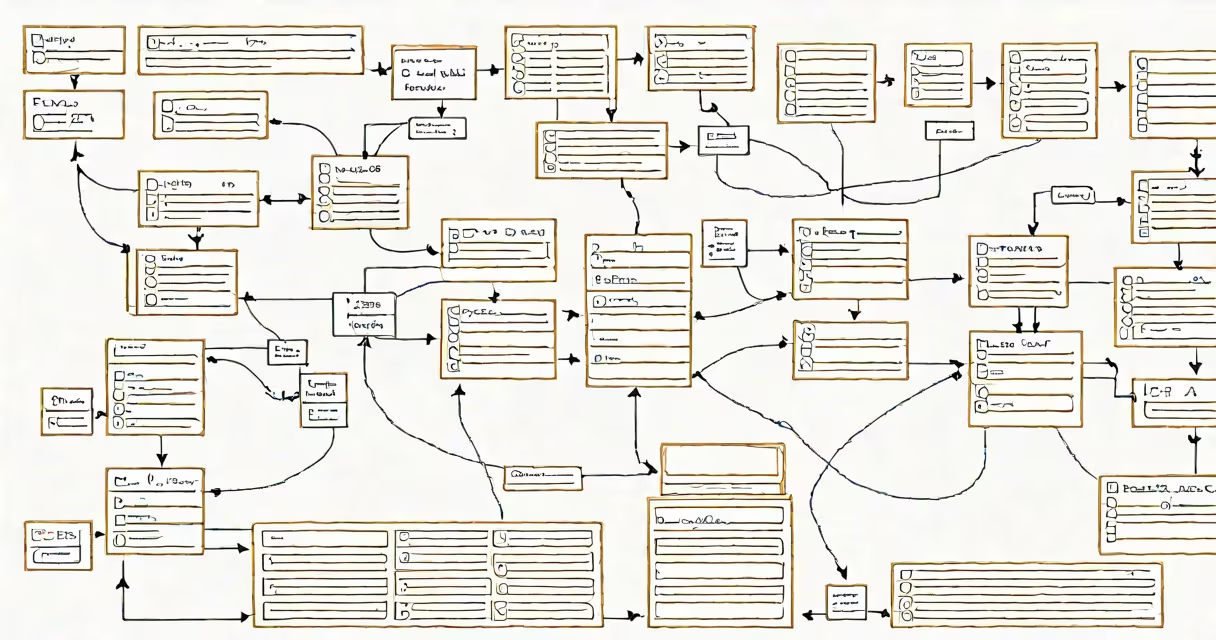
A database management system (DBMS) is software that enables users to define, create, maintain, and control access to databases. It acts as an intermediary between applications and the physical database, ensuring data is stored securely, retrieved quickly, and remains consistent across multiple users.
At its core, a DBMS manages structured data-organized in tables, rows, and columns-using a formal language like SQL. It handles tasks such as querying, updating, backing up, and enforcing constraints. Without a DBMS, managing large volumes of data would require custom code for every operation, leading to errors, inefficiency, and poor scalability.
Modern DBMSs support concurrent access, meaning hundreds of users can read and write data simultaneously without conflicts. They also enforce security policies, audit logs, and transaction rollbacks to prevent data loss during failures. These capabilities make DBMS essential for banking systems, e-commerce platforms, healthcare records, and enterprise resource planning tools.
When an application requests data, the DBMS translates the request into low-level operations on disk storage. This involves parsing queries, optimizing execution plans, accessing indexed data, and returning results. The system uses memory buffers and caching to speed up frequent operations.
Data is stored in files managed by the DBMS's storage engine. These files are organized using structures like B-trees, hash tables, or columnar formats depending on performance needs. For example, PostgreSQL uses B-trees for indexing primary keys, while Apache Cassandra uses partitioned data models optimized for high write throughput.
Each DBMS includes a query processor, transaction manager, recovery manager, and catalog manager. The catalog stores metadata-the schema, user permissions, indexes, and table definitions. When you run SELECT * FROM customers WHERE region = 'West', the DBMS consults the catalog to locate the correct table, applies filters, and returns matching rows.
DBMSs differ based on data model, architecture, and intended workload. The most common types are relational, document, key-value, and graph databases.
| Type | Model | Use Case | Example |
|---|---|---|---|
| Relational | Tables with rows and columns | Financial systems, inventory tracking | PostgreSQL, Oracle, MySQL |
| Document | JSON-like documents | User profiles, content management | MongoDB, Couchbase |
| Key-Value | Simple key-to-value mappings | Caching, session storage | Redis, DynamoDB |
| Graph | Nodes and edges | Recommendation engines, fraud detection | Neo4j, Amazon Neptune |
Relational DBMSs dominate enterprise environments due to ACID compliance-Atomicity, Consistency, Isolation, Durability-which guarantees reliable transactions even under failure. A financial transfer from Account A to B must either complete fully or fail entirely. If the system crashes midway, the DBMS rolls back changes to preserve consistency.
Non-relational systems trade strict consistency for scalability and flexibility. MongoDB allows nested fields and changing schemas, making it ideal for evolving data structures. However, it doesn't enforce referential integrity like SQL databases do.
Many people confuse a DBMS with a database itself. A database is the actual collection of data-like a library's bookshelves. A DBMS is the librarian who organizes, checks out, and tracks books. You cannot interact directly with raw database files; the DBMS provides the interface.
Another error is assuming all DBMSs are equal. Performance varies widely. A single-node MySQL instance may handle 10,000 queries per second under light load. But scaling to millions requires sharding, replication, and distributed architectures-features not available in basic versions.
There's also confusion around "SQL" versus "DBMS." SQL is a language used to communicate with many DBMSs, including Oracle, Microsoft SQL Server, and SQLite. But not all DBMSs use SQL. Firebase uses a proprietary API, and Neo4j uses Cypher-a domain-specific language for graphs.
Consider an online store processing a purchase. The customer adds a product to their cart. The application sends a request to the DBMS to check stock levels.
The DBMS receives the query: UPDATE products SET quantity = quantity - 1 WHERE id = 1234;. It locks the row, verifies the current stock is greater than zero, decrements the count, and commits the change. If another user tries to buy the same item at the same time, the DBMS ensures only one transaction succeeds through locking mechanisms.
After confirmation, the system creates a new order record in the orders table. All steps happen within a single transaction. If any step fails-say, payment processing fails-the DBMS rolls back all changes. No partial orders exist. This prevents over-selling and maintains data accuracy.
This entire flow happens in under 200 milliseconds on a well-tuned system. The DBMS handles concurrency, logging, and rollback automatically. Developers don't need to write code for every edge case-they rely on the DBMS's built-in reliability features.
I once helped migrate a small business's sales records from Excel spreadsheets to a PostgreSQL-based DBMS. The original setup had duplicate entries, inconsistent formatting, and no backup strategy. After importing data into PostgreSQL, we enforced constraints: unique IDs, required fields, and foreign key references.
Within days, reporting became faster. Queries that took minutes in Excel now returned results in seconds. We added triggers to log changes and automated backups. The team reported fewer errors and higher confidence in their data. The migration wasn't about replacing tools-it was about establishing trust in the data.
According to the Oracle documentation, a DBMS must ensure data integrity, availability, and confidentiality. These principles align with NIST Special Publication 800-53, which outlines federal standards for secure data handling.
Research from MIT's Computer Science and Artificial Intelligence Laboratory confirms that centralized DBMSs reduce data redundancy by up to 70% compared to file-based systems. By centralizing data, organizations eliminate inconsistencies caused by multiple copies and manual updates.
Understanding a database management system is not optional for anyone working with data. Whether building a mobile app, analyzing customer behavior, or managing supply chains, the DBMS is the foundation of reliable information systems.