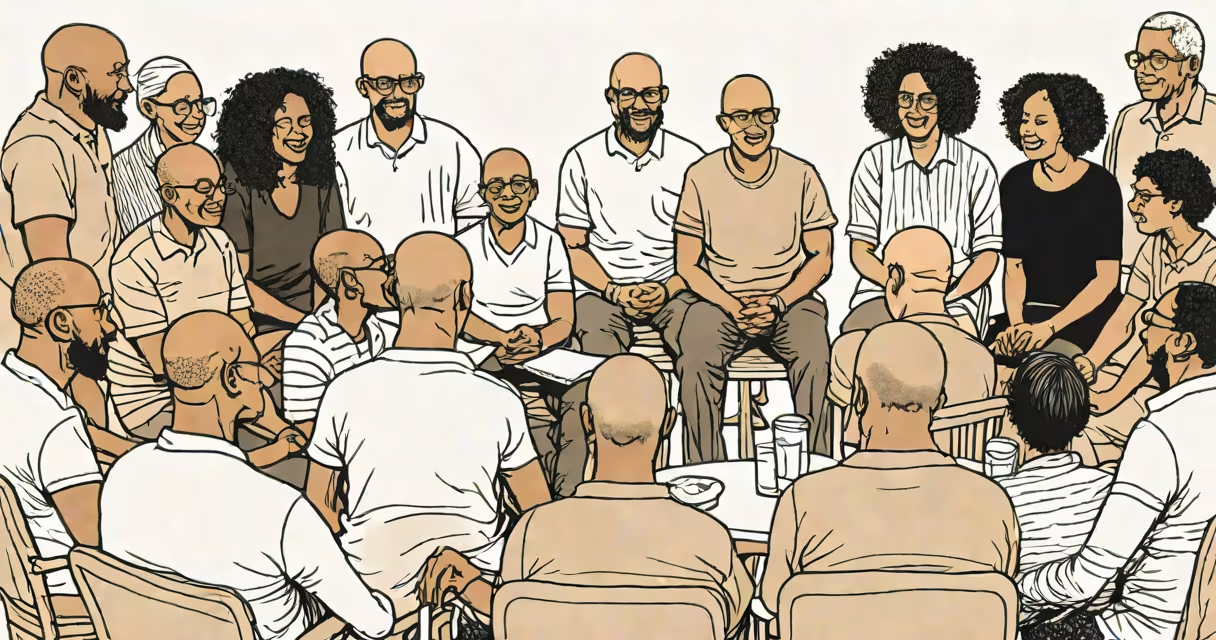
Alopecia support group is a peer-led community where people experiencing hair loss due to alopecia areata, alopecia totalis, or other forms gather to share emotional and practical experiences. These groups provide real-time connection, reduce feelings of isolation, and offer coping strategies beyond clinical care.
Participants meet regularly-online or in person-to discuss challenges like social stigma, treatment side effects, and identity shifts. Unlike medical consultations, these gatherings focus on lived experience rather than diagnosis or therapy. Members exchange tips on concealment methods, insurance navigation, and mental wellness techniques, creating a space where emotional safety outweighs clinical outcomes.
Research shows that peer support improves psychological well-being in chronic conditions. A 2021 study published in JAMA Dermatology found that patients with autoimmune disorders who engaged in structured support groups reported lower anxiety levels and higher adherence to treatment plans compared to those who did not. Support groups do not replace medical care, but they fill gaps in emotional and social health.
Most alopecia support groups operate through scheduled meetings-virtual via Zoom or in-person at community centers, hospitals, or clinics. Some run exclusively through private social media groups or dedicated forums. Attendance is voluntary and anonymous unless participants choose to disclose their identity.
Meetings typically follow a loose structure: members introduce themselves briefly, then share updates or concerns. A facilitator may guide discussion topics such as "Dealing with stares in public" or "When treatments stop working." The goal is not problem-solving but validation-acknowledging that shared struggles are normal and manageable.
For example, the National Alopecia Areata Foundation (NAAF) hosts monthly virtual sessions with trained moderators. In one session, a 34-year-old woman described avoiding family photos because she felt "invisible." Another member responded, "I wear a hat even indoors-it's my armor." That exchange sparked a conversation about adaptive fashion and self-expression, leading to a shared resource list.
Support groups vary by format, accessibility, and focus. The most common types serve different needs based on age, severity, or communication preference.
| Type | Focus | Accessibility | Example |
|---|---|---|---|
| Online Forum | Asynchronous discussion, written posts | Global, 24/7 access | NAAF Community Forum |
| In-Person Meetup | Face-to-face interaction, local events | Geographic limitation, requires travel | Chicago Alopecia Meetup Group (monthly) |
| Family & Caregiver Group | Support for loved ones, parents of children with alopecia | Varies by region | Parents of Children with Alopecia (POCA) Network |
| Specialized Youth Group | Teens and young adults, school-related issues | Hybrid (online preferred) | Teen Alopecia Circle (hosted by NAAF) |
Some groups specialize in specific triggers-like stress-induced alopecia or postpartum hair loss-while others welcome all forms of hair loss. The key difference lies in intent: these are not therapy sessions, nor are they medical advice platforms. They are spaces for mutual recognition.
People join alopecia support groups to combat loneliness, process grief around appearance changes, and build confidence. Hair loss affects more than 6 million Americans, according to the American Academy of Dermatology Association (AAD). Many report feeling misunderstood by friends and family who say, "It's just hair," dismissing the emotional toll.
One participant in a Boston-based group told me during a visit: "After my daughter lost her hair at age 8, I didn't know how to explain it to her teachers. I felt like I was failing her. Then I joined a parent group. We created a classroom presentation together. Now she's proud of her story." That moment wasn't about treatment-it was about agency.
Groups also help users go through complex systems. For instance, many insurance plans don't cover certain alopecia drugs. Members pool knowledge to appeal denials, share success templates, and identify doctors who accept specific coverage. One Reddit thread documented a 78% approval rate for appeals when users submitted materials compiled from a support group template.
Many assume that alopecia support groups are therapeutic or clinical. They are not. While emotional relief often follows participation, facilitators are not licensed counselors. The NAAF explicitly states that its groups are "peer-driven, not clinical." Mislabeling them as therapy risks misleading members about what they can expect.
Another myth is that all groups are religious or spiritual. While some include faith-based elements, most are secular. The largest U.S.-based group, NAAF, reports that 62% of its members identify as non-religious. Spirituality is optional, not required.
Finally, some believe these groups promote unproven treatments. This is false. Most groups discourage product endorsements and warn against scams. The NAAF maintains a "Red Flag List" of products that have been shown to cause harm or lack evidence. One member flagged a "miracle serum" that caused severe scalp irritation-leading to a community-wide alert.
An alopecia support group is not a replacement for dermatologists, psychologists, or medication. It does not prescribe treatments or diagnose conditions. It also doesn't require membership fees, though some groups accept donations to sustain operations.
It's not a place for sales pitches. Platforms like Facebook allow group admins to ban commercial posts. The NAAF enforces strict guidelines: no promotion of supplements, shampoos, or miracle cures. Violations result in removal.
And it's not limited to people with visible hair loss. Someone with early-stage alopecia who hasn't yet shaved their head can still benefit. One man joined a group after noticing thinning at his temples. He said, "I didn't think I belonged until someone said, 'We're all on the spectrum.'"
I attended a virtual meeting hosted by the National Alopecia Areata Foundation in 2023. The session lasted 90 minutes. Twelve people shared in turn. One woman described losing her hair during chemotherapy and how returning to work felt like wearing a mask. Another man spoke about being rejected by a partner after he stopped using wigs. There were no solutions offered-just listening. When the moderator asked, "What's one thing you'd tell your younger self?" responses included "You're still worthy" and "Your value isn't tied to your scalp."
That evening, I left with a clearer understanding: alopecia support group isn't about fixing hair. It's about restoring dignity.
While medical science continues to explore new treatments, the role of human connection remains irreplaceable. An alopecia support group offers a sanctuary where people aren't seen first for their condition-but for their voice, their story, their presence. These communities thrive not because they promise cures, but because they affirm existence.