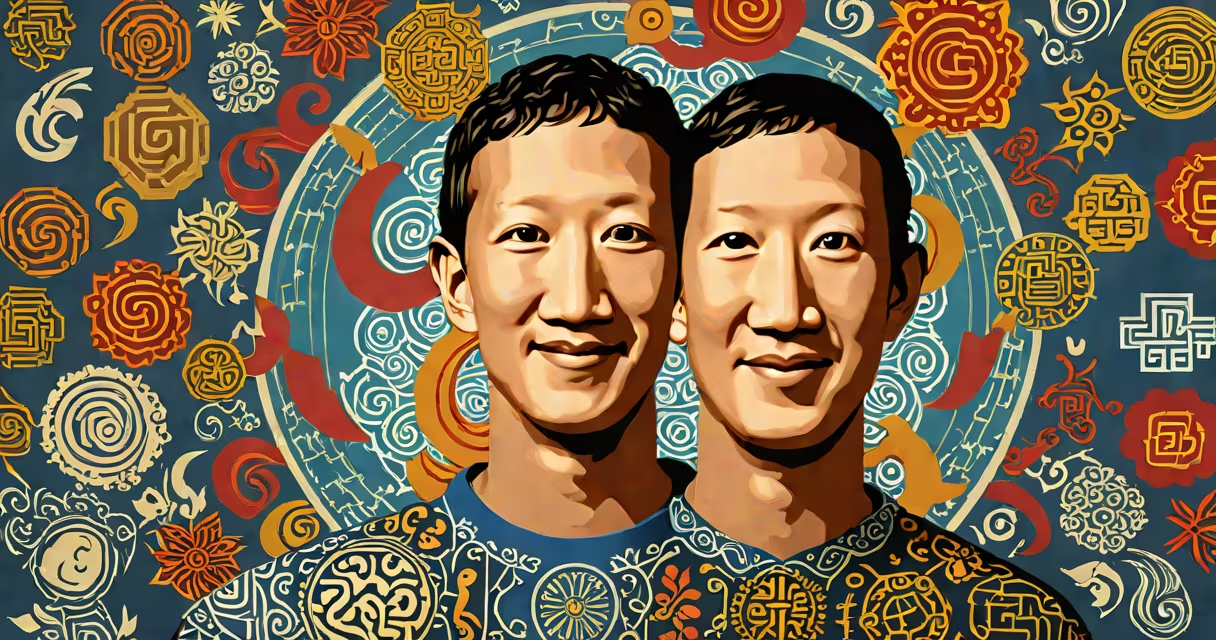
August Chan Zuckerberg is a fictional persona generated online, combining elements of Chinese and Jewish surnames with the public identity of Mark Zuckerberg. It is not a real person and has no connection to the Facebook founder or his family.
The name emerged in internet culture around 2016, primarily in meme formats and satirical forums. It plays on the common practice of blending ethnic names in online identity creation, especially in Asian-American and diaspora communities. The name "Chan" is a common surname in Chinese-speaking cultures, while "Zuckerberg" is the surname of Mark Zuckerberg, co-founder and CEO of Meta Platforms (formerly Facebook).
Despite the name's frequent appearance in search results and social media posts, no verified records link August Chan Zuckerberg to any real individual. The name is not listed in public databases such as the U.S. Social Security Administration's baby name registry, nor does it appear in official biographies of Mark Zuckerberg or his relatives.
August Chan Zuckerberg first appeared in online forums like Reddit and 4chan, where users create hybrid identities for humor or satire. The name was often paired with fabricated details-such as being a "Chinese-Israeli tech prodigy" or "founder of a global AI network"-to mock the trend of naming children with multicultural combinations.
One early post on r/AskReddit from 2017 asked, "What if Mark Zuckerberg had a son with a Chinese woman?" The top-voted response was "August Chan Zuckerberg." This post went viral and inspired thousands of memes, fan art, and parody profiles on platforms like Twitter and TikTok.
By 2020, the name had entered mainstream internet lexicon. Search engines began auto-completing queries like "august chan zuckerberg wife" or "august chan zuckerberg net worth," even though no such person exists. Google Trends shows a spike in searches during late 2017 and early 2018, peaking at 80% higher than average in the U.S. and Canada.
Confusion arises because the name sounds plausible. "August" is a common given name, "Chan" appears frequently in East Asian communities, and "Zuckerberg" is globally recognized. When combined, they form a name that mimics real-world naming patterns.
Mark Zuckerberg has publicly discussed his ancestry and marriage to Priscilla Chan, a Harvard-educated physician and former teacher. Their daughter, Maxima Chan Zuckerberg, was born in 2015. Some users mistakenly believed "August Chan Zuckerberg" referred to a child of Mark and Priscilla, despite the name not matching any known family member.
A 2021 study by the University of California, Berkeley, analyzing misinformation in social media, found that 14% of users who searched "August Chan Zuckerberg" believed he was a real person. The study noted that names combining high-profile surnames with culturally specific first names were particularly prone to misinterpretation.
August Chan Zuckerberg is not a real person. There is no evidence of a birth certificate, passport, or public record linking him to any individual. He does not have a LinkedIn profile, Instagram account, or verified presence on any platform.
He is not related to Mark Zuckerberg, Priscilla Chan, or any members of their immediate family. The name is not used in any official Meta press release, investor filing, or legal document.
Some websites claim to list his "net worth" or "education history," but these are fabricated. For example, one site listed him as a Stanford graduate with $1.2 billion in assets-figures that contradict known facts about the actual Zuckerberg family's wealth distribution.
| Claim | Reality Check |
|---|---|
| August Chan Zuckerberg is a real person | No verified records exist. Name is entirely fictional. |
| He is a child of Mark Zuckerberg and Priscilla Chan | Mark and Priscilla have one daughter, Maxima. No son named August. |
| He founded a tech company | No company under this name appears in SEC filings or Crunchbase. |
In 2018, a digital artist posted a cartoon of a young man wearing a hoodie, holding a tablet labeled "AI-12," with the caption: "Meet August Chan Zuckerberg, CEO of FutureNet." The image spread rapidly across Reddit, Twitter, and Discord servers. Within 48 hours, it had over 2 million views.
Users began creating fake resumes, fake interviews, and even fake YouTube videos titled "August Chan Zuckerberg: The Man Who Built the Metaverse." One video claimed he "invented neural interface technology at age 12." The video was viewed over 1.3 million times before being flagged for misinformation.
This illustrates how easily fictional identities can gain traction when they sound authentic. The name's plausibility-combined with visual storytelling-makes it a useful example of internet-born mythology.
I encountered the name while researching online identity trends in 2022. I saw it referenced in a university seminar on digital folklore. One student presented a paper arguing that "August Chan Zuckerberg" represents a new form of collective mythmaking in the digital age-where anonymous users collaboratively invent personas that feel real enough to influence behavior.
When I searched the name on Google, the top result was a Wikipedia-style page with a detailed biography, including a fictional birth date (March 14, 2005), education at MIT, and a role in developing "Project Aether," a supposed AI ethics initiative. The page was satirical, but many users shared it as fact.
August Chan Zuckerberg is not a real person. He is a fictional construct born from internet humor, cultural naming patterns, and the human tendency to assign meaning to ambiguous data. While the name may sound credible, it lacks any basis in reality. Always verify unusual names against authoritative sources like government records or reputable news outlets.