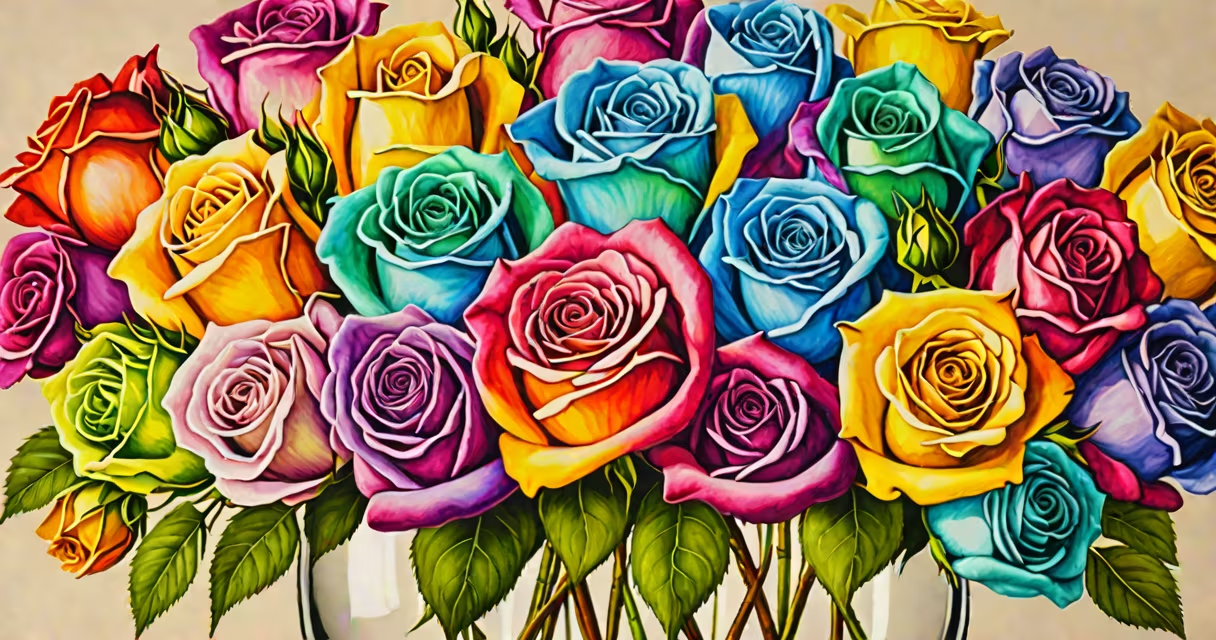
Rainbow roses are cut roses dyed in multiple vibrant hues-typically red, pink, yellow, orange, purple, and blue-to create a gradient effect. They symbolize inclusivity, joy, and celebration of diversity, often given to mark milestones, express love for someone unique, or honor cultural events like Pride.
The color transformation happens through capillary action: stems are split and submerged in colored water, which the petals absorb. This process doesn't harm the flower's lifespan but alters its appearance permanently. The result is a striking visual metaphor for unity in difference.
Unlike traditional single-color roses, rainbow roses aren't tied to one emotion. Their meaning shifts based on context-romantic, celebratory, or symbolic. For example, a rainbow rose given during a wedding may represent the couple's shared values across backgrounds, while one gifted at a gender-affirmation event emphasizes acceptance.
Florists don't grow rainbow roses naturally. Instead, they start with white or pale pink roses-chosen for their neutral base and high porosity. The stem is split vertically, then each section is placed in a different dye solution. Water travels up the xylem, depositing pigment into the petals.
This method was developed in the early 2000s by Japanese and Dutch growers seeking to expand floral artistry. By 2010, it had spread globally. A single rose can take 6-12 hours to fully absorb dyes, depending on temperature and petal thickness.
Some commercial suppliers use food-grade dyes approved by the U.S. Food and Drug Administration (FDA) for cosmetic use. However, dyes intended for plants are not safe for ingestion. The FDA warns against consuming dyed flowers due to potential toxicity.
Rainbow roses are most frequently associated with pride, identity, and inclusion. They're popular gifts during LGBTQ+ Pride Month, weddings between partners of different backgrounds, and birthdays celebrating individuality. Their bold look stands out in bouquets meant to convey bold messages.
They also appear in corporate events promoting diversity initiatives. A 2022 study by the Society of American Florists found that 38% of floral orders for workplace diversity workshops included rainbow-colored arrangements, up from 12% in 2015.
For romantic gestures, rainbow roses suggest a love that embraces all parts of a person-flaws, passions, and identities. They're less about conventional romance than about deep acceptance. One customer told us at a New York florist: "I gave my partner a rainbow rose after they came out. It wasn't about being 'different'-it was about saying, 'I see you, fully.'"
| Color Combination | Typical Meaning | Best Use Case |
|---|---|---|
| Red, pink, white | Love, affection, purity | Anniversaries, proposals |
| Blue, purple, lavender | Peace, calm, spiritual connection | Meditation spaces, grief support |
| Full spectrum (red to violet) | Inclusivity, joy, celebration | Pride events, multicultural weddings |
Rainbow roses are not genetically modified. They don't bloom with rainbow colors naturally. Claims that they are "naturally occurring" or "grown in rainbows" are false. The color change is entirely artificial and temporary-once the dye fades, the petals return to their original hue.
They are also not the same as "rainbow tulips" or "multicolored chrysanthemums." Those species exist naturally in variegated forms, but rainbow roses require human intervention. Confusing them leads to misinterpretation-giving a natural variegated flower as a Pride gift may lack the intentional symbolism behind a dyed rose.
A common misconception is that rainbow roses last longer than regular ones. In reality, dye absorption stresses the plant tissue slightly. According to research from Cornell University's Department of Horticulture, dyed roses have a shelf life averaging 7-10 days, compared to 10-14 days for untreated ones.
In 2023, a couple in Portland, Oregon, chose rainbow roses for their wedding reception centerpieces. The bride, who is Black and Jewish, and the groom, who is East Asian and Christian, wanted decor that reflected their dual heritage. The florist used white roses dyed in red (for Black culture), gold (for Jewish tradition), blue (for East Asian symbolism), and green (for earth and renewal).
Guests reported feeling seen. One wrote in the guestbook: "I've never seen flowers mean so much." The couple later donated the leftover blooms to a local hospice, where staff said patients responded emotionally to the colors.
This example shows how rainbow roses go beyond decoration-they serve as emotional anchors in meaningful moments.
When choosing a rainbow rose, consider the occasion, recipient's values, and the message you want to send. These flowers carry weight-not just beauty. Their meaning lies in the intention behind the gesture, not just the colors themselves.
Understanding what do rainbow roses mean helps you choose a gift that resonates. Whether celebrating love, identity, or unity, they offer a vivid way to say what words sometimes cannot.