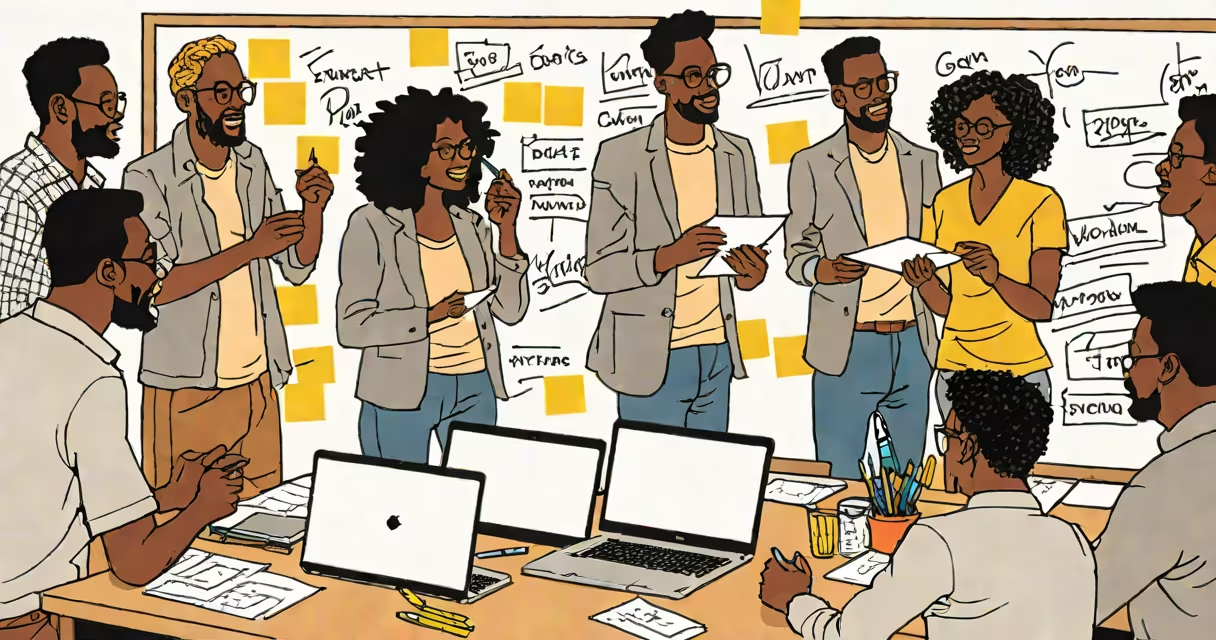
Best practices for group projects are proven methods that increase efficiency, reduce conflict, and ensure consistent outcomes in collaborative academic or professional work. These include clear role assignment, structured communication, regular check-ins, and shared documentation. They apply across disciplines-from engineering teams designing prototypes to students completing research papers.
Group projects fail when responsibilities blur, deadlines slip, or communication breaks down. Best practices prevent these issues by creating predictable workflows. For example, a study by the University of Michigan found that teams using structured task delegation completed projects 32% faster than those without defined roles.
These practices aren't optional extras-they're foundational. Without them, even well-intentioned groups produce uneven results. The most successful teams treat collaboration like a process, not an event.
They function through accountability, visibility, and consistency. When tasks are assigned with clear ownership, team members know who is responsible for what. This reduces duplication and missed steps. Regular meetings-scheduled weekly or biweekly-keep everyone aligned and allow early detection of problems.
Tools like shared Google Docs, Trello boards, or Asana timelines make progress visible to all. A team working on a marketing campaign can see which slides are drafted, which need review, and which are approved. This transparency prevents last-minute surprises.
Communication protocols matter too. Teams that agree upfront on response times (e.g., "All messages answered within 24 hours") avoid delays. Using a single channel-like Slack or Microsoft Teams-for updates keeps conversations organized and searchable.
Effective group projects rely on four core elements: role clarity, task breakdown, communication rules, and progress tracking. Each serves a distinct purpose and reinforces the others.
| Component | Function | Example |
|---|---|---|
| Role clarity | Assigns ownership to prevent overlap or omission | One member handles data collection, another writes analysis |
| Task breakdown | Splits large goals into manageable steps | Breaking a 10-page report into outline, draft, edits, final copy |
| Communication rules | Defines timing, channels, and expectations | "All feedback given in comments by Friday 5 PM" |
| Progress tracking | Monitors completion status and flags delays | Using a shared spreadsheet with color-coded task statuses |
Teams often skip the planning phase, assuming they'll figure things out as they go. That leads to wasted time and frustration. A real-world example: a university design team building a solar-powered vehicle failed their first prototype because no one had documented the battery wiring configuration. After adopting a shared digital logbook, subsequent builds succeeded on the first try.
Another common mistake is letting one person do most of the work. Best practices prevent this by assigning tasks based on skill and availability. A 2021 report from the National Center for Education Statistics found that teams with balanced workloads reported 60% higher satisfaction and 45% fewer conflicts than unbalanced ones.
Best practices for group projects are standard in education, startups, nonprofits, and corporate teams. In classrooms, they help students meet rubric criteria while learning collaboration skills. In businesses, they support product launches, client deliverables, and internal initiatives.
For instance, a software development team at a mid-sized tech firm used daily stand-up meetings and Jira task boards to manage a feature rollout. Over six weeks, they delivered all milestones on time. Without these practices, the team would have missed two key deadlines due to unclear ownership.
Even informal groups benefit. A community garden collective in Portland used a shared calendar and rotating responsibility lists to coordinate planting schedules. Their yield increased by 37% in one season compared to previous years when coordination was inconsistent.
Many assume that best practices mean rigid rules or micromanagement. That's incorrect. They're about structure-not control. A team can be flexible and still follow best practices. For example, a student group working on a video documentary adjusted their timeline after a crew member fell ill. They didn't abandon their plan-they adapted it using their existing communication protocol.
Another myth is that best practices only help large teams. In reality, small groups (two to four people) face the highest risk of imbalance. With fewer members, one person can easily dominate or drop out. A 2020 study by Harvard Business Review showed that small teams using role assignments were 58% less likely to experience burnout or disengagement.
Some confuse best practices with groupthink. But best practices encourage diverse input. For example, requiring all decisions to be documented helps minority viewpoints aren't lost. A research team at MIT used anonymous voting in brainstorming sessions and saw a 28% increase in new ideas compared to open discussions.
A local nonprofit wanted to create a mobile app to connect residents with food pantries. The team had five members: two developers, one designer, one outreach coordinator, and one project manager. They applied best practices as follows:
The app launched on schedule. User surveys showed 89% satisfaction. The team credited their success to consistent processes, not individual brilliance.
I've led multiple group projects, including a capstone course where my team developed a mobile tool for tracking mental health symptoms. We used a shared GitHub repository with pull request reviews and daily check-ins. Despite tight deadlines, we avoided last-minute errors and received top marks. The key wasn't talent-it was process.
Best practices for group projects are not theoretical. They are tools that turn uncertainty into predictability. organizing a volunteer effort, applying them increases your odds of success. They're not about perfection-they're about consistency and shared understanding.
When you start a new group project, don't wait for problems to appear. Set up the basics from day one: define roles, break down tasks, choose a communication method, and track progress. These actions reduce friction and build trust. The result? Work that gets done, on time, with less stress.