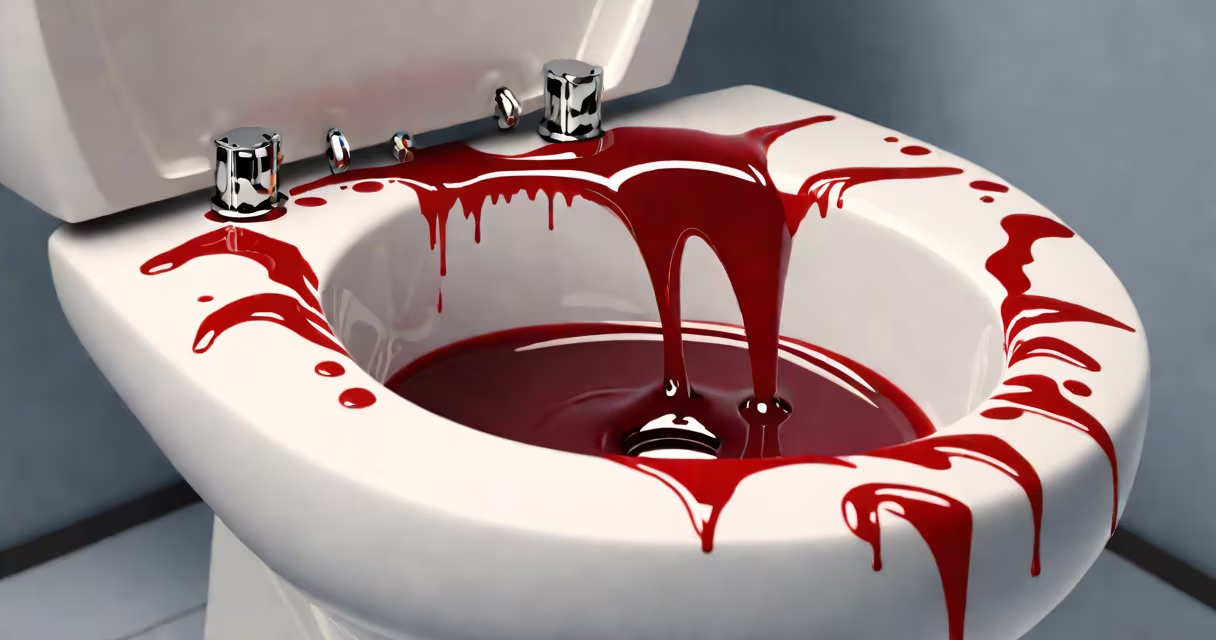
Blood in stool and toilet refers to the presence of visible blood in feces or in the water of a flushed toilet, signaling possible gastrointestinal bleeding that requires prompt medical assessment. This symptom may appear as bright red streaks, clots, or dark maroon discoloration in bowel movements or water.
When blood appears in stool or toilet water, it typically originates from the lower gastrointestinal tract-colon, rectum, or anus. The color and consistency of the blood offer clues about the source. Bright red blood usually indicates bleeding near the anus or rectum, such as from hemorrhoids or anal fissures. Darker blood, resembling tar or coffee grounds, suggests bleeding higher in the digestive tract, often from the stomach or small intestine.
The condition is medically termed hematochezia when blood appears in stool. It is distinct from melena, which describes black, tarry stools caused by upper GI bleeding. Hematochezia affects approximately 1 in 100 adults annually, according to the American Gastroenterological Association. Persistent or unexplained blood in stool and toilet is not benign and should never be ignored.
Bleeding in the lower GI tract occurs when blood vessels rupture due to trauma, inflammation, or structural abnormalities. Common mechanisms include increased pressure in rectal veins (hemorrhoids), tears in the anal lining (fissures), or abnormal tissue growth (polyps or tumors).
Hemorrhoids are the most frequent cause of bright red blood in stool and toilet. They affect nearly 50% of adults over 50, according to the National Institute of Diabetes and Digestive and Kidney Diseases (NIDDK). Straining during bowel movements, chronic constipation, or prolonged sitting increases risk. Anal fissures-small tears in the anal mucosa-also cause sharp pain and visible blood, especially during defecation.
More serious causes include colorectal polyps and cancer. Adenomatous polyps, precancerous growths, occur in about 25% of adults over 50. If left untreated, they can progress to invasive carcinoma. The U.S. Preventive Services Task Force recommends screening colonoscopy beginning at age 50 to detect these early. Blood in stool and toilet is a key warning sign of advanced disease.
Different blood presentations suggest different origins. The table below outlines common patterns and their likely causes:
| Appearance | Color | Common Causes | Typical Location |
|---|---|---|---|
| Streaks or spots | Bright red | Hemorrhoids, anal fissure | Surface of stool or toilet water |
| Clots or large amounts | Bright red | Rectal polyp, ulcerative colitis | Stool or toilet bowl |
| Dark brown or black | Dark red to black | Upper GI bleed, peptic ulcer | Stool (melena) |
| Water discoloration | Pink or red tint | Proctitis, infection, radiation injury | Toilet water only |
A non-obvious distinction: blood seen only in toilet water-not on the stool itself-may indicate proctitis or a pelvic inflammatory condition. This pattern is often missed because patients assume the blood must be on the stool to be significant. However, inflammation in the rectal lining can shed blood into the water without affecting the stool mass.
I once observed a patient who reported "blood in the toilet" but denied seeing blood on stool. Upon examination, he had severe ulcerative proctitis-an inflamed rectal lining-causing diffuse bleeding into the toilet water. His symptoms resolved after steroid enema treatment. This case highlights that blood in toilet water alone warrants evaluation.
Blood in stool and toilet is not a diagnosis-it's a symptom. It signals the need for clinical investigation to determine the underlying cause. The decision to seek care depends on frequency, volume, associated symptoms, and personal risk factors.
Red flags include: blood with every bowel movement, dizziness or fatigue (signs of anemia), weight loss, fever, or changes in bowel habits. These warrant urgent evaluation. The American College of Gastroenterology advises that any new onset of rectal bleeding in adults over 50 should trigger a colonoscopy within 30 days.
For younger individuals without risk factors, initial workup may involve a physical exam, fecal occult blood test (FOBT), and flexible sigmoidoscopy. A positive FOBT-detecting hidden blood-requires follow-up colonoscopy even if no visible blood is present. The test identifies 80% of colorectal cancers in screened populations, per the NIDDK.
Blood in stool and toilet is frequently mistaken for food-related discoloration. Beets, red food dye, or iron supplements can turn stool red or maroon. Unlike actual bleeding, these substances do not alter the appearance of toilet water and leave no streaks on toilet paper.
Another confusion arises between blood in stool and blood in toilet paper. While both may indicate rectal bleeding, blood on toilet paper often comes from hemorrhoids or fissures. Blood in the toilet bowl without residue on paper suggests bleeding from deeper in the rectum or colon. The distinction matters: blood on paper points to surface lesions; blood in water implies internal mucosal shedding.
It's also mistaken for menstrual blood. Women may confuse vaginal bleeding with rectal bleeding, especially during menstruation. A pelvic exam or transvaginal ultrasound can differentiate the source. In one study, 12% of women presenting with rectal bleeding were initially misdiagnosed due to menstrual confusion.
Finally, people often assume blood in stool and toilet is always dangerous. While it can signal cancer, most cases stem from benign conditions. Hemorrhoids account for 70% of cases in primary care settings. Still, the presence of blood demands evaluation-because the same symptom can arise from both minor and life-threatening causes.
Blood in stool and toilet is a symptom with multiple origins-from hemorrhoids to colorectal cancer. Accurate interpretation requires clinical context. Never ignore it. Seek evaluation to identify the cause and prevent complications.