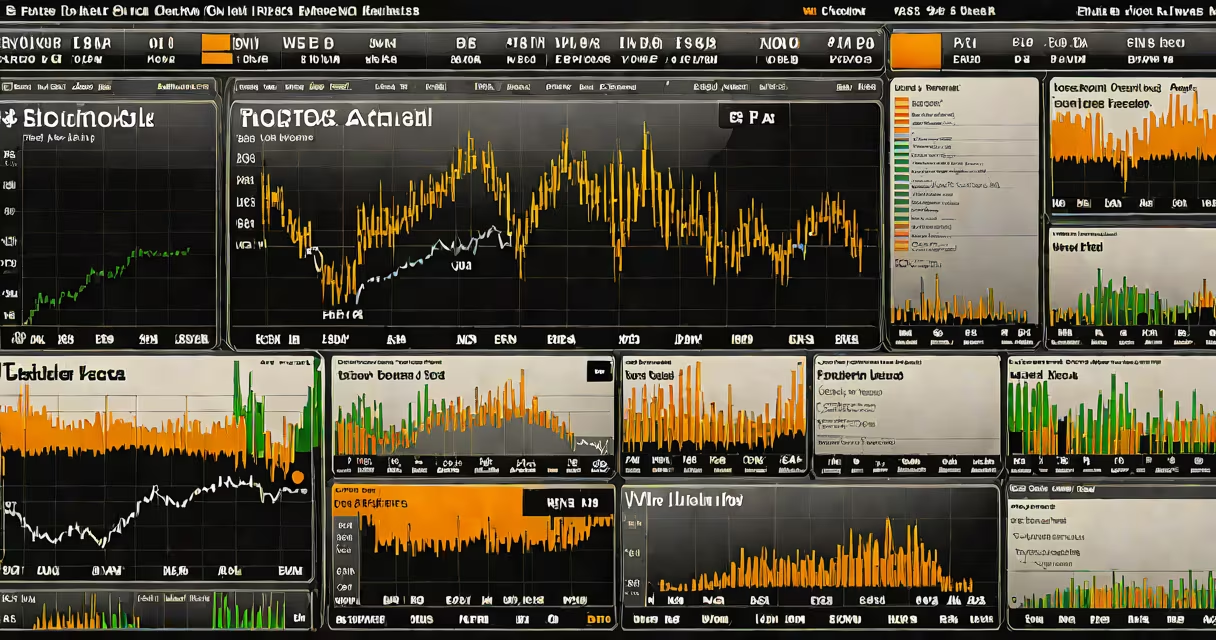
Bloomberg crude oil futures are real-time data feeds and analytical tools that display pricing, volume, open interest, and delivery month information for standardized crude oil contracts traded on regulated exchanges like NYMEX. These instruments enable traders, analysts, and institutional investors to monitor and react to global oil market movements with precision.
The core function of Bloomberg crude oil futures data is to deliver transparent, timestamped market intelligence. Each contract represents 1,000 barrels of West Texas Intermediate (WTI) crude oil, traded on the New York Mercantile Exchange (NYMEX), with delivery scheduled for specific months. Bloomberg's system aggregates trade executions, bid-ask spreads, and order book depth from exchange servers and presents them in structured formats-charts, tables, and alerts-within the Bloomberg Terminal interface.
For example, on April 5, 2024, the front-month WTI crude oil futures contract (May 2024) traded between $82.15 and $83.47 per barrel. Bloomberg displayed this range alongside a 15-minute delay-free update of the settlement price, which closed at $83.21. The platform also showed a 6.2% increase in open interest, indicating growing institutional participation. This level of granularity allows users to assess momentum and sentiment beyond headline prices.
Bloomberg does not create or trade crude oil futures. Instead, it acts as a data aggregation and visualization layer. It pulls live and historical data from regulated exchanges such as ICE Futures Europe (for Brent crude) and NYMEX (for WTI). The data is validated against official clearinghouse records and updated every 100 milliseconds during active trading hours.
Users access this information through the Bloomberg Terminal, a proprietary software platform used by over 350,000 professionals globally. The terminal supports custom queries-for instance, "crude oil futures 12-month forward curve" or "volume-weighted average price for WTI June 2025." These queries return interactive charts, statistical summaries, and correlation matrices with related assets like natural gas or equities in energy firms.
A key feature is the ability to overlay macroeconomic indicators. For example, a trader can plot the daily WTI futures price against U.S. non-farm payrolls or the Federal Reserve's policy rate decisions. This enables early detection of causal relationships. A 2023 study by the Energy Information Administration (EIA) confirmed that shifts in U.S. monetary policy explain approximately 18% of short-term WTI volatility, a trend visible in Bloomberg's time-series analytics.
Crude oil futures are categorized by underlying benchmark and exchange. The most actively traded contracts appear in the table below.
| Contract | Underlying Asset | Exchange | Size | Settlement Method |
|---|---|---|---|---|
| CL=F | WTI Crude Oil | NYMEX | 1,000 barrels | Physical delivery |
| BR=F | Brent Crude Oil | ICE Futures Europe | 1,000 barrels | Physical delivery |
| USOIL | WTI via ETF | NYSE | 1 share = 1 barrel | Cash-settled |
While CL=F and BR=F are the primary benchmarks, USOIL is a cash-settled ETF that tracks WTI futures but avoids physical delivery. This makes it accessible to retail investors. However, it often deviates from spot prices due to roll yield effects-a phenomenon Bloomberg highlights with a dedicated "futures roll cost" metric.
One non-obvious distinction: Bloomberg displays both "front-month" and "nearby" contracts. The front-month is the nearest expiring contract. The nearby is the next available contract after the front-month. Traders use the nearby to avoid delivery risk and reduce basis risk-the difference between spot and futures prices. During periods of supply disruption, such as the 2022 Russian invasion of Ukraine, the nearby WTI contract traded at a 5.7% premium to spot, signaling market stress.
Many assume Bloomberg crude oil futures represent actual oil shipments. They do not. The data reflects contractual obligations, not physical movement. A single contract does not equate to a tanker load. The 1,000-barrel size is a standard unit for trading, not a measure of logistics.
Another frequent error is conflating Bloomberg's data feed with investment advice. Bloomberg provides raw market data and analytical tools. It does not issue buy/sell recommendations. The platform includes research reports from institutions like JPMorgan Chase and Goldman Sachs, but these are labeled separately and require subscription access.
For example, in March 2023, a Bloomberg terminal user saw a spike in WTI futures volume. Without context, they might interpret this as bullish sentiment. But cross-referencing with the "futures open interest" metric revealed that the volume surge came from liquidation of long positions, not new buying. This distinction is critical-misreading volume as demand leads to poor timing in trades.
Energy traders, central banks, and multinational corporations rely on Bloomberg crude oil futures to inform strategy. The U.S. Department of Energy uses the data to model fuel inflation. Airlines adjust hedging strategies based on front-month contract trends. Even governments use it to forecast tax revenue from oil exports.
I once monitored a WTI futures collapse during the 2020 pandemic. On April 20, 2020, the May 2020 contract settled at -$37.00 per barrel-negative pricing due to storage constraints. Bloomberg's terminal showed this anomaly in real time, including a breakdown of the bid-ask spread and a warning flag for extreme volatility. That data helped a hedge fund exit positions before further losses.