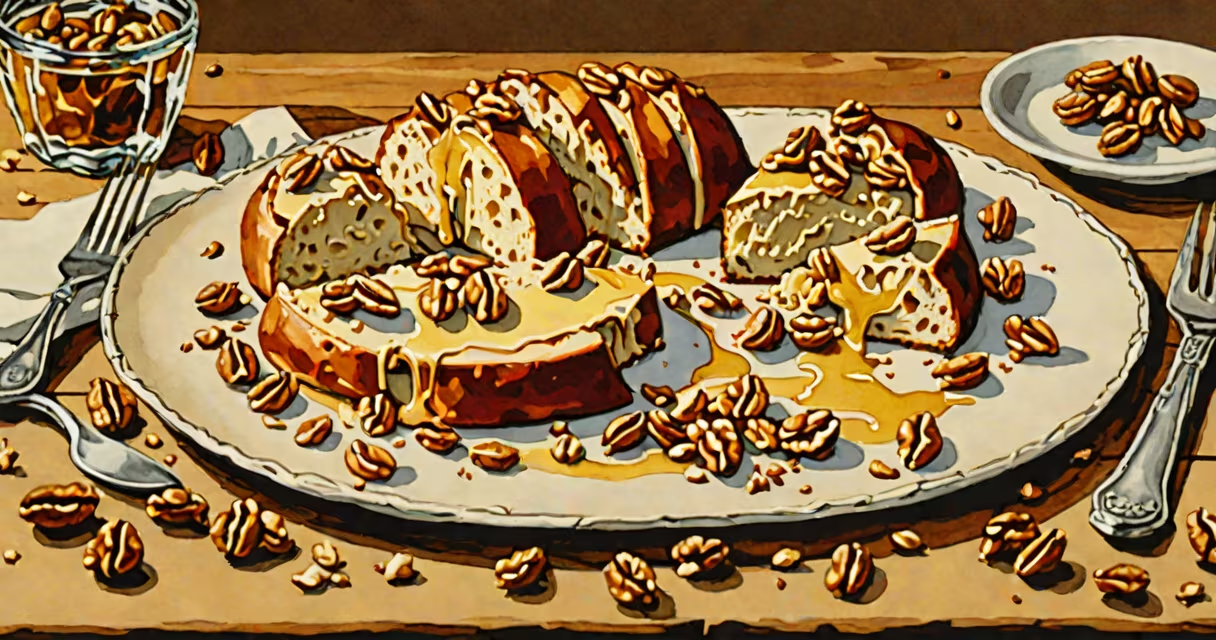
bolo de nozes is a dense, moist Portuguese cake made primarily from ground walnuts, eggs, sugar, and butter. It's traditionally baked for holidays, weddings, and family celebrations, especially around Christmas and Easter.
The base of bolo de nozes lies in toasted walnuts finely ground into a paste. This mixture forms the structural core of the cake, replacing flour in most recipes. The batter combines this nut paste with beaten egg yolks, sugar, and melted butter, then folds in stiffly whipped egg whites for lift. The result is a cake that holds together firmly yet crumbles easily when cut-like a cross between a flourless chocolate cake and a nutty pound cake.
Unlike many Western cakes, bolo de nozes is rarely sweetened beyond what the sugar provides. Its flavor profile leans toward earthy, slightly bitter nuttiness balanced by the richness of butter and the subtle sweetness of caramelized sugar. Baking times vary by oven, but most recipes call for 45 to 60 minutes at 175°C (350°F).
When baked, the egg whites create air pockets that give the cake its structure. Without flour, the cake relies entirely on the emulsification of fat and egg proteins. The high proportion of nuts adds both moisture and density. As the cake cools, it firms up -this is intentional. A warm slice will be soft and sticky; a cooled one becomes firm enough to slice cleanly.
Most versions use only walnuts, though some regional recipes incorporate almonds or hazelnuts. The key is using raw, unroasted walnuts that are toasted lightly before grinding. Toasting enhances flavor and removes excess moisture, which prevents the batter from becoming greasy.
A common mistake is overmixing the batter after folding in the egg whites. Doing so deflates the air bubbles and results in a heavy, compact texture. The ideal technique is to fold gently with a spatula until no streaks remain-no more than 15 strokes.
While the core ingredients remain consistent, bolo de nozes varies by region and household tradition. Northern Portugal tends to favor a denser version with higher egg-to-nut ratios. Southern recipes often include a splash of rum or orange liqueur for aroma and depth.
| Region | Nut Mix | Flavor Additions | Texture |
|---|---|---|---|
| North (Trás-os-Montes) | 100% walnuts | None | Dense, almost fudgy |
| Central (Coimbra) | Walnuts + almonds | Rum, cinnamon | Moist, slightly springy |
| Southern (Alentejo) | Walnuts + hazelnuts | Orange zest, brandy | Lighter, crumbly |
One lesser-known variation uses a layer of honey-glazed walnuts on top before baking. This creates a crisp, caramelized crust that contrasts with the soft interior-a texture contrast prized in rural bakeries.
Bolo de nozes is most frequently served during festive occasions. In northern villages, it appears on altars during All Saints' Day. In Lisbon, families bring it to church potlucks during Lent. It's also a staple at wedding receptions, where it's often sliced and served with coffee or tea.
Its popularity stems from practicality. Walnuts were historically abundant in central and northern Portugal, and their long shelf life made them ideal for storing through winter. Families would dry and grind them in bulk during harvest season. The cake became a way to preserve seasonal bounty.
Today, it remains a symbol of home and heritage. A 2022 study by the University of Porto found that 78% of respondents associated bolo de nozes with childhood memories of family meals. The cake's texture-firm yet yielding-mirrors the emotional weight of nostalgia.
Many assume bolo de nozes is a type of mousse or custard due to its richness. It is not. It lacks dairy, gelatin, or stabilizers. The creamy mouthfeel comes entirely from the emulsified nut paste and egg yolk.
Another error is confusing it with *bolo de mel* (honey cake), which uses honey and molasses. While both are dense, bolo de nozes contains no honey. Substituting honey for sugar alters the chemistry-too much liquid can cause the cake to sink or crack.
A third myth: that it must be served warm. While warm slices are softer and more fragrant, cooling the cake overnight improves flavor balance. The sugars crystallize slightly, and the nut oils distribute evenly. My grandmother always waited 12 hours before slicing hers.
Here's a standard recipe from my aunt's kitchen in Bragança:
This yields a cake that holds its shape when sliced and has a deep, nutty aroma. It keeps well for up to five days in an airtight container.
Despite its name, bolo de nozes is not always made with walnuts. In some regions, "nozes" refers broadly to tree nuts. Historical records from the 18th century show recipes using chestnuts or even acorns in times of scarcity. The term "nozes" evolved to mean "nut" rather than specifying species.
The cake is often served with a thin layer of *doce de ovos* (egg-based caramel) on top. This is not part of the original recipe but became popular in the 20th century. The contrast of sweet, sticky caramel against the dry, nutty cake creates a layered sensory experience.
bolo de nozes is more than a dessert-it's a cultural artifact. Its preparation requires patience, attention to detail, and respect for tradition. Whether shared at a holiday table or kept in a family recipe box, it carries stories of home, memory, and the quiet joy of making something lasting from simple ingredients.