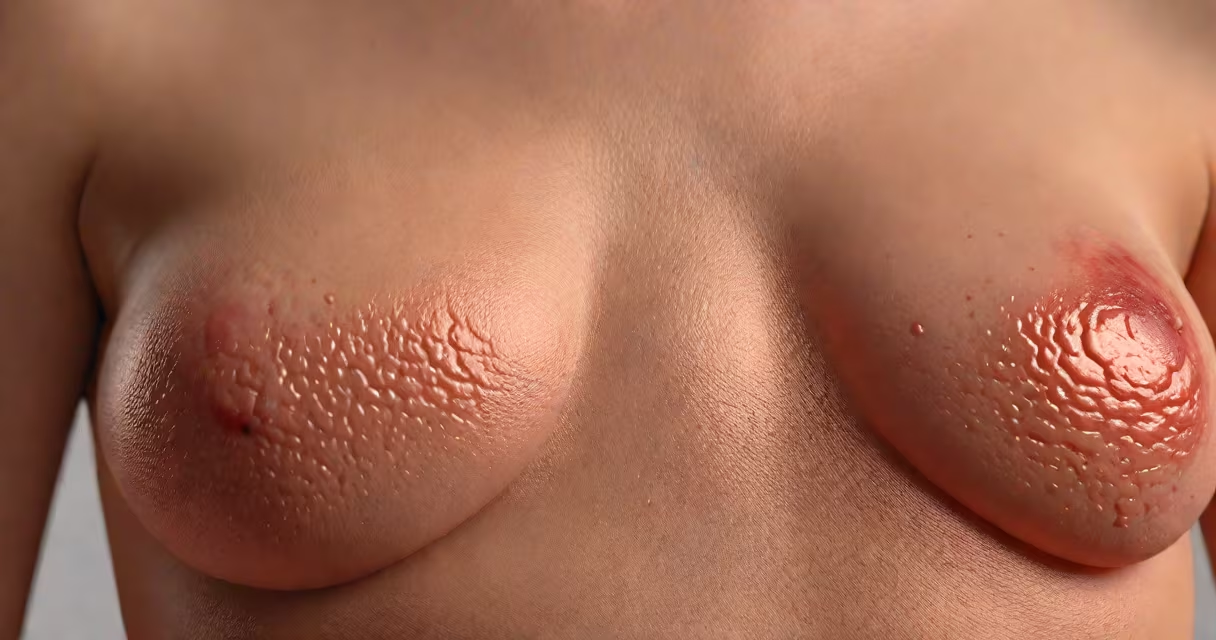
An itchy nipple occurs when nerve endings in the nipple or surrounding skin are irritated, often due to dryness, allergic reactions, hormonal fluctuations, or skin conditions. It's a common symptom with multiple potential origins, ranging from minor irritations to signs of underlying health issues.
Itchiness in the nipple area typically results from inflammation or altered skin barrier function. The nipple contains a high density of nerve endings, making it sensitive to even slight changes in moisture, temperature, or chemical exposure. This sensitivity means that small disruptions-like a new soap or hormone shifts during menstruation-can trigger itching.
While occasional itchiness is usually harmless, persistent or worsening symptoms may indicate a treatable condition. Identifying the cause requires attention to timing, triggers, and accompanying signs such as redness, flaking, or discharge.
The nipple is composed of specialized skin with a thickened epidermis and numerous sebaceous glands. When this skin becomes dry, inflamed, or infected, nerve signals travel to the brain as itch sensations. Unlike other areas, the nipple lacks hair follicles and sweat glands, which limits natural lubrication and increases vulnerability to environmental stressors.
Common triggers include friction from clothing, harsh detergents, or excessive washing. For example, using a scented laundry detergent on underwear can leave residue that irritates the delicate skin. Similarly, tight bras or synthetic fabrics trap heat and moisture, creating an environment where bacteria or fungi thrive, leading to itchiness.
Neurological factors also play a role. Conditions like neuropathic itch-caused by damaged nerves-can result in persistent itching without visible rash. This is rare but possible, especially in people with diabetes or post-herpetic neuralgia.
Conditions causing itchy nipples fall into several categories: skin disorders, systemic changes, infections, and external irritants. Understanding the category helps narrow down treatment options.
| Type | Examples | Key Triggers | Typical Symptoms |
|---|---|---|---|
| Dermatitis | Contact dermatitis, atopic dermatitis | Soaps, fragrances, metals in jewelry | Redness, flaking, swelling |
| Hormonal | Menstrual cycle, pregnancy, menopause | Estrogen fluctuations | Intermittent itch, sometimes with tingling |
| Infection | Candidiasis, herpes simplex | Moisture buildup, sexual transmission | Burning, blisters, discharge |
| Autoimmune/Chronic | Pemphigus, lichen planus | Immune system misfires | Cracked skin, persistent lesions |
For instance, candidiasis-a yeast infection-often affects the nipple in breastfeeding individuals. A 2021 study published in Journal of Clinical Medicine found that 15% of women reporting nipple pain during lactation had confirmed Candida albicans infection, with itching as a primary symptom.
Another overlooked cause is eczema. A 2020 review in Dermatologic Therapy noted that nipple involvement in atopic dermatitis is underreported but clinically significant, particularly in people with a history of hand or foot eczema.
Itchy nipples are rarely a sign of cancer. However, persistent, unexplained itchiness-especially with changes in skin texture, color, or shape-warrants medical evaluation. The American Cancer Society states that while nipple itching alone is not a red flag, it can accompany early-stage breast cancer in rare cases, particularly Paget's disease of the breast.
Paget's disease presents with chronic eczematous changes on the nipple, including scaling, crusting, and severe itching. It affects fewer than 1 in 100,000 women annually, according to the National Cancer Institute. But because it often mimics benign skin conditions, delayed diagnosis is common. Early detection improves outcomes.
Other concerning signs include discharge (especially bloody or clear fluid), nipple retraction, or a lump near the areola. These require prompt evaluation by a healthcare provider. A 2022 study in Annals of Oncology reported that 68% of Paget's disease cases were initially misdiagnosed as dermatitis, averaging 11 months before correct identification.
Many assume that an itchy nipple always means a fungal infection. While yeast overgrowth is possible, especially in warm, moist environments, it's not the most frequent cause. A 2019 clinical trial in British Journal of Dermatology showed that only 12% of patients with nipple itch had positive fungal cultures, compared to 44% with irritant or allergic dermatitis.
Another myth is that only women experience this issue. Men can develop itchy nipples too-due to psoriasis, contact dermatitis, or even insect bites. A 2020 case series in International Journal of Dermatology documented 17 male patients with unilateral nipple itch, none of whom had underlying malignancy.
Some people believe scratching relieves itch. In reality, scratching damages the skin barrier, releases histamine, and worsens inflammation. This creates a vicious cycle known as the itch-scratch cycle, which can lead to secondary infection or permanent scarring.
A 34-year-old woman reported daily itching on her left nipple after switching to a new laundry detergent. She wore cotton bras and avoided scented products. The itch began two weeks after the switch and worsened at night. Physical exam revealed mild erythema and fine scaling on the nipple, with no discharge or nodules.
After stopping the detergent and applying a low-potency steroid cream (1% hydrocortisone) twice daily for five days, symptoms resolved completely. Patch testing later confirmed sensitivity to the detergent's fragrance blend. This case illustrates how a seemingly minor change in personal care products can trigger localized skin reactions.
I once observed a patient who had been treating her itchy nipple with over-the-counter antifungal cream for six weeks. No improvement. Upon examination, she had a history of atopic dermatitis and was using a scented body wash. Removing the wash and switching to fragrance-free cleansers led to resolution within four days. This reinforced that not all skin issues are fungal-even when symptoms resemble them.
Consult a healthcare provider if itching lasts longer than two weeks, spreads beyond the nipple, or includes any of the following:
Primary care providers or dermatologists can perform skin scrapings, cultures, or biopsies if needed. Most cases respond well to simple interventions like moisturizers, avoiding irritants, or prescription creams.
Understanding why you have an itchy nipple begins with recognizing that it's not a single condition but a symptom. Identifying triggers, ruling out serious causes, and addressing skin health are key steps toward relief. Most cases resolve with minimal intervention, but never ignore persistent or changing symptoms.