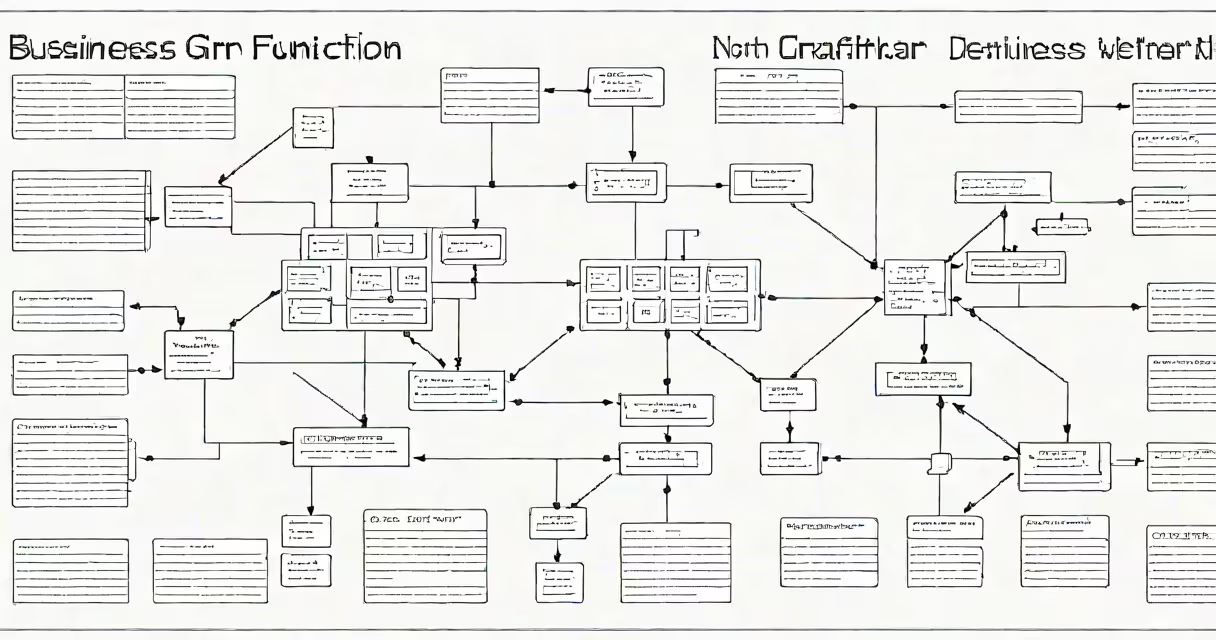
A business function definition describes the core responsibilities, objectives, and expected outcomes of a specific role, team, or department within an organization. It clarifies what work gets done, who owns it, and how success is measured. This definition ensures alignment across teams and supports consistent decision-making.
Every organization relies on structured divisions of labor. Without clear business function definitions, teams operate in isolation, duplicate effort, or fail to meet strategic goals. For example, the finance department's function includes budgeting, financial reporting, and cash flow management-not just bookkeeping. This distinction shapes staffing, tools, and performance reviews.
According to the Harvard Business Review, organizations with well-defined functional roles see 30% higher cross-departmental collaboration efficiency compared to those without formal definitions. The clarity reduces ambiguity, prevents overlap, and enables faster response to market changes.
These definitions act as operating blueprints. They specify how it contributes to larger goals. A marketing function, for instance, isn't just about creating ads-it manages customer acquisition, brand positioning, and campaign ROI analysis.
Each function operates through workflows, systems, and key performance indicators (KPIs). The human resources function handles recruitment, onboarding, employee development, and compliance-all governed by internal policies and external regulations like the Fair Labor Standards Act.
When a function lacks a formal definition, decisions often default to individual judgment. This leads to inconsistency. In one case study from McKinsey & Company, a mid-sized retailer lost $1.2 million in annual revenue due to misaligned sales and inventory teams-both assumed responsibility for stock updates because their roles were undefined.
Organizations typically group functions into four primary categories. These categories vary slightly by industry but follow a consistent structure:
| Function Type | Core Responsibilities | Examples |
|---|---|---|
| Operations | Production, logistics, quality control, supply chain | Manufacturing, warehouse management, delivery scheduling |
| Finance | Budgeting, accounting, auditing, capital planning | Payroll processing, tax filings, investor reporting |
| Human Resources | Talent acquisition, compensation, training, compliance | Onboarding programs, performance reviews, benefits administration |
| Marketing and Sales | Lead generation, customer engagement, pricing strategy | Email campaigns, website analytics, sales forecasting |
Some companies further divide functions into sub-functions. For example, within marketing, digital marketing, content creation, and public relations may each have distinct definitions. A social media manager's function includes posting frequency, engagement metrics, and crisis response protocols-not just posting content.
Nonprofit organizations apply similar structures. The fundraising function defines donor outreach methods, grant application processes, and stewardship timelines. Without these, efforts lack direction and measurable impact.
Many people confuse business function with job title. A "sales associate" is a role. The sales function encompasses lead tracking, conversion analysis, and territory management. Confusing the two causes misalignment between individual tasks and team goals.
Another error is assuming functions are static. In reality, they evolve. When Amazon expanded into cloud computing, the IT function had to change its scope beyond internal support to include product development and service delivery. The original definition no longer applied.
Some assume that small businesses don't need formal function definitions. But even startups fail faster without them. I once observed a tech startup grow from five to 30 employees in 18 months. Without documented functions, founders spent 40% of their time resolving conflicts over task ownership. After defining each function-including engineering, customer support, and product management-the team reduced meeting time by 60% and improved project completion rates.
Clear business function definitions reduce redundancy, accelerate onboarding, and improve accountability. When someone joins a new team, a documented function definition tells them exactly what's expected and how their work fits into the bigger picture.
They also enable better resource allocation. A company planning to launch a new product uses function definitions to assign tasks: R&D develops prototypes, legal reviews contracts, manufacturing plans production runs. Each team knows its boundaries and dependencies.
Without definitions, organizations rely on informal norms. These often favor senior staff or dominant personalities. A 2022 study by the Society for Human Resource Management found that 68% of employees in companies without defined functions reported feeling unclear about their responsibilities during performance evaluations.
When building or refining your organization's structure, start with a precise business function definition. Define the outputs, inputs, owners, and success criteria for each unit. Use real-world examples-like how Apple's design function integrates with hardware engineering-to ground expectations. Avoid vague language such as "support" or "help." Instead, say "manage user feedback cycles" or "deliver quarterly feature updates."
A business function definition is not a document to file away. It's a living tool that guides hiring, performance reviews, and strategic planning. When written, it becomes the foundation for sustainable growth.