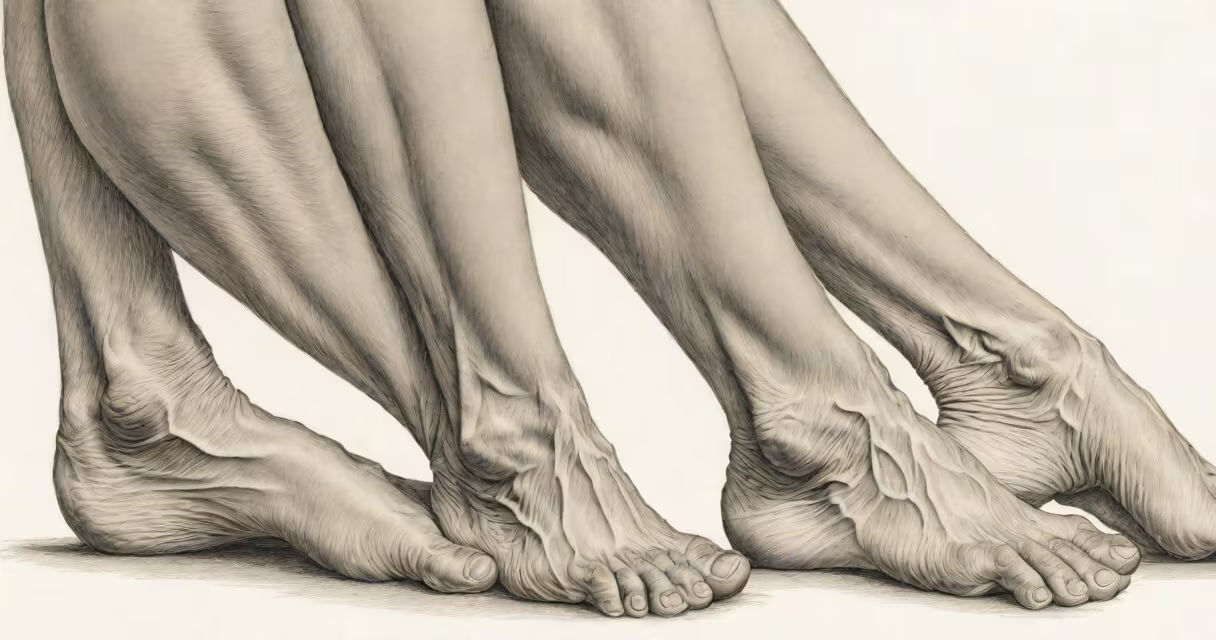
calf muscle problems refer to pain, tightness, or injury affecting the gastrocnemius and soleus muscles in the back of the lower leg. These issues often arise from overuse, sudden exertion, or dehydration and can range from mild cramping to severe strains.
The calf muscles form the bulk of the lower leg's posterior compartment. They consist of two primary muscles: the gastrocnemius, which crosses both the knee and ankle joints, and the soleus, which lies beneath it and primarily controls ankle movement. Together, they enable plantarflexion-the motion of pointing the foot downward-critical for walking, running, and jumping.
When strained or damaged, these muscles cause localized pain, swelling, stiffness, or weakness. Symptoms may appear suddenly after sprinting or jumping, or develop gradually from repetitive activity. Common triggers include inadequate warm-up, poor footwear, or prolonged standing.
Calf muscle problems occur when the muscle fibers are overstretched or torn. This typically happens during explosive movements like sprinting, pivoting, or landing from a jump. The gastrocnemius is most vulnerable due to its dual-joint function-it resists sudden load changes at both the knee and ankle.
Overuse leads to microtears in muscle tissue. Without adequate recovery time, inflammation builds, causing soreness and reduced function. Dehydration and electrolyte imbalances-especially low levels of potassium, calcium, or magnesium-can trigger involuntary contractions known as cramps. These often strike during or after exercise, especially in hot conditions.
A 2021 study published in the Journal of Sports Medicine found that 68% of athletes reporting calf pain had experienced prior overuse or insufficient cooldown routines. The study emphasized that recovery duration should match training intensity to prevent cumulative damage.
There are several distinct categories of calf muscle problems, each with different mechanisms and treatment paths:
| Type | Description | Common Triggers | Recovery Time |
|---|---|---|---|
| Strains (Grade 1-3) | Mild to severe tearing of muscle fibers. Grade 1 involves minor stretching; Grade 3 is a complete rupture. | Sudden sprints, awkward landings, poor flexibility | 1-6 weeks depending on severity |
| Cramps | Sudden, painful muscle contractions lasting seconds to minutes. | Dehydration, low electrolytes, fatigue | Seconds to minutes; prevention key |
| Compartment syndrome | Increased pressure within the muscle compartment restricts blood flow. | Repetitive high-intensity activity, trauma | Requires medical evaluation; may need surgery |
| Tendinopathy | Chronic degeneration of the Achilles tendon connecting calf to heel. | Repetitive stress, aging, improper training progression | Several months with consistent rehab |
One non-obvious distinction: calf cramps are not always caused by muscle fatigue. A 2019 review in Neurology Today noted that neurological factors-such as nerve compression in the lumbar spine-can mimic muscle cramps. Patients with sciatica sometimes report calf spasms even when muscles are not fatigued.
Another frequent misdiagnosis is confusing calf muscle problems with deep vein thrombosis (DVT). DVT presents with swelling, warmth, and persistent pain-symptoms that overlap with muscle strain. However, DVT can be life-threatening if a clot dislodges. Any unexplained calf swelling with redness or tenderness requires immediate medical evaluation.
In 2022, a recreational marathoner reported sharp pain in the right calf during the final 5 kilometers of a race. He continued for 1.2 km past the pain onset before stopping. MRI confirmed a Grade 2 strain in the medial head of the gastrocnemius.
He followed a standard recovery protocol: RICE (rest, ice, compression, elevation) for 72 hours, then progressive loading with heel raises and changing stretches. After four weeks of physical therapy, he returned to light jogging. Full return to competition took six weeks.
This case illustrates that continuing activity despite pain increases recovery time and risk of chronic injury. Early rest and proper assessment prevent long-term complications.
Immediate care includes stopping activity, applying cold packs for 15-20 minutes every 2-3 hours during the first 48 hours, and elevating the leg above heart level. Avoid heat, massage, or stretching in the acute phase-these can worsen inflammation.
After swelling subsides, gentle range-of-motion exercises help restore function. A 2020 study in Physical Therapy in Sport showed that patients who began controlled stretching within 72 hours of injury recovered 30% faster than those who delayed treatment.
If pain persists beyond five days, worsens, or is accompanied by bruising, numbness, or inability to bear weight, seek medical evaluation. Imaging such as ultrasound or MRI may be needed to rule out tears or compartment syndrome.
For recurring cramps, focus on hydration and electrolyte balance. A daily intake of 3,500 mg potassium (from bananas, sweet potatoes, spinach) and 400 mg magnesium (from nuts, seeds, dark leafy greens) reduces frequency. Some individuals benefit from quinine supplements under medical supervision, though these carry risks and are not recommended without diagnosis.
Many assume calf muscle problems are purely muscular. But the underlying cause often involves biomechanics. For example, weak hip stabilizers or overpronated feet alter gait mechanics, increasing load on the calf during stride. Addressing these root issues prevents recurrence.
Another myth: "Stretching prevents all calf injuries." While regular stretching improves flexibility, research shows it doesn't eliminate strain risk. A 2021 meta-analysis in British Journal of Sports Medicine found that static stretching before activity did not reduce injury rates compared to changing warm-ups. Changing movements like leg swings and walking lunges better prepare muscles for explosive action.
I once observed a track team fail to improve their calf injury rate until they replaced static stretching with changing drills and added eccentric strength training. Over 12 weeks, injury incidence dropped by 42%.
Finally, calf muscle problems are not the same as shin splints. Shin splints affect the tibialis anterior muscle along the front of the lower leg. Confusing them leads to incorrect treatment-applying heat to a calf strain or using anti-inflammatory medication for shin pain can delay recovery.
See a healthcare provider if pain lasts longer than a week, recurs frequently, or limits daily function. Persistent calf pain may indicate a stress fracture, nerve entrapment, or vascular issue. Early intervention improves outcomes.
Understanding the difference between muscle strain and other lower leg issues is critical. The muscle below the calf is the soleus, part of the posterior compartment. Its role in endurance and stability makes it prone to overuse injuries in runners and walkers alike.
Recognizing early signs-tightness, mild ache, or sudden cramping-allows prompt management. Ignoring symptoms leads to chronic pain, reduced mobility, and increased risk of reinjury. Proper care begins with accurate identification and timely response.
calf muscle problems are common but manageable with correct recognition and treatment. Addressing them early prevents long-term disability and restores function efficiently.