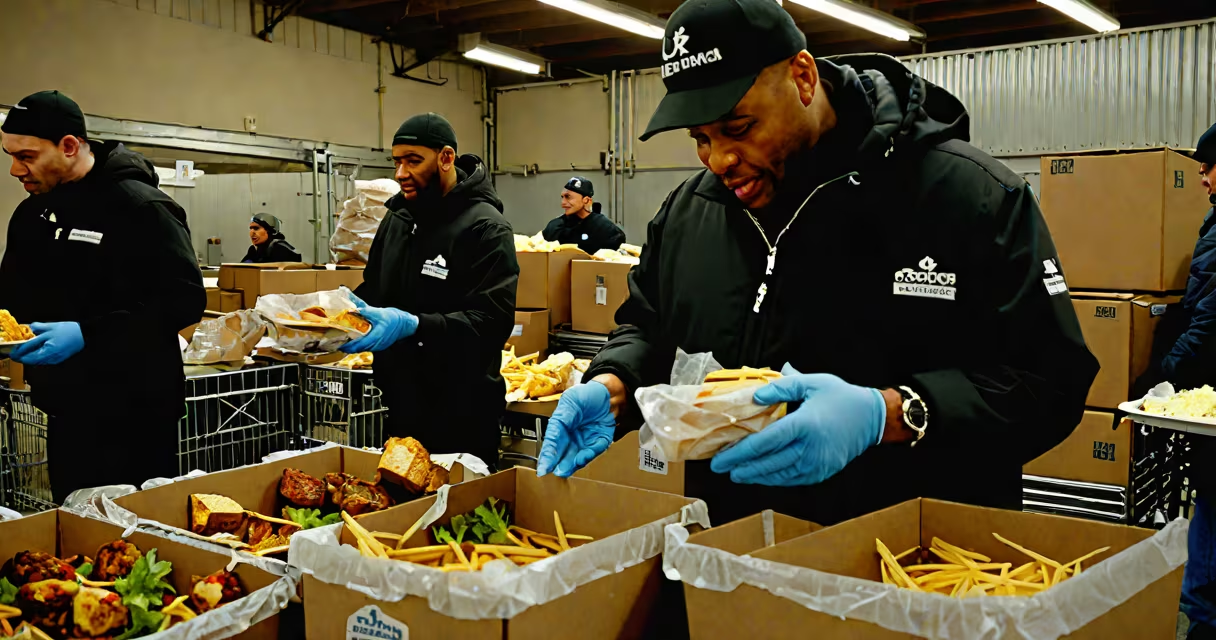
Catholic Charities NYC is a nonprofit organization that delivers emergency food, housing assistance, mental health services, and immigration support to low-income individuals and families across New York City's five boroughs. It operates under the auspices of the Archdiocese of New York and serves over 150,000 people annually through direct aid and community partnerships.
The organization traces its roots to 1917, when it was established as part of a national network of Catholic social service agencies. Today, it runs 46 programs across Manhattan, Brooklyn, Queens, the Bronx, and Staten Island. Its work includes feeding the hungry, helping homeless families find shelter, providing legal aid to immigrants, and offering counseling for trauma survivors. All services are available regardless of religious affiliation, though the mission is grounded in Catholic social teaching.
Services are funded through private donations, government grants, and corporate sponsorships. In 2023, Catholic Charities NYC reported $147 million in revenue, with 84% of funds directed toward program expenses. The organization holds a four-star rating from Charity Navigator, reflecting high financial efficiency and accountability.
Catholic Charities NYC uses a decentralized model, with local field offices managing outreach in specific neighborhoods. Each office coordinates with community centers, churches, schools, and municipal agencies to identify and serve those in crisis. For example, in the South Bronx, staff partner with local clinics to screen for food insecurity among patients with chronic illness.
Emergency food distribution happens daily at 27 sites. Clients receive a bag containing fresh produce, dairy, grains, and protein, based on household size. In 2023, the organization distributed over 1.2 million pounds of food-equivalent to 1 million meals-to residents in high-poverty zip codes like 10451 (The Bronx) and 11201 (Brooklyn).
For housing, Catholic Charities NYC operates transitional shelters and permanent supportive housing units. A client applying for assistance undergoes a needs assessment that considers income, family size, medical conditions, and history of eviction. If approved, they receive rental subsidies, case management, and access to job training. One participant, a single mother of three from Harlem, secured stable housing after being referred from a city shelter system. She now works as a home health aide and pays 30% of her income toward rent-within federal affordability guidelines.
The organization groups its offerings into six main categories:
| Service Type | Examples | Annual Reach |
|---|---|---|
| Emergency Food & Nutrition | Food pantries, mobile distribution, school meal programs | 1.2 million meals |
| Housing & Homelessness Support | Transitional shelters, rental assistance, permanent housing | 12,000 individuals |
| Immigration Legal Services | Asylum applications, DACA renewals, deportation defense | 5,200 cases |
| Mental Health & Counseling | Individual therapy, crisis intervention, youth programs | 8,700 clients |
| Family & Youth Services | After-school programs, parenting workshops, child abuse prevention | 14,000 participants |
| Senior & Disability Support | Transportation, home care, nutrition for elderly | 9,300 seniors served |
Each category is managed by a dedicated team with specialized training. Mental health counselors, for instance, are licensed clinicians who follow evidence-based practices such as cognitive behavioral therapy and trauma-informed care. They see an average of 25 clients per week across 12 clinic locations.
Catholic Charities NYC is often mistaken for a religious institution focused solely on churchgoers. This is incorrect. While rooted in Catholic values, the organization serves anyone in need, regardless of faith, citizenship status, or background. Over 60% of clients identify as non-Catholic, and nearly 40% are undocumented immigrants.
A second misconception is that Catholic Charities NYC relies entirely on government funding. In reality, only 42% of its budget comes from public sources. The remaining 58% comes from individual donors, foundations, and corporate giving. In 2023, 72% of private contributions were under $100, demonstrating broad grassroots support.
One non-obvious fact: Catholic Charities NYC does not operate its own shelters in most cases. Instead, it contracts with existing facilities-such as city-run drop-in centers or faith-based hostels-and provides staffing, case management, and funding. This allows faster deployment during crises. During the 2020 pandemic, the organization rapidly expanded food delivery routes using volunteer drivers and donated vehicles, reaching 30,000 households in under two weeks.
Marisol, a 38-year-old woman from Jackson Heights, Queens, lost her job as a hotel housekeeper during the pandemic. With no savings and a son with asthma, she qualified for emergency assistance through Catholic Charities NYC. Her caseworker helped her apply for SNAP benefits, connected her to a free flu vaccine clinic, and enrolled her in a vocational training program for medical coding.
She received a $300 grocery voucher and attended weekly job readiness sessions. After completing the course, she landed a remote position with a healthcare provider. Within six months, she had saved enough to move into a subsidized apartment. Her story reflects the organization's focus on long-term stability, not just immediate relief.
When asked about her experience, Marisol said, "They didn't just give me food. They gave me hope."
Catholic Charities NYC reports outcomes transparently. According to its 2023 annual report, 78% of families receiving housing assistance remained stably housed after one year. Among clients in mental health programs, 67% showed measurable improvement in symptom severity after eight weeks of treatment.
External audits confirm compliance with IRS standards for nonprofit operations. The organization is accredited by the National Council on Aging and the Joint Commission. It also publishes an annual financial statement online, including detailed breakdowns of administrative costs, program spending, and fund allocation.
Catholic Charities NYC remains a critical lifeline in a city where 1 in 5 residents lives below the poverty line. Its blend of faith-driven mission and data-backed execution helps aid reaches those who need it most-without judgment, without delay.