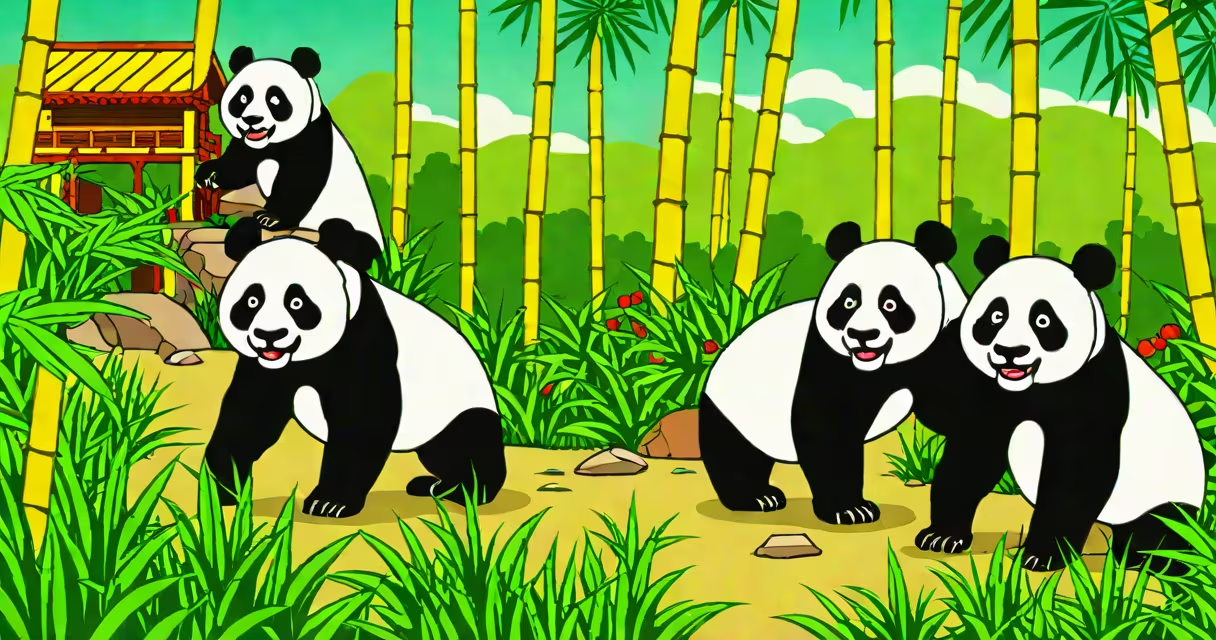
China sends two giant pandas to the United States under a formal loan agreement, where they reside at accredited zoos for a set period, typically 10 years, as part of international conservation and diplomatic engagement.
These animals are not owned by the U.S. government or the hosting zoos. They remain the property of the People's Republic of China, which grants their temporary presence abroad. The arrangement includes strict conditions: the pandas must be returned at the end of the term, and any offspring born during the loan are also repatriated to China.
The practice began in the 1950s when China gifted pandas to foreign nations as symbolic gestures of goodwill. Today, it functions as a form of soft power, reinforcing relationships between China and host countries. The most recent pair sent to the U.S. arrived at the National Zoo in Washington, D.C., in 2023, following a long-standing agreement between the Chinese government and the U.S. Department of Agriculture.
When China sends two giant pandas to the U.S., it does so through a formal agreement managed by the U.S. Fish and Wildlife Service and the Chinese Ministry of Ecology and Environment. The process involves multiple layers of coordination: animal health assessments, quarantine protocols, facility inspections, and ongoing monitoring.
Pandas arrive via specialized cargo flights equipped with climate-controlled containers. Upon arrival, they undergo a 30-day quarantine period to ensure they carry no diseases that could threaten native wildlife. During this time, veterinary teams conduct full physical exams, blood tests, and behavioral evaluations.
After quarantine, the pandas are introduced to their new habitat. These enclosures are designed to mimic natural environments, including temperature regulation, humidity control, and access to bamboo groves. The National Zoo's panda habitat spans 3.5 acres and includes climbing structures, pools, and hidden feeding stations to encourage natural behaviors.
China does not offer free gifts anymore. All current panda loans are commercialized arrangements, meaning the host country pays a fee for the loan. This funding supports conservation efforts in China, particularly in Sichuan Province, where wild pandas live.
| Loan Type | Funding Model | Duration | Offspring Policy |
|---|---|---|---|
| Conservation Loan | $1 million/year to China | 10 years | Offspring stay in China |
| Research Loan | $1.5 million/year; research collaboration required | 10 years | Offspring go to China |
| Public Education Loan | $750,000/year; public outreach mandate | 10 years | Offspring return to China |
For example, the 2023 pair sent to the National Zoo were under a Conservation Loan agreement. The U.S. paid $1 million annually, with funds directed toward breeding programs and habitat restoration in Wolong Nature Reserve. The agreement also requires the zoo to publish annual reports on the pandas' health, behavior, and public engagement metrics.
Hosting giant pandas is a high-profile honor. Only 20 U.S. zoos have hosted them since 1972. The National Zoo has had pandas since 1972, with a continuous presence except for brief gaps due to political tensions or pandemic-related closures.
Attendance at the National Zoo spikes by 20% during panda events. In 2023, the arrival of the new pair drew over 1.2 million visitors in the first six months-up from 850,000 the previous year. Pandas generate significant revenue through ticket sales, merchandise, and media rights.
But the economic impact is secondary. The primary goal is fostering international cooperation. According to the U.S. State Department, panda loans are part of a broader structure of science and environmental diplomacy. China has used the program to build partnerships with countries across Asia, Europe, and North America.
Many assume the U.S. owns the pandas or that they're permanent residents. That's false. The animals are never transferred to U.S. ownership. Even if a zoo spends millions on infrastructure and care, the pandas remain Chinese property.
Another misconception is that pandas are easy to breed. In reality, female giant pandas ovulate only once a year, and gestation lasts 95 to 160 days. Births are rare, and cub survival rates are low without intensive human intervention. The National Zoo's last successful birth was in 2019. The current pair have not yet produced offspring.
A lesser-known fact: China restricts the movement of pandas between facilities. A panda cannot be transferred from one U.S. zoo to another without prior approval. In 2021, a proposed swap between the San Diego Zoo and the Smithsonian Institution was denied because the Chinese authorities cited concerns over genetic diversity and stress factors.
I visited the National Zoo in early spring 2024. The pandas were resting in a shaded bamboo grove. One sat upright, chewing slowly on a stalk. The other lay on its side, belly exposed. Visitors stood silently, phones out, recording footage. There was no noise-just the rustle of leaves and the occasional grunt from the animals.
That moment underscored the emotional weight of the loan. These animals aren't just attractions. They represent a fragile balance between conservation, diplomacy, and public fascination. When the pandas move, the entire system of the exhibit shifts-from staff routines to visitor expectations to media coverage.
Unlike typical animal trade, panda loans are not commercial transactions. They do not involve ownership transfer. The animals are not sold, traded, or auctioned. Instead, they function as living ambassadors.
Compare this to the U.S. import of exotic birds or reptiles. Those are regulated under the Lacey Act and require permits. But pandas are governed by the Convention on International Trade in Endangered Species (CITES), which classifies them as endangered. Their movement is subject to both national laws and international treaties.
Also, unlike most wildlife loans, pandas are not released into the wild after their service. They remain in captivity for life. China has no plans to reintroduce captive-born pandas into the wild, even if they meet biological criteria. The focus remains on maintaining genetic lines in controlled environments.
China sends two giant pandas to the U.S. under a long-term loan agreement that serves scientific, diplomatic, and conservation goals. The animals are not pets or permanent residents-they are part of a global effort to protect a species on the brink of extinction. Their presence in American zoos reflects deeper ties between nations, shaped by shared ecological responsibility and mutual interest in biodiversity.
Understanding this arrangement requires seeing beyond the cute photos and viral videos. The real story lies in the logistics, the regulations, and the long-term commitments. For every panda that walks through a zoo gate, thousands of people in China and the U.S. work behind the scenes to ensure their well-being and the success of the partnership.