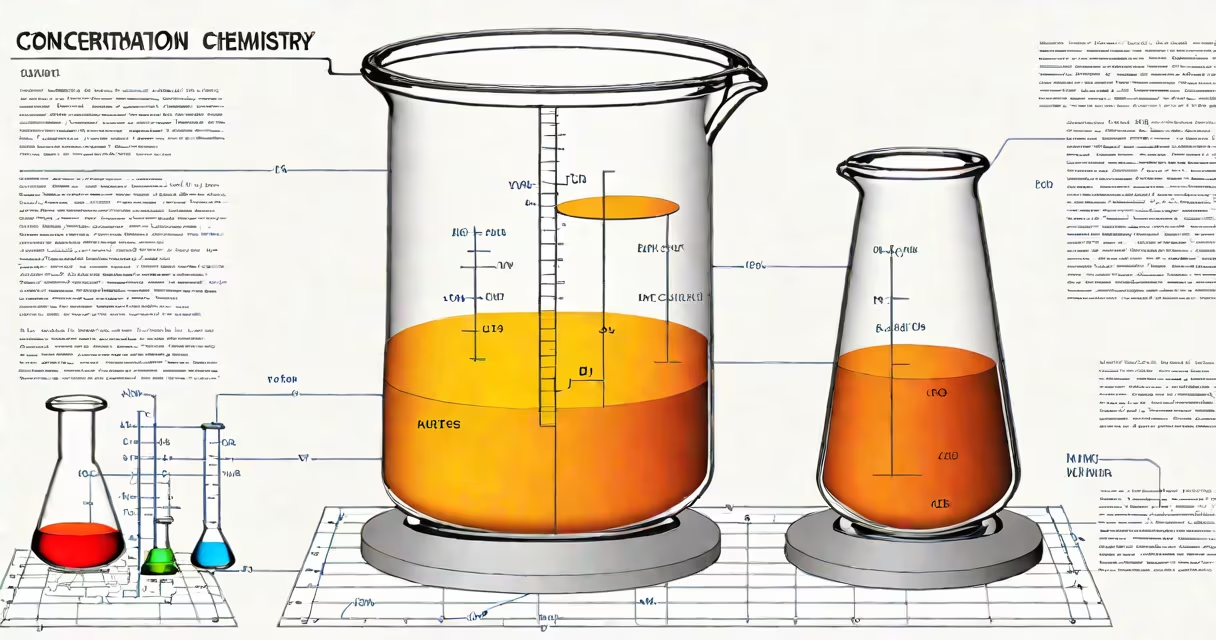
Concentration in chemistry quantifies the amount of a substance (solute) dissolved in a given volume of solvent or solution. It defines how much solute exists per unit volume, enabling precise control in reactions, formulations, and analytical procedures.
Concentration is not a single value-it varies by method. The most common measure is molarity (M), which expresses moles of solute per liter of solution. For example, a 1 M NaCl solution contains exactly 1 mole of sodium chloride dissolved in 1 liter of water. This allows chemists to predict reaction yields, adjust pH, and scale experiments from lab bench to industrial production.
Other forms include molality (moles per kilogram of solvent), mass percent (grams of solute per 100 grams of solution), and parts per million (ppm). Each serves different purposes. Molality is used in colligative property calculations because it doesn't change with temperature, while ppm is standard in environmental testing for trace contaminants.
Measuring concentration begins with dissolving a known mass of solute into a solvent. The resulting solution is diluted to a specific volume using a volumetric flask. For molarity, the formula is:
M = moles of solute / liters of solutionTo calculate moles, divide the mass of the solute by its molar mass. For instance, dissolving 58.44 grams of NaCl (molar mass = 58.44 g/mol) in enough water to make 1 liter of solution gives a 1 M solution.
When preparing solutions, accuracy matters. A 0.1 M HCl solution requires 3.65 grams of HCl per liter. Using a balance accurate to ±0.01 g and a Class A volumetric flask ensures precision. Errors in measurement propagate through dilutions and affect experimental outcomes.
Dilution follows the formula:
C₁V₁ = C₂V₂Where C₁ and V₁ are initial concentration and volume, and C₂ and V₂ are final values. To make 500 mL of 0.05 M NaOH from a 1 M stock, solve for V₁: (1 M)(V₁) = (0.05 M)(0.5 L), so V₁ = 0.025 L or 25 mL. Add 25 mL of stock to 475 mL of water.
Chemists choose concentration units based on context. Molarity dominates in reaction stoichiometry, especially in titrations and kinetic studies. Molality is preferred in freezing point depression and boiling point elevation calculations, such as determining antifreeze effectiveness in car radiators.
| Unit | Formula | Use Case | Example |
|---|---|---|---|
| Molarity (M) | mol solute / L solution | Reaction rates, titrations | 0.5 M glucose in IV fluid |
| Molality (m) | mol solute / kg solvent | Colligative properties | NaCl in ice-melting brine |
| Mass percent (%) | (mass solute / mass solution) × 100 | Pharmaceuticals, consumer products | 3% hydrogen peroxide disinfectant |
| Parts per million (ppm) | (mass solute / mass solution) × 10⁶ | Environmental monitoring | 10 ppm lead in drinking water |
A key distinction often missed: molarity changes with temperature because volume expands or contracts. Molality does not. In a lab setting, this means a 1 M solution at 20°C becomes slightly less concentrated at 30°C due to thermal expansion. For high-precision work, molality avoids this error.
Many assume "concentration" means only molarity. But in practice, scientists use multiple units depending on stability, accuracy, and application. Confusing molarity with molality leads to significant errors-especially in cryoscopy or osmotic pressure calculations.
Another frequent mistake is assuming that adding solute always increases concentration linearly. In reality, solubility limits exist. For example, NaCl dissolves in water up to about 6.1 M at room temperature. Beyond that, excess salt precipitates out. Attempting to make a 7 M NaCl solution fails-the solution remains saturated at ~6.1 M.
I once prepared a 0.1 M CuSO₄ solution for a school demonstration. I weighed 2.497 grams of copper(II) sulfate pentahydrate (CuSO₄·5H₂O, molar mass 249.68 g/mol) and dissolved it in 1 liter of water. The resulting solution was pale blue, as expected. But when I checked the actual concentration with UV-Vis spectroscopy, it read 0.098 M. The discrepancy came from incomplete dissolution during transfer. Always swirl gently and verify clarity before final volume adjustment.
In pharmaceutical development, concentration determines drug efficacy and safety. A 0.1% w/v insulin solution delivers 1 mg per 1 mL. Deviations beyond ±5% can cause hypoglycemia or ineffective treatment. Regulatory bodies like the FDA require strict documentation of concentration during batch production.
Environmental labs monitor pollutants using ppm and ppb (parts per billion). The EPA sets a maximum contaminant level of 10 ppb for arsenic in drinking water. Testing involves sample digestion, matrix separation, and detection via ICP-MS (inductively coupled plasma mass spectrometry). Even small deviations in concentration affect public health decisions.
Industrial processes rely on consistent concentration too. In semiconductor manufacturing, etching solutions must maintain exact molarity to avoid micro-defects. A 0.5% variance in HF concentration can result in uneven silicon removal, leading to faulty chips.
Understanding concentration enables accurate prediction, reproducibility, and compliance. It's not just a number-it's a control parameter in science and engineering.