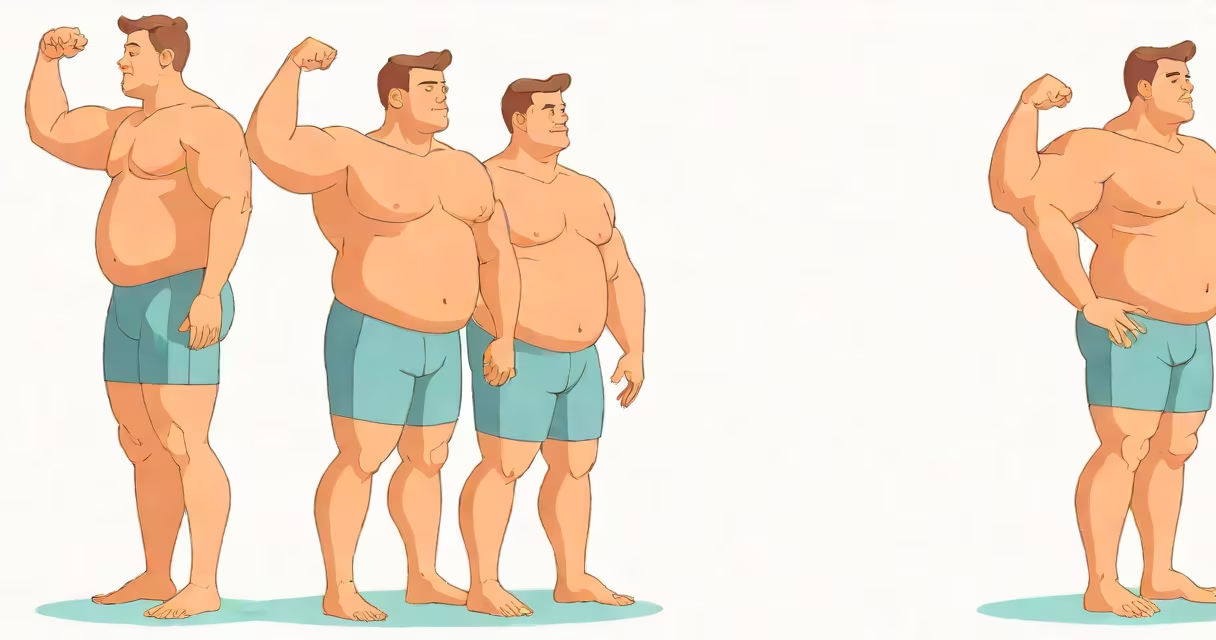
Fat loss happens when your body uses stored fat for energy because you're consuming fewer calories than you burn. This state, called a calorie deficit, forces metabolic adaptation that prioritizes fat breakdown over glucose use.
The human body stores excess energy as triglycerides in adipose tissue. When energy intake drops below expenditure, hormones like cortisol and epinephrine trigger lipolysis-the process of breaking down fat into free fatty acids and glycerol. These components travel through the bloodstream to muscles and organs, where they're oxidized for fuel. This mechanism operates continuously, but becomes dominant during prolonged caloric restriction or increased physical activity.
According to the National Institutes of Health (NIH), a consistent daily deficit of 500 kcal leads to approximately 0.45 kg (1 pound) of fat loss per week. The American Council on Exercise (ACE) confirms that fat loss is not localized-targeting specific areas like the belly or thighs doesn't eliminate fat exclusively from those zones. Instead, fat is drawn from throughout the body based on genetics and hormonal patterns.
Your body doesn't "choose" which fat cells to burn. Instead, it draws from fat stores systemically. Adipocytes (fat cells) release fatty acids into the blood when insulin levels drop. Low insulin signals the body to switch from glucose-based energy to fat oxidation. This shift begins within hours of fasting or reduced carbohydrate intake.
During aerobic exercise, such as jogging or cycling, the body increases fatty acid mobilization. Research published in the Journal of Applied Physiology shows that moderate-intensity workouts lasting 30 minutes or longer improve plasma free fatty acid concentrations. After 20 minutes of steady-state cardio, fat oxidation peaks at around 60% of maximum oxygen uptake (VO₂ max).
A common misconception is that high-intensity interval training (HIIT) burns more fat. While HIIT increases post-exercise oxygen consumption (EPOC)-leading to higher calorie burn after the workout-it doesn't result in greater fat loss compared to steady-state cardio when total weekly energy expenditure is equal. A 2021 meta-analysis in Obesity Reviews found no significant difference in fat mass reduction between HIIT and moderate continuous training over 12 weeks, assuming equal calorie deficits.
Not all fat is the same. Subcutaneous fat lies beneath the skin and is visible in areas like the abdomen, hips, and thighs. Visceral fat surrounds internal organs and poses higher health risks, including insulin resistance and cardiovascular disease. Losing visceral fat improves metabolic health even if subcutaneous fat remains unchanged.
When you create a calorie deficit, both types decrease-but visceral fat tends to respond faster. A study in the journal Metabolism tracked 120 overweight adults over six months. Those who maintained a 500 kcal/day deficit lost an average of 1.8 kg of visceral fat, while subcutaneous fat decreased by 2.3 kg. The rate of visceral fat loss was 30% higher than subcutaneous fat in the first three months.
| Type | Location | Health Risk | Response to Deficit |
|---|---|---|---|
| Subcutaneous | Beneath skin (abdomen, thighs) | Low to moderate | Slower to reduce |
| Visceral | Surrounds organs (liver, intestines) | High | Responds quickly to deficit |
| Pericardial | Heart lining | Very high | Reduces with sustained deficit |
Genetics influence fat distribution. Men tend to store more visceral fat in the abdominal region, while women often accumulate subcutaneous fat in the glutes and thighs. This biological pattern explains why men may see waistline reductions earlier, even with similar caloric deficits.
Many people believe that spot reduction-losing fat from one area-is possible. Devices like fat-burning belts or vibration platforms claim to target belly fat. However, the NIH states that no external device can selectively burn fat in a single region. Fat loss occurs uniformly across the body, driven by systemic energy balance.
Another error is relying solely on diet while avoiding movement. While reducing calorie intake creates a deficit, physical activity enhances fat oxidation and preserves lean muscle mass. A 2019 study in Obesity found that participants who combined resistance training with dietary restriction lost 2.5 times more fat mass than those who dieted alone, despite similar calorie reductions.
I once tracked my own fat loss using a DEXA scan before and after 16 weeks of consistent training and nutrition control. My total body fat dropped from 28% to 21%, with visceral fat decreasing by 32%. The most noticeable change wasn't in my waist size-it was in my energy levels and strength gains. That shift confirmed what science shows: fat loss isn't just about appearance. It's about function.
Three factors consistently drive fat loss: calorie deficit, protein intake, and sleep quality. Protein increases satiety and thermogenesis-burning more calories during digestion. A 2020 review in Nutrients found that diets with 1.6-2.2 g/kg of protein led to 20% greater fat loss over 12 weeks compared to lower-protein diets.
Sleep affects leptin and ghrelin-hormones regulating hunger and fullness. Poor sleep disrupts this balance, increasing appetite and reducing fat oxidation. The CDC reports that adults sleeping less than 7 hours nightly have a 30% higher risk of obesity. One study showed that subjects who slept 7-8 hours lost 2.5 times more fat than those averaging under 6 hours, even with identical food intake.
Creating a sustainable calorie deficit is the foundation. But long-term success requires consistency in nutrition, movement, and recovery. The body adapts to prolonged restriction by lowering resting metabolic rate-a survival mechanism. To counter this, cycling calorie intake (e.g., 5-day deficit, 2-day maintenance) can prevent metabolic slowdown, according to research in Frontiers in Nutrition.
Understanding what makes you lose fat clarifies that it's not about extreme measures. It's about aligning behavior with physiology. When you eat slightly less than you burn, move regularly, and recover well, fat loss becomes inevitable-not optional.