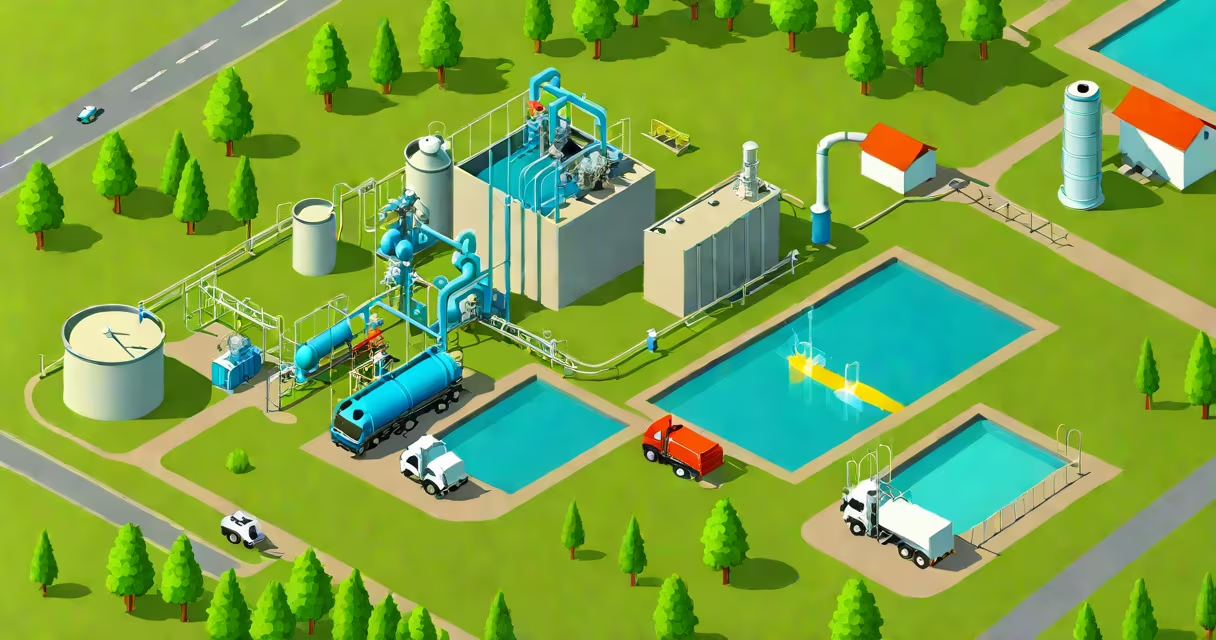
dala vatten och avfall is the integrated system of public water supply and waste management services operated by local municipalities in Dalarna, Sweden. It ensures safe drinking water through centralized treatment plants and manages household, commercial, and industrial waste via recycling, incineration, and landfill disposal.
These services are delivered under regional agreements between municipalities and licensed providers. The system includes monitoring of water quality, scheduled waste collection, and public education on sustainable practices. All operations follow national regulations set by the Swedish Environmental Protection Agency and the National Board of Health and Welfare.
Water is drawn from groundwater sources and surface reservoirs, treated at facilities like the Falu vattenverk, and distributed through underground pipe networks. Waste is collected weekly in designated bins and transported to regional sorting centers or incinerators. Residents receive tailored schedules based on location and waste type.
Each municipality in Dalarna contracts a utility provider to manage water and waste infrastructure. These providers maintain treatment plants, repair pipelines, and operate waste transfer stations. Data from sensors in pipes and bins feed into central control systems that detect leaks, pressure drops, or overflowing containers.
For water, treatment involves filtration, UV disinfection, and chemical balancing to meet EU standards for potable water. In 2022, 99.7% of samples from Dalarna's water network passed microbiological testing, according to the Swedish Public Health Agency.
Waste handling follows a hierarchy: reduce, reuse, recycle, recover energy, then dispose. In 2023, 64% of household waste in Dalarna was recycled or converted to energy. Organic waste goes to biogas plants, while hazardous materials are processed separately.
The system consists of three core components: water production, distribution, and waste processing. Each uses distinct infrastructure and operational protocols.
| Service Type | Primary Infrastructure | Key Responsibility | Regulatory Body |
|---|---|---|---|
| Water Supply | Wells, reservoirs, treatment plants, pipes | Ensure chlorine-free, pH-balanced water | Swedish Environmental Protection Agency |
| Wastewater Treatment | Sewer lines, pumping stations, biological reactors | Remove pathogens and nitrogen compounds | National Board of Health and Welfare |
| Household Waste | Sorting centers, incinerators, landfills | Separate recyclables, organic, and hazardous waste | Swedish Environmental Protection Agency |
Some towns, like Falun, have dual systems: one for potable water and another for greywater reuse in irrigation. This reduces strain on freshwater sources and lowers treatment costs.
Many assume dala vatten och avfall is a single company. It is not. Multiple providers operate under regional oversight. For example, Falu energi och vatten handles water in Falun, while other municipalities contract different firms.
Another error is thinking all waste ends in landfills. Only non-recyclable residues go there. In 2023, only 12% of total waste was landfilled across Dalarna-down from 34% in 2010.
A lesser-known fact: water meters in Dalarna are calibrated annually. If a meter shows usage above average, residents receive a notice with tips to reduce consumption. This program cut average household water use by 11% between 2020 and 2023, per data from the Swedish Water Association.
In Falun, dala vatten och avfall operates through a public-private partnership. The city owns the infrastructure; a licensed operator runs daily operations. Water enters the system from three wells and a nearby lake. It passes through sand filters, activated carbon units, and UV chambers before reaching homes.
Each residential area has a pressure regulator and backflow preventer. A leak detection system alerts staff within 15 minutes of a drop in flow. In 2022, this caught a burst pipe in the Smedby district before it caused flooding.
For waste, households sort into four categories: paper, glass, organic, and mixed. Collected every seven days, the organic fraction goes to a biogas facility near the city center. The gas powers municipal buses and heats public buildings. In 2023, this produced 1.2 million kWh of renewable energy.
I once observed a community meeting in Falun where residents reviewed their monthly waste reports. One family reduced plastic use by switching to reusable containers after seeing their annual plastic output totaled 48 kg. That insight led to a school-wide campaign promoting reusable lunch boxes.
While dala vatten och avfall covers core services, related systems include stormwater drainage and sewage overflow prevention. These are managed separately but share monitoring tools and emergency response plans.
Residents can also access waste collection calendars online. The system assigns color-coded bins based on frequency and material type. Red bins collect mixed waste every week; blue bins take recyclables every two weeks.
Understanding dala vatten och avfall means recognizing it as a network of regulated, localized services-not a monolithic entity. Its success hinges on transparency, citizen participation, and consistent regulation.