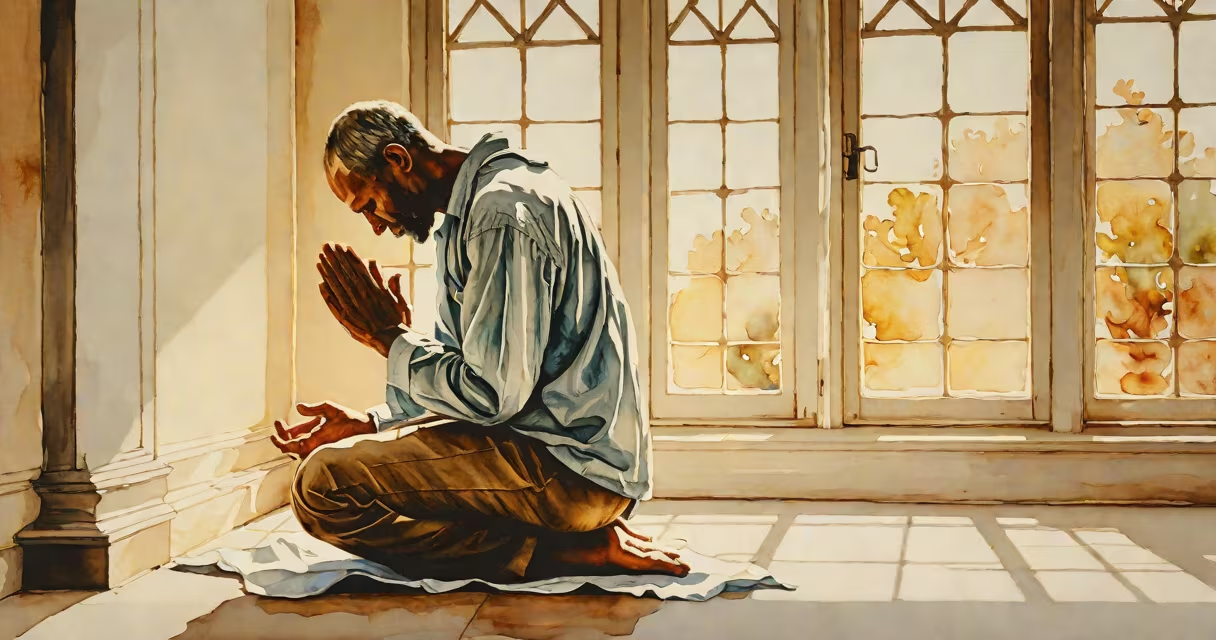
Prayer is a deliberate act of communication with a divine being, spiritual force, or higher power, expressed through spoken words, silent thoughts, rituals, or physical gestures. It functions as a central practice in most religious traditions and many personal belief systems.
Prayer involves intentionality. A person may speak aloud, whisper, or silently reflect, often using set phrases, scripture, or spontaneous language. The act is not merely verbal-it includes posture, timing, location, and emotional focus. Common forms include supplication (asking for help), thanksgiving (expressing gratitude), confession (acknowledging wrongdoing), and praise (honoring the divine).
Religious texts define prayer in specific ways. The Bible describes prayer as "calling on the name of the Lord" (Genesis 4:26). In Islam, salah-the five daily prayers-is performed facing Mecca, involving precise movements and recitations from the Quran. Hinduism includes japa (repetition of mantras) and puja (ritual offerings). These practices are not symbolic only-they are structured, time-bound, and often obligatory within their communities.
Prayer operates differently depending on context. In monotheistic faiths like Christianity, Judaism, and Islam, prayer is typically directed toward a single, transcendent God. In polytheistic or animistic traditions, such as certain Indigenous spiritual systems or Shinto, prayer may be offered to multiple deities, ancestors, or natural forces.
Some traditions emphasize ritual repetition. The Catholic rosary involves reciting 15 decades of prayers while counting beads. In Sufi Islam, dhikr-repeating the name of God-can last hours and involve rhythmic breathing and movement. These practices aim to deepen focus, induce altered states of consciousness, and strengthen connection over time.
Other forms are spontaneous. A person may pray during a crisis, in private, without formal structure. This kind of prayer is often described as "conversational"-a direct exchange between the individual and the divine. Research from the National Institutes of Health notes that such informal prayer correlates with reduced anxiety and improved coping in clinical settings, though it does not replace medical treatment.
Prayer varies widely in form. Below is a comparison of common types based on function and structure:
| Type | Function | Examples | Frequency |
|---|---|---|---|
| Supplication | Requesting help or intervention | "Please heal my child." (Christianity) | As needed |
| Thanksgiving | Expressing gratitude | "Thank you for this food." (Jewish Shema) | Daily or seasonal |
| Praise | Honoring divine attributes | "Holy, holy, holy..." (Isaiah 6:3) | Regular worship services |
| Confession | Admitting fault or sin | "Forgive me, Father, for I have sinned." (Roman Catholic) | Weekly or annually |
| Contemplation | Meditative stillness | Centering prayer (Christian mysticism) | Personal, ongoing |
Not all prayer requires words. In Zen Buddhism, zazen (seated meditation) is a form of silent prayer focused on breath and awareness. Similarly, Native American sweat lodge ceremonies include prayer not through speech but through presence, silence, and ritual gesture.
People often assume prayer is solely about asking for miracles or material outcomes. But scholars distinguish between petitionary prayer (seeking favors) and major prayer (changing the self). According to the Pew Research Center, 73% of Americans say they pray regularly-but only 38% report praying specifically to ask for something. Most cite emotional comfort, moral guidance, or inner peace as primary reasons.
Another misconception is that prayer must be verbal. Silent mental prayer is valid across traditions. The Catholic Church recognizes interior prayer as essential to spiritual life. Saint Teresa of Ávila wrote in *The Interior Castle* that "the soul's deepest communion with God happens in silence."
A less obvious point: prayer is not always directed upward. In some African traditional religions, prayer is offered to ancestors, spirits, or nature deities. In Sikhism, prayer is addressed to Waheguru-a formless, eternal reality. These systems challenge the Western assumption that prayer is exclusively vertical (between human and divine) rather than horizontal (within community or ecological relationships).
Consider Maria, a 42-year-old nurse in Chicago who practices Roman Catholicism. Her morning routine includes 15 minutes of prayer after waking. She begins with the Sign of the Cross, then recites the Our Father and Hail Mary. She adds a personal request: "Help me be patient with my patients today." She ends with a silent moment of listening. This pattern repeats daily, even on weekends.
She does not expect immediate results. Instead, she views prayer as shaping her character. "I don't pray to change God," she says. "I pray to change myself." Her experience reflects a key insight from theologian Paul Tillich: prayer is not about changing the world through divine intervention-it's about aligning the self with deeper values.
Research from the University of Pennsylvania's Positive Psychology Center shows that people who engage in regular prayer report higher levels of resilience, lower stress markers, and greater life satisfaction. The study tracked 2,000 participants over two years and found that those who prayed daily had a 22% lower risk of depression compared to non-prayers, even after adjusting for socioeconomic status.
Prayer is not magic. It does not guarantee outcomes. It is not a transactional system where good behavior earns divine rewards. The Book of Job in the Hebrew Bible explicitly rejects this idea-Job suffers despite his righteousness. The message is clear: suffering exists, and prayer does not always resolve it.
Prayer also differs from meditation, though the two often overlap. Meditation focuses on mental discipline, breath control, or mindfulness. Prayer centers on relationship-with God, spirit, or purpose. While both may calm the mind, prayer involves address: "I am speaking to You." Meditation is often self-directed: "I am observing my thoughts."
Finally, prayer is not exclusive to religion. Secular individuals may use prayer-like practices-journaling, affirmations, or reflective pauses-to manage stress or clarify decisions. These are not religious acts, but they share structural similarities: intention, repetition, and inward focus.
Understanding prayer as a multifaceted human practice-spiritual, psychological, cultural-helps avoid oversimplification. It is not a single action but a constellation of behaviors shaped by history, identity, and need.