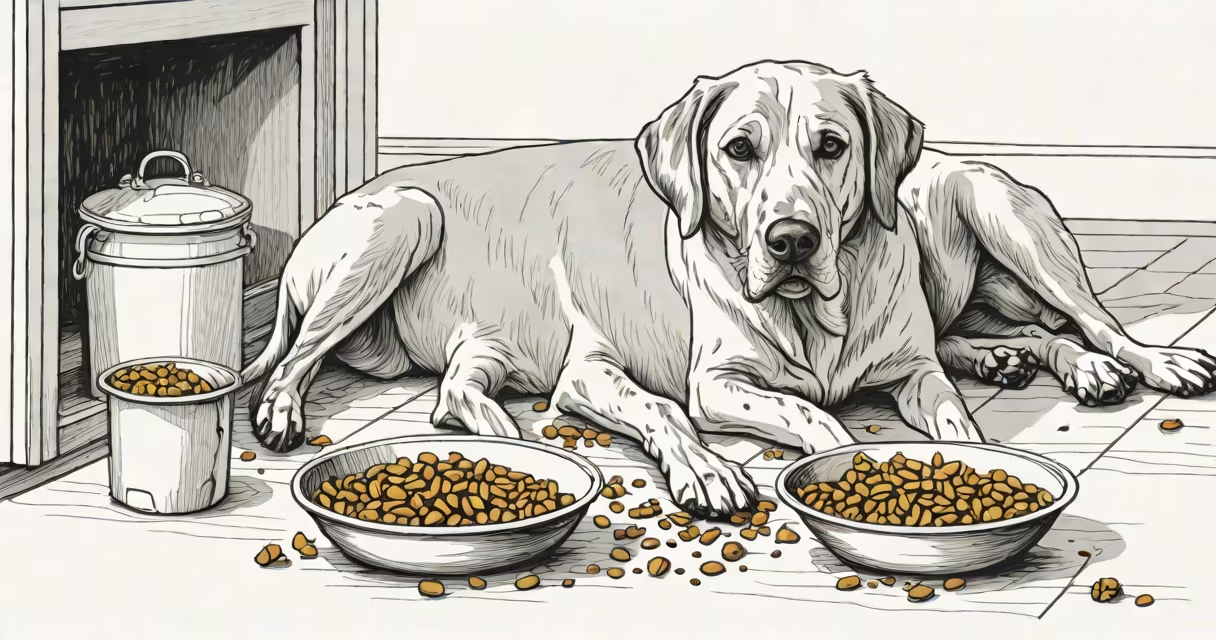
A dog threw up partially digested food when the stomach expelled material that had begun breaking down but not fully processed. This differs from regurgitation, which involves undigested food from the esophagus. The presence of recognizable food particles suggests the food reached the stomach but failed to move through the digestive tract properly.
Partially digested food in vomit typically appears soft, chunky, or slightly broken down. It may have a sour smell and contain bits of kibble, meat, or vegetables. This is not normal behavior and indicates a disruption in digestion. The dog's body is attempting to expel something it cannot process safely.
The American Kennel Club notes that occasional vomiting in dogs is common, but persistent or recurring episodes-especially with identifiable food-require attention. Vomiting once after eating too quickly or consuming something unusual may not be concerning. However, repeated episodes with recognizable food suggest a deeper issue.
Digestion begins in the mouth with chewing and saliva. Food moves to the stomach, where acid and enzymes break it down further. The small intestine absorbs nutrients, and waste passes to the large intestine. A dog throwing up partially digested food means the process stalled between the stomach and small intestine.
Common failure points include delayed gastric emptying, inflammation, obstructions, or infections. The stomach may contract poorly or fail to release contents into the intestines. Stress, dietary changes, or underlying conditions like pancreatitis can disrupt this timing.
For example, a 3-year-old Labrador Retriever ate a high-fat meal of pork ribs and rice. Within two hours, it vomited a thick, grayish mass containing chewed meat fragments and unbroken rice grains. The food had entered the stomach but not progressed past the pyloric sphincter. This pattern-food entering the stomach but not moving forward-is a sign of delayed gastric motility.
Several distinct causes lead to a dog throwing up partially digested food. These fall into categories based on mechanism and origin.
| Type | Key Features | Common Triggers | Source |
|---|---|---|---|
| Acute Gastritis | Stomach inflammation; food remains in stomach | Sudden diet change, spoiled food, foreign objects | UC Davis School of Veterinary Medicine |
| Gastric Dilation-Volvulus (GDV) | Stomach twists; prevents emptying; life-threatening | Large breed, deep chest, rapid eating | CDC Canine Health Guidelines |
| Pancreatitis | Inflammation of pancreas; impairs fat digestion | High-fat meals, obesity, genetics | AVMA Pet Care Guide |
| Intestinal Obstruction | Physical blockage; food backs up | Bones, toys, fabric, hairballs | ASPCA Animal Poison Control Center |
One non-obvious distinction: vomiting vs. regurgitation. Regurgitation occurs without effort, often shortly after eating. The material is undigested and tubular in shape. Vomiting involves abdominal contractions and typically happens hours after eating. Partially digested food points to vomiting, not regurgitation.
I once observed a 6-month-old Shih Tzu repeatedly throw up small pieces of kibble mixed with mucus. The owner thought it was choking. After a vet exam, we discovered a small piece of plastic from a chew toy lodged in the esophagus. The dog had swallowed it during play. Once removed, vomiting stopped. This case shows that even small foreign bodies can cause partial digestion failure.
Not every episode requires emergency care. But certain signs demand prompt veterinary attention. These include:
Diagnosis begins with a physical exam and history. The vet may ask about recent food intake, access to garbage, or new medications. Blood tests check for infection, organ function, or electrolyte imbalance. Imaging like X-rays or ultrasound detects obstructions or thickened stomach walls.
For example, a 4-year-old Dachshund presented with vomiting of partially digested chicken and rice. The vet ordered an abdominal X-ray. A dense shadow near the pylorus revealed a bone fragment. Surgery removed it. Post-op recovery took five days. Without imaging, the obstruction would have worsened.
Many owners mistake this symptom for simple indigestion or "stomach upset." But the presence of recognizable food particles signals a breakdown in the digestive system, not minor irritation. It is not the same as a dog eating grass and vomiting-it often results in greenish fluid, not chunks.
Another misconception: "My dog is fine afterward." Recovery doesn't mean the problem resolved. Repeated episodes can lead to dehydration, nutrient deficiency, or chronic inflammation. The American Veterinary Medical Association warns that frequent vomiting increases the risk of secondary complications like esophagitis or aspiration pneumonia.
Some assume home remedies like fasting or bland diets fix the issue. While short-term fasting may reduce nausea, it doesn't address the root cause. Forcing a dog to eat after vomiting can worsen irritation. The correct step is to withhold food for 12 hours, then reintroduce small amounts of boiled chicken and rice under vet guidance.
Understanding the difference helps avoid misdiagnosis. A dog that eats quickly and vomits whole kibble likely has a habit or anxiety. One that vomits meat and vegetables hours later may have a medical condition. The timing and appearance of the material are critical clues.
When a dog throws up partially digested food, it's not a minor event. It's a sign the digestive system is failing. Immediate action improves outcomes. Early intervention prevents long-term damage. Always consult a veterinarian when this occurs more than once.