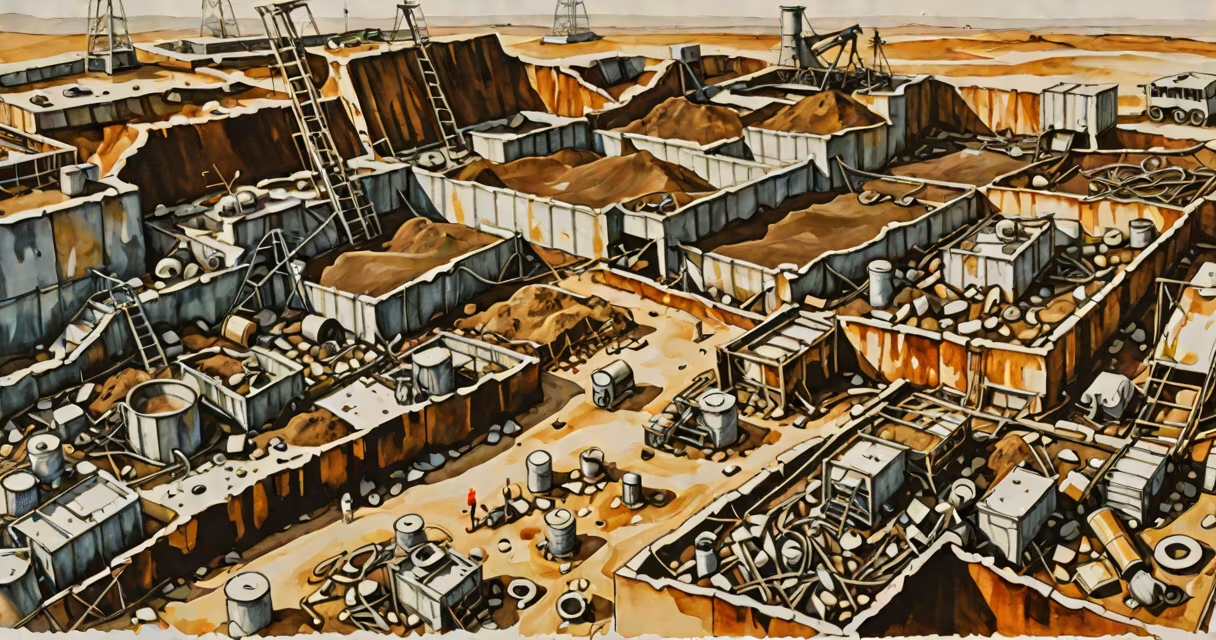
Land pollution occurs when human-made waste accumulates in soil, altering its natural composition and harming ecosystems. It stems from improper disposal of industrial byproducts, agricultural chemicals, and household trash, leading to long-term environmental damage.
Human activity introduces contaminants into the ground at rates faster than natural processes can break them down. These pollutants include heavy metals, pesticides, plastics, and untreated sewage. Once embedded in soil, they disrupt microbial communities, reduce fertility, and leach into groundwater. The result is degraded land that cannot support healthy plant growth or safe food production.
According to the United Nations Environment Programme (UNEP), over 30% of global land is moderately to severely degraded due to pollution and poor management practices. This includes areas near mining sites, urban centers, and intensive farming regions. Contamination spreads through runoff, wind, and root systems, affecting regions far beyond the original source.
When waste enters the soil, physical, chemical, and biological changes occur. Solids settle into pores, reducing oxygen flow and water infiltration. Chemicals dissolve in moisture and migrate downward, reaching aquifers. Microorganisms that maintain soil health die off or mutate under toxic conditions.
For example, lead from old paint or battery waste can remain in soil for decades. A study published in Environmental Science & Technology found that lead concentrations in urban soils near highways exceeded safe limits by up to 12 times. These levels pose risks to children who play in contaminated yards and to crops grown nearby.
Leaching is a key mechanism. Rainwater percolates through polluted soil, picking up toxins and carrying them into groundwater. In Bangladesh, arsenic-contaminated groundwater-originating from naturally occurring minerals and exacerbated by industrial runoff-has poisoned over 20 million people. The World Health Organization (WHO) confirms that such contamination often begins with land pollution.
Land pollution arises from distinct categories of waste and activity. Major contributors include industrial operations, agriculture, municipal solid waste, and mining.
| Type | Common Sources | Key Pollutants | Impact Example |
|---|---|---|---|
| Industrial | Factories, refineries, smelters | Heavy metals (lead, mercury), solvents | Flint, Michigan's water crisis linked to industrial runoff |
| Agricultural | Fertilizers, pesticides, animal waste | Nitrates, phosphates, antibiotics | Dead zones in Gulf of Mexico caused by nutrient runoff |
| Municipal | Landfills, litter, construction debris | Plastics, food waste, asbestos | Great Pacific Garbage Patch includes land-derived plastic |
| Mineral Extraction | Open-pit mines, tailings ponds | Cyanide, sulfuric acid, heavy metals | Mount Polley disaster in British Columbia released 25 million cubic meters of mine waste |
Each category releases unique toxins. Industrial sites often emit persistent organic pollutants (POPs) like dioxins, which resist breakdown and bioaccumulate in food chains. Agricultural runoff contains nitrogen compounds that trigger algal blooms in downstream waters. Municipal waste contributes microplastics-particles smaller than 5mm-that persist in soil for centuries.
One overlooked source is electronic waste. Discarded devices contain cadmium, chromium, and brominated flame retardants. When dumped in informal landfills-common in parts of Ghana and India-these materials seep into soil and air. A 2021 UNEP report estimated that 50 million metric tons of e-waste were generated globally, with only 17% formally recycled.
Land pollution is often confused with soil erosion or desertification. While related, they differ in cause and process. Erosion involves loss of topsoil due to wind or water, whereas land pollution adds foreign substances to existing soil. Desertification results from climate stress and overgrazing, not chemical contamination.
Another misconception is that land pollution only affects rural or undeveloped areas. Urban centers face higher concentrations of pollutants due to dense populations and infrastructure. In New York City, soil samples from Central Park showed elevated levels of polycyclic aromatic hydrocarbons (PAHs)-byproducts of vehicle exhaust and heating fuel-due to historical industrial use.
Not all waste is equally harmful. Organic waste like food scraps decomposes quickly and can enrich soil when composted. But when mixed with plastics or toxics, it becomes hazardous. The Environmental Protection Agency (EPA) distinguishes between biodegradable and non-biodegradable waste based on decomposition timelines-some plastics take over 400 years to break down.
The Love Canal neighborhood in Niagara Falls, New York, serves as a defining case. In the 1940s, Hooker Chemical Company buried 21,000 tons of toxic waste in a canal filled with landfill. The site was later covered and sold for residential development. By the 1970s, rainwater had saturated the area, causing chemicals to leach into homes and gardens.
Residents reported birth defects, miscarriages, and respiratory illnesses. Testing revealed high levels of benzene, dioxins, and PCBs in soil and indoor air. The EPA declared the area a Superfund site in 1980-the first such designation under the Complete Environmental Response, Compensation, and Liability Act (CERCLA).
This incident led to federal regulations requiring proper disposal of hazardous waste and the creation of the National Priorities List. It also demonstrated how land pollution can spread silently-through groundwater and vapor intrusion-before symptoms appear.
I once visited a former industrial zone in Detroit where soil tests confirmed lead levels 30 times above EPA safety thresholds. Children playing near abandoned factories had blood lead levels exceeding 5 µg/dL, the threshold for intervention. The site remains unremediated, underscoring how legacy pollution persists even after industries close.
Remediation methods depend on pollutant type and concentration. Phytoremediation uses plants like sunflowers to absorb heavy metals. Bioremediation employs microbes to break down organic toxins. Soil washing removes fine particles using water and surfactants.
Prevention is more effective than cleanup. Strict permitting for waste disposal, extended producer responsibility laws, and mandatory landfill liners reduce risk. The European Union's Waste Structure Directive requires member states to recycle 65% of municipal waste by 2035, pushing systems toward circular models.