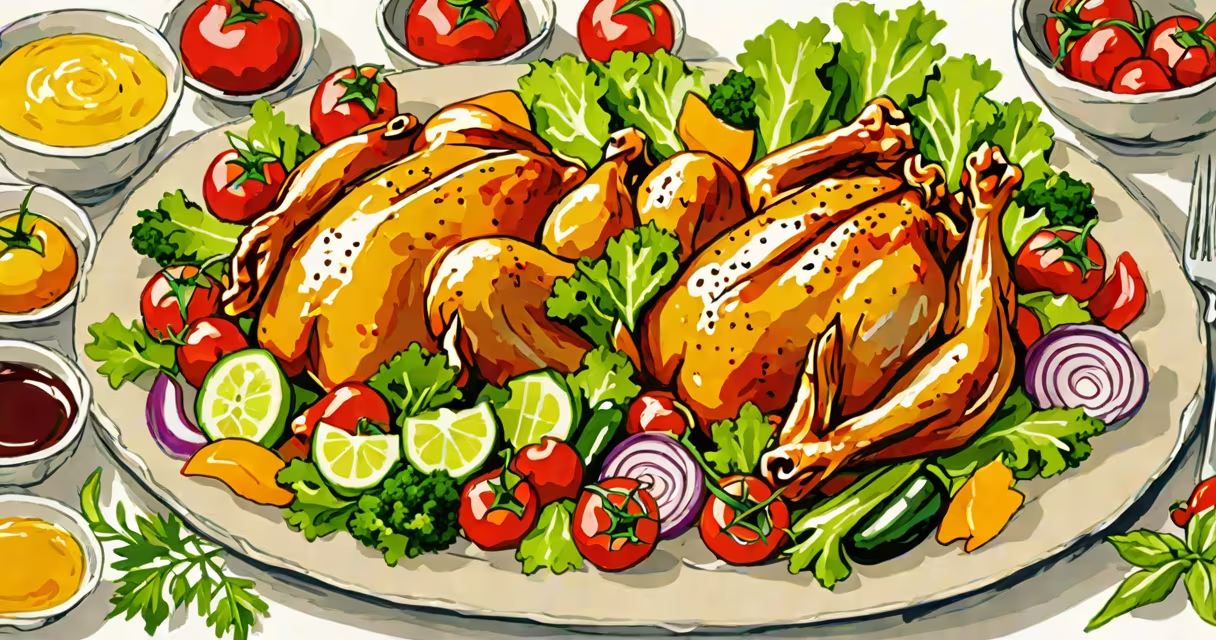
Halal food means any food that is permissible under Islamic law, based on Quranic guidelines and interpretations by Islamic scholars. It excludes pork, alcohol, blood, and animals not slaughtered according to Islamic rites. The term applies to both ingredients and preparation processes.
Halal is derived from the Arabic word meaning "permissible" or "lawful." In practice, it governs what Muslims may eat and how those foods must be handled. The concept extends beyond meat-it includes grains, dairy, beverages, and processed foods. A product labeled halal must meet strict standards during sourcing, processing, and packaging.
The requirements for halal food are rooted in religious texts and codified through centuries of jurisprudence. The Quran states: "He has only forbidden to you dead animals, blood, the flesh of swine, and that which has been dedicated to other than Allah" (Surah Al-Baqarah, 2:173). This verse forms the foundation of halal dietary rules. Modern halal certification bodies enforce these principles with audits and labeling systems.
For a food to be halal, it must pass three key criteria: ingredients, processing, and handling. No prohibited substances-such as alcohol, gelatin from pigs, or enzymes derived from non-halal sources-are allowed. Even trace amounts can disqualify a product, depending on the certifying authority.
Slaughter of animals follows a specific method called dhabihah. The animal must be alive and healthy at the time of slaughter. A swift cut to the neck severs the jugular vein, carotid artery, and windpipe while reciting the name of Allah. The animal must bleed out completely before being processed. This method is intended to minimize suffering and ensure purity.
Non-animal products must also comply. For example, some flavorings contain alcohol-based solvents. If the alcohol is not removed during processing, the product fails halal status. Similarly, cross-contamination during manufacturing-like using shared equipment for halal and non-halal items-can invalidate certification.
Halal certification varies by country and organization. Major certifiers include the Islamic Food and Nutrition Council of America (IFANCA), the Halal Certification Authority (HCA), and the European Halal Integrity Association (EHIA). Each has distinct auditing protocols.
| Certification Body | Region Covered | Key Standard |
|---|---|---|
| IFANCA | North America, parts of Europe | Requires full documentation of supply chain; bans genetically modified organisms (GMOs) unless verified safe |
| HCA | UK, Middle East | Enforces regular on-site inspections; allows certain additives if alcohol is distilled below 0.1% |
| EHIA | Europe | Recognizes EU organic standards as compatible with halal; requires independent lab testing for contaminants |
Not all halal labels carry equal weight. Some brands use "halal-style" or "halal-inspired" to describe dishes without formal certification. These are not legally recognized as halal and may mislead consumers. True halal status requires third-party verification.
Halal food is consumed by over 1.8 billion Muslims worldwide, representing approximately 24% of the global population. Demand drives markets in countries like Indonesia, Turkey, and Malaysia, where halal is embedded in national policy. In the U.S., halal food sales reached $16.5 billion in 2022, according to the National Halal Institute.
Restaurants and supermarkets often label halal items. Chains like McDonald's offer halal menus in countries such as Saudi Arabia and Egypt. In the UK, major retailers including Tesco and Sainsbury's stock halal-certified meat and ready meals. Consumers rely on these labels to make informed choices aligned with religious practice.
Some non-Muslims choose halal food for ethical reasons. The dhabihah method emphasizes humane treatment and reduces animal stress. Studies published in Journal of Animal Science show that halal slaughter results in lower cortisol levels in sheep compared to conventional methods. This makes halal appealing to animal welfare advocates.
Halal is not synonymous with "healthy" or "organic." A product can be halal but high in sugar, salt, or trans fats. Conversely, organic food does not automatically qualify as halal-many organic certifications allow alcohol-based extracts or non-halal enzymes.
Another misconception is that halal means "vegetarian." It does not. Halal includes meat, fish, and poultry, as long as they meet the required conditions. Fish are considered halal by default because they do not require ritual slaughter. However, shellfish are debated among scholars-some permit them, others do not.
A less known fact: halal certification does not guarantee cleanliness or safety. A product can be halal but still contain allergens or pathogens. Certification focuses on compliance with Islamic law, not public health standards. Consumers should still check for allergen warnings and expiration dates.
During my visit to a halal butcher in Istanbul, I observed the entire process-from animal selection to knife sharpening. The butcher explained that the blade must be razor-sharp to ensure a single clean cut. Any hesitation or multiple cuts invalidates the slaughter. This precision reflects the religious significance of intention and execution.
Halal is frequently confused with kosher, another religious dietary system. Both prohibit pork and require ritual slaughter, but differences exist. Kosher animals must be inspected for defects before slaughter. Halal does not require such visual inspection., kosher allows the use of certain animal-derived enzymes that halal forbids.
Some people assume halal means "all-natural." That's incorrect. Artificial colors, preservatives, and flavor enhancers are permitted in halal food if they are derived from halal sources. For example, Red 40 dye is acceptable if sourced from synthetic materials and not from pig fat.
Finally, halal does not apply to all aspects of life. It governs food and drink, but not clothing, housing, or personal conduct. A person can follow halal diet rules while engaging in behaviors outside halal boundaries-such as gambling or lying. The term is specific to consumption.