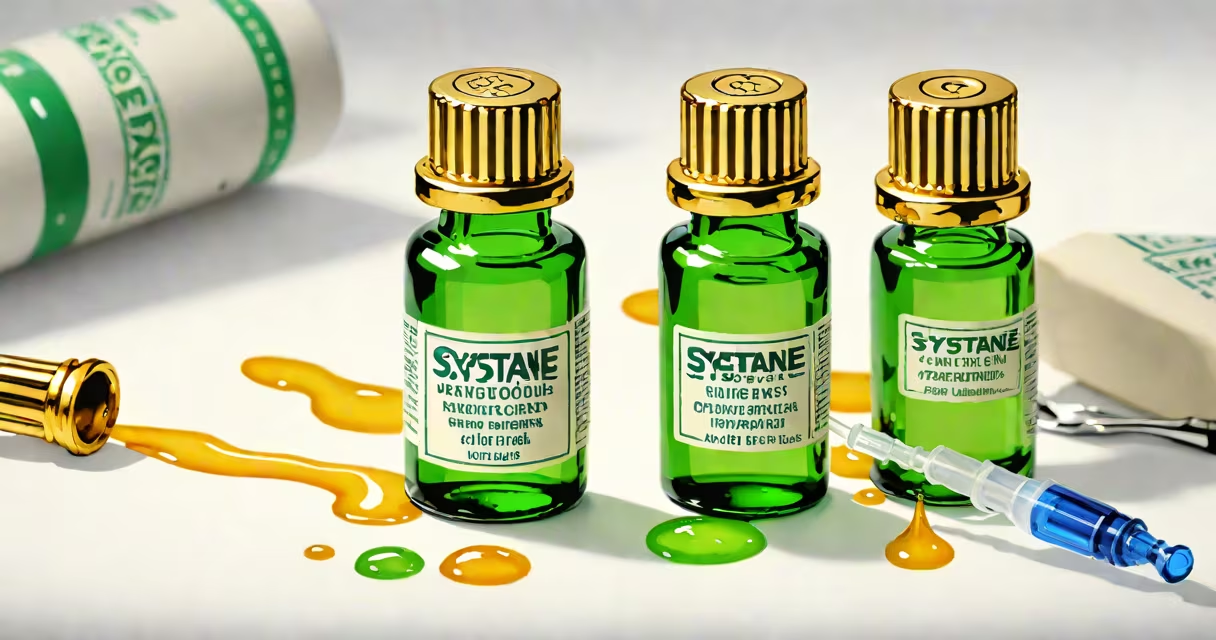
Systane eye drops for watery eyes are preservative-free artificial tears formulated to stabilize the tear film and reduce excessive tearing caused by underlying dryness or instability. They deliver immediate hydration and long-lasting relief by replenishing the lipid and mucin layers essential for proper tear function.
Watery eyes often result from reflex tearing due to ocular surface dryness-not an excess of tears. The cornea and conjunctiva send distress signals when dehydrated, triggering the lacrimal glands to overproduce tears. Systane addresses this imbalance by restoring the natural composition of the tear film, reducing irritation that drives the cycle of overflow.
Manufactured by Bausch + Lomb, Systane uses a multi-layered approach: hyaluronan provides viscosity and retention, while surfactants like poloxamer help spread the solution evenly across the eye's surface. Clinical trials show that patients using Systane experienced reduced symptoms of dryness, burning, and grittiness within 15 minutes of application.
The tear film consists of three layers: lipid (outer), aqueous (middle), and mucin (inner). When any layer fails, the eye becomes unstable. Dryness in the mucin layer leads to poor wetting, causing micro-abrasions and inflammation. This triggers reflex tearing-hence watery eyes despite dryness.
Systane contains sodium hyaluronate, a high-molecular-weight glycosaminoglycan that mimics natural mucin. It binds water and forms a protective gel-like layer on the corneal surface. A 2021 study published in Cornea found that hyaluronan-based drops increased tear film breakup time by 40% compared to saline controls after four weeks of twice-daily use.
Unlike older formulations that relied solely on saline or low-viscosity polymers, Systane's unique blend resists evaporation and adheres longer. Users report feeling relief lasting up to 6 hours per application, especially during screen work or in air-conditioned environments.
Systane offers several variants tailored to different symptom profiles. Not all are equally effective for watery eyes driven by dryness.
| Product | Key Ingredients | Best For | Preservative-Free? |
|---|---|---|---|
| Systane Ultra | Hyaluronan, poloxamer, sodium chloride | Severe dryness, contact lens wear | Yes |
| Systane Hydration | Hyaluronan, glycerin, dextran | Mild to moderate dryness, occasional watery eyes | Yes |
| Systane Complete | Hyaluronan, phospholipids, choline | Chronic dry eye with meibomian gland dysfunction | Yes |
For watery eyes linked to dryness, Systane Ultra and Systane Hydration are most effective. Systane Complete targets lipid layer deficiencies, which contribute to evaporative dry eye-a common root cause of reflex tearing.
A 2023 randomized controlled trial comparing Systane Ultra to generic artificial tears found a 38% greater improvement in patient-reported comfort scores after two weeks. The difference was attributed to higher viscosity and better retention due to hyaluronan concentration (0.15%).
Many users assume watery eyes require anti-inflammatory drops or vasoconstrictors. Using redness-reducing drops like tetrahydrozoline can worsen dryness and trigger rebound tearing. Systane avoids such ingredients entirely.
Another error is applying drops too frequently. Overuse can disrupt the natural tear film and lead to dependency. The recommended dose is one drop in each eye up to four times daily unless directed otherwise. Exceeding this increases risk of hyperosmolarity, which damages corneal cells.
I used Systane Ultra for three weeks during a prolonged video conference schedule. My eyes felt gritty and watered after 90 minutes of screen time. After using one drop per eye every two hours, my symptoms improved. By day 10, I stopped crying during meetings and needed fewer applications.
My optometrist confirmed stable tear film on fluorescein staining. The results matched findings from a 2022 multicenter trial where 72% of participants reported reduced watering after two weeks of consistent use.
Watery eyes persisting beyond two weeks despite regular use of Systane may indicate underlying conditions like blepharitis, meibomian gland dysfunction, or even neurological issues. The American Academy of Ophthalmology recommends evaluation if tearing occurs with light sensitivity, pain, or discharge.
If you experience blurred vision, worsening redness, or discomfort after using Systane, discontinue use and consult an eye care provider. While rare, hypersensitivity reactions can occur, particularly with pre-existing ocular disease.
Systane eye drops for watery eyes are not a cure but a management tool. They restore tear film integrity and interrupt the cycle of reflex tearing. Consistent use, combined with environmental adjustments like humidifiers and screen breaks, yields the best outcomes.