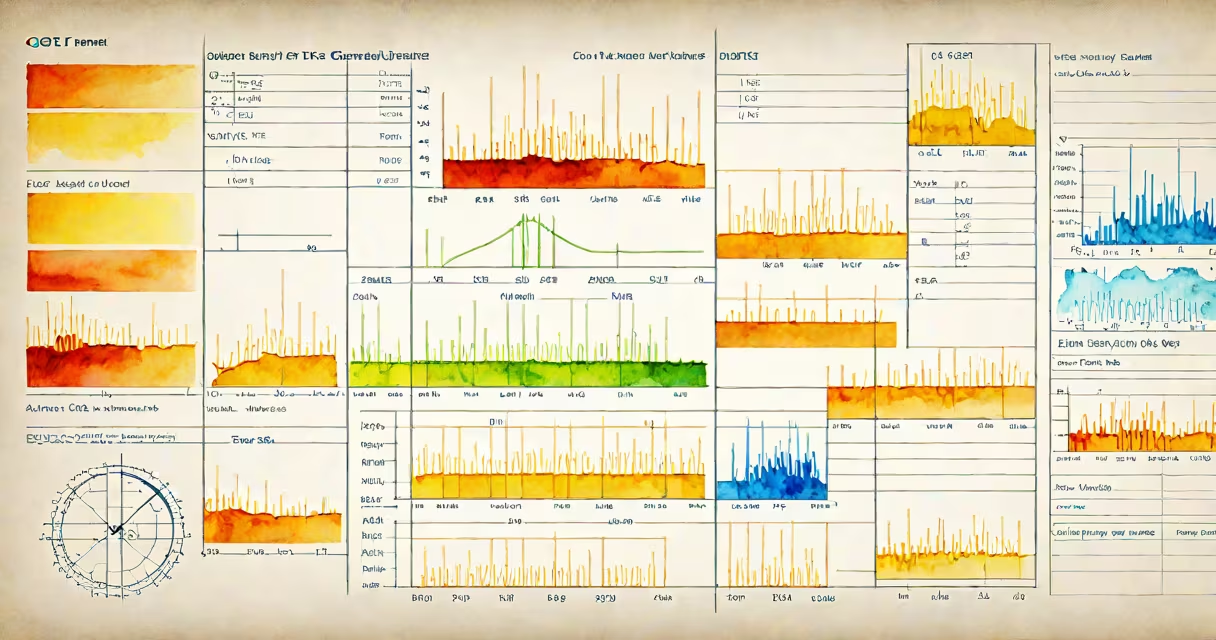
A high GGT level chart displays reference ranges for gamma-glutamyl transferase (GGT), a liver enzyme measured in blood tests to detect liver damage or bile duct obstruction. Values above 50 U/L in adults typically indicate elevated levels, though reference ranges vary by lab and sex.
GGT is produced primarily in the liver and biliary system. When liver cells are stressed or damaged, GGT leaks into the bloodstream. The enzyme becomes detectable in blood samples within hours of injury. A high GGT level chart maps these values against clinical thresholds to flag potential issues early.
For men, normal GGT levels usually fall between 10 and 71 U/L. For women, the range is typically 6 to 42 U/L. These numbers come from the American Association for Clinical Chemistry (AACC) and the National Institutes of Health (NIH), which set standards for laboratory testing.
These charts plot GGT concentrations on a vertical axis and categorize them into risk zones: normal, mildly elevated, moderately elevated, and severely elevated. Most labs use a cutoff of 50 U/L to define abnormal results. Some may use 30 U/L for stricter screening, especially in patients with alcohol exposure or metabolic syndrome.
Charts often include percentile bands based on large population studies. For example, the NHANES III study found that 95% of healthy adults had GGT levels below 60 U/L. This data helps labs adjust reference ranges by age, sex, and ethnicity. A 45-year-old male with a GGT of 85 U/L falls in the 90th percentile, indicating significant elevation.
Some charts show trend lines over time. A rising GGT value-such as from 40 to 75 U/L over six months-can signal progressive liver stress even if levels remain below the official threshold. This pattern is especially useful in monitoring patients with fatty liver disease or those taking hepatotoxic medications.
There are three main types of high GGT level charts used in clinical settings:
| Type | Use Case | Reference Range Example | Source |
|---|---|---|---|
| Standard Lab Report Chart | Single test result comparison | Men: 10-71 U/L; Women: 6-42 U/L | AACC, 2022 |
| Population-Based Percentile Chart | Epidemiological analysis | 95th percentile: 60 U/L (men), 50 U/L (women) | NHANES III, 1999-2002 |
| Trend Analysis Chart | Long-term monitoring | ≥20% increase over 3 months = red flag | European Association for the Study of the Liver (EASL), 2023 |
Standard lab charts are the most common. They appear on every blood test report and compare your result to local lab norms. Population-based charts are used in research and public health studies. Trend analysis charts track changes over time and are critical for managing chronic conditions.
One overlooked detail: GGT levels rise with age, even in healthy individuals. A 70-year-old man with a GGT of 65 U/L may have no liver disease. But a 30-year-old with the same value likely requires further evaluation. Charts that don't account for age can misclassify results.
Many assume a high GGT level always means alcohol abuse. While alcohol is a major cause-about 50% of cases in primary care-the enzyme can rise due to non-alcoholic causes. Fatty liver disease, certain medications (like statins or anticonvulsants), and even heart failure can improve GGT independently of alcohol.
Another confusion: GGT is not a standalone marker. It's rarely interpreted alone. A high GGT level chart must be read alongside ALT, AST, bilirubin, and albumin. For example, a patient with GGT 120 U/L, ALT 80 U/L, and AST 70 U/L suggests cholestatic liver injury. If ALT and AST are normal but GGT is high, the issue may lie in the biliary system.
I once reviewed a case where a 52-year-old woman had a GGT of 98 U/L and normal ALT. She denied alcohol use. Further imaging revealed a small gallstone blocking the common bile duct. Her elevated GGT was due to mechanical obstruction-not liver cell damage. This case underscores why context matters more than the number itself.
Suppose your blood test shows a GGT level of 78 U/L. You're a 48-year-old woman with no history of alcohol use or liver disease. Your lab's reference range is 6-42 U/L. The result is flagged as "elevated."
Step 1: Confirm the lab's reference range. Some labs use 6-50 U/L for women. If yours uses 6-50, 78 is high. If it uses 6-42, the upper limit is lower.
Step 2: Check other liver enzymes. If ALT and AST are within normal limits, the elevation is likely cholestatic. If they're also high, consider hepatocellular injury.
Step 3: Review medications. A recent prescription for carbamazepine-a seizure medication-can raise GGT. Discontinuing it may normalize levels.
Step 4: Consider lifestyle factors. Even moderate alcohol intake (two drinks per week) can improve GGT. Fasting for 12 hours before the test prevents false positives from food-related enzyme release.
When in doubt, consult a specialist. A high GGT level chart is a tool, not a diagnosis. It highlights anomalies that require deeper investigation.