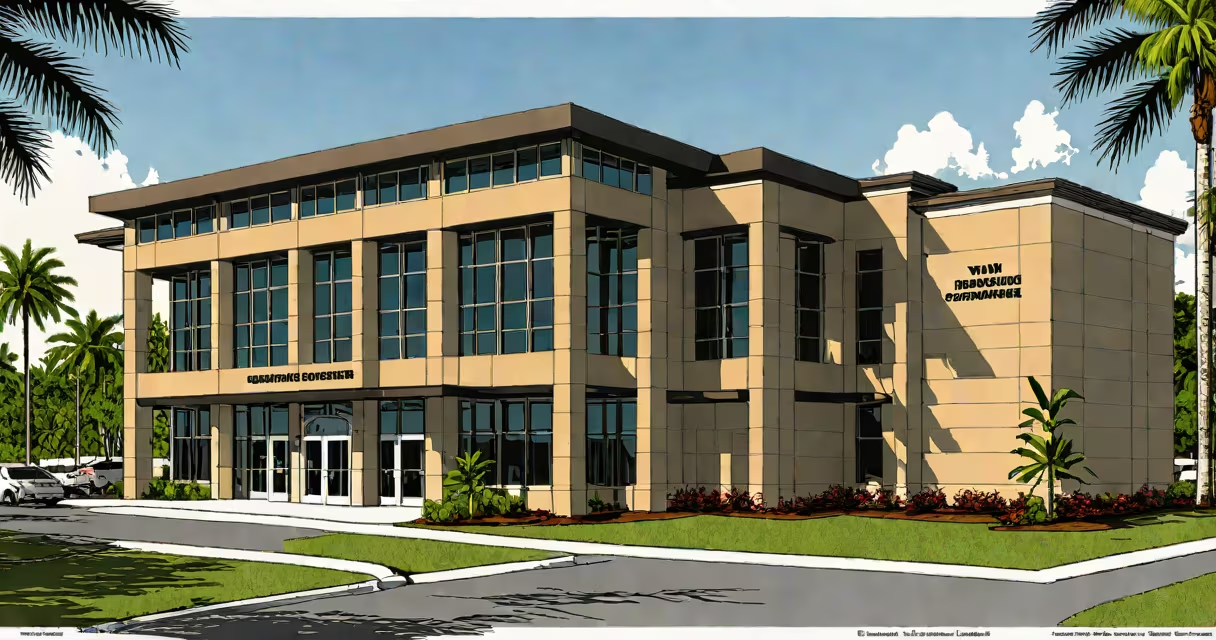
The Hillsborough County Tax Appraiser is the official government office responsible for determining the assessed value of real property within Hillsborough County, Florida, which directly affects property tax bills. This office uses standardized methods to evaluate land and improvements annually, ensuring fair and consistent valuations based on market conditions.
Assessments are not the same as actual sales prices. The appraiser's role is to assign a taxable value using comparable sales, cost approaches, and income analysis. These values are then multiplied by the tax rate set by local governments to calculate your annual property tax. The office operates under Florida Statutes Chapter 192, which outlines procedures for valuation, appeals, and public access to records.
For example, a single-family home in Tampa valued at $350,000 with a 10% increase in assessed value due to renovations may see its tax bill rise from $5,250 to $5,775, assuming a flat millage rate of 15.0. The appraiser's office provides online tools to view current assessments, historical data, and parcel maps through the official portal.
The office conducts annual reassessments in January, adjusting values based on market trends, construction activity, and economic indicators. Properties are evaluated using three primary approaches: the sales comparison method (comparing recent sales of similar homes), the cost approach (estimating replacement cost minus depreciation), and the income capitalization method (used for rental properties).
Each property receives a unique parcel ID. The appraiser's office maintains a database of over 1.2 million parcels in Hillsborough County. Data is updated monthly and includes details such as square footage, number of bedrooms, year built, and zoning classification. All records are publicly accessible via the property search tool.
A key function is identifying exemptions. The office processes applications for homestead exemption (up to $50,000 reduction in assessed value), senior citizen relief, and disabled veteran benefits. These reduce taxable value but do not alter the original assessment. For instance, a 70-year-old homeowner with a $300,000 home could save $1,500 annually on taxes through the homestead benefit.
Property assessments fall into four categories based on use and ownership:
| Type | Use Case | Valuation Method | Example |
|---|---|---|---|
| Residential | Owner-occupied homes, condos | Sales comparison, cost approach | Single-family home in Wesley Chapel |
| Commercial | Retail stores, offices, warehouses | Income capitalization, market data | Shopping center on Westshore Blvd |
| Industrial | Factories, distribution centers | Cost approach, location-based factors | Logistics facility near I-75 |
| Special Purpose | Churches, schools, government buildings | Cost approach, limited market data | Hillsborough County Courthouse |
Assessments are not uniform across neighborhoods. A home in Hyde Park may have a higher per-square-foot value than one in East Tampa due to proximity to amenities, school districts, and infrastructure. The appraiser's office publishes neighborhood-level median values quarterly.
One common misconception is that assessments reflect market price. They do not. A home sold for $400,000 in 2023 may still be assessed at $375,000 if the appraiser's model shows no significant upward trend in comparable sales. The difference between sale price and assessed value is normal and expected.
Local governments rely on the Hillsborough County Tax Appraiser to distribute funding. School boards, fire departments, and city councils use tax revenue generated from assessments to fund services. In 2023, the county collected $1.8 billion in property tax revenue, with 62% going to public education.
Homeowners use the office to verify accuracy, apply for relief, and file appeals. If a homeowner believes their property is overvalued, they can request a review. The process begins with a written appeal filed by March 1. The office schedules hearings and reviews evidence such as recent comparable sales, inspection reports, and appraisals.
I once attended a hearing in the Hillsborough County Tax Appraiser's office in Tampa. A couple appealed their home's assessment after a new highway exit was approved nearby. They submitted traffic studies and developer plans showing increased congestion. The appraiser reduced the value by 12%, citing negative externalities. The decision was upheld after a second review.
Many assume the tax appraiser sets the tax rate. That is incorrect. The rate is determined by elected officials-school boards, county commissioners, and city councils. The appraiser only assigns value. A property taxed at $8,000 annually could have a $400,000 assessment and a 20-mill rate, or a $500,000 assessment and a 16-mill rate.
Another error is thinking appeals always succeed. Only 18% of contested assessments were adjusted in 2022. Successful appeals typically require documented evidence of lower comparable sales or physical deterioration. A home with a cracked foundation or outdated HVAC system may qualify for a reduction.
Some confuse the appraiser's office with the tax collector. The appraiser determines value. The tax collector collects payments. The two offices are separate entities. You can pay taxes online through the Hillsborough County Tax Collector website.
For comparison, Fulton County, Georgia, uses a similar model but applies different weighting to sales data. Brazoria County, Texas, relies more on automated systems and less on field inspections. Hillsborough County emphasizes manual verification and public engagement, especially in high-growth areas like Brandon and Riverview.
Understanding the role of the Hillsborough County Tax Appraiser ensures accurate tax reporting and informed decisions during appeals. Knowing how assessments are calculated and where to seek corrections prevents overpayment and supports equitable taxation.