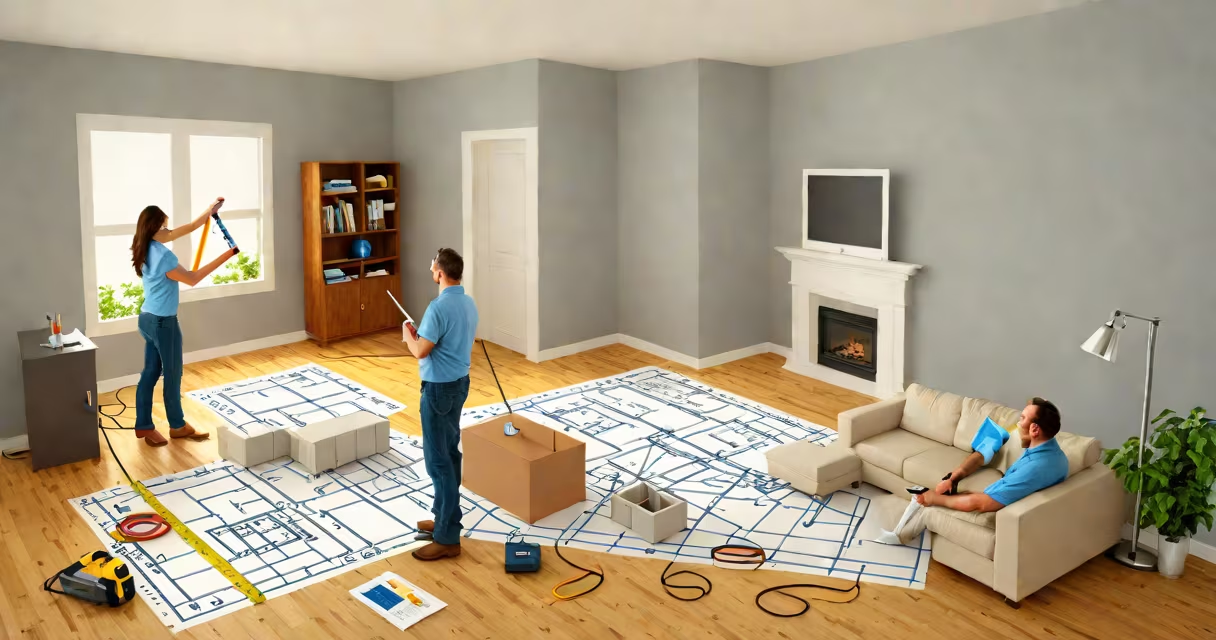
How to figure out air conditioner size begins with calculating the square footage of the room, then adjusting for factors like sunlight exposure, ceiling height, and insulation quality. A properly sized unit cools efficiently without wasting energy or failing to maintain comfort.
A 12,000-BTU air conditioner typically handles rooms between 450 and 550 square feet. Units below 6,000 BTU are suitable for small bedrooms under 150 sq ft. Larger spaces require higher BTU ratings-up to 18,000 BTU for areas over 700 sq ft. Using the wrong size leads to frequent cycling, high energy bills, and poor humidity control.
The U.S. Department of Energy states that improperly sized units consume 15-20% more energy than correctly matched systems. The Environmental Protection Agency notes that oversized ACs dehumidify less effectively, leading to dampness and mold risk. These findings show why precise sizing matters beyond mere comfort.
AC size is measured in British Thermal Units (BTUs) per hour-the amount of heat the unit can remove from a space in one hour. A 9,000-BTU unit removes 9,000 BTUs of heat per hour. This rating directly correlates to cooling capacity.
To estimate required BTU, start with 20 BTUs per square foot of floor area. For a 300-square-foot bedroom, multiply 300 × 20 = 6,000 BTU. But this base calculation doesn't account for real-world variables. Adjustments are necessary based on room characteristics.
For example, a south-facing room with large windows may need 25% more cooling power due to solar gain. A poorly insulated attic room requires 30% more BTU. Conversely, a shaded basement with minimal windows may need only 15 BTU per square foot.
Room conditions impact cooling load. Sunlight exposure adds heat-each hour of direct sun through a window increases internal temperature by 1-2°F. A room with three large windows facing west may absorb 20% more heat than a similar room with north-facing glazing.
Ceiling height affects volume. Standard ceilings are 8 feet. For 10-foot ceilings, increase BTU by 25%. A 500 sq ft room with 10-foot ceilings needs 12,500 BTU instead of 10,000. High ceilings increase air mass, requiring longer run times to cool.
Occupancy and equipment generate heat. Two people in a room add about 600 BTU. A computer, TV, or oven contributes another 400-1,000 BTU. A kitchen with constant cooking may need 20% higher capacity than a living room with low equipment use.
Many homeowners assume bigger is better. An oversized unit cools quickly but shuts off before removing humidity. This causes sticky air and condensation on ducts. The EPA reports that 30% of residential AC failures stem from oversizing.
Under-sizing is equally problematic. A 6,000-BTU unit in a 600-sq-ft living room runs continuously during peak summer. It never reaches set temperature, straining components and increasing wear. A 2021 study by the National Renewable Energy Laboratory found undersized units operate 40% longer daily, raising electricity costs by $120/year on average.
Some rely solely on online calculators without inputting real details. A calculator that assumes "average" insulation and "standard" windows gives inaccurate results. Always enter actual values-window count, wall material, shading, and occupancy.
Step 1: Measure the room's length and width. Multiply them to get square footage. For a 15 ft × 20 ft room: 15 × 20 = 300 sq ft.
Step 2: Apply the base rate-20 BTU per sq ft. 300 × 20 = 6,000 BTU.
Step 3: Adjust for known factors:
For a 300 sq ft west-facing room with two occupants and standard 8-foot ceilings: 6,000 BTU × 1.1 (sun exposure) × 1.15 (occupants) = 7,800 BTU. Round up to 9,000 BTU for a standard unit.
I once installed a 12,000-BTU unit in a 500-sq-ft apartment with two large east-facing windows. The previous unit was 9,000 BTU and ran constantly. After upgrading, the thermostat held steady at 74°F, and the compressor cycled every 15 minutes-ideal efficiency.
Different AC types have distinct sizing considerations. Window units are designed for single rooms. Portable units move between spaces but lose 10-15% efficiency due to exhaust venting losses. Central systems serve entire homes and require zone-specific calculations.
| Type | Best For | Typical BTU Range | Size Adjustment Notes |
|---|---|---|---|
| Window unit | Single rooms, rentals | 6,000-18,000 BTU | Match BTU to room size. Avoid oversizing. |
| Portable unit | Temporary cooling, mobility | 8,000-12,000 BTU | Reduce effective output by 10% due to exhaust hose loss. |
| Split system (ductless) | Home additions, no ductwork | 9,000-24,000 BTU | Use zone-specific load calculations. Account for wall thickness. |
| Central AC | Whole-house cooling | 18,000-60,000 BTU | Requires professional load calculation (Manual J). |
For a 500-sq-ft room, a 12,000-BTU window unit is standard. A portable unit of the same rating will perform less effectively due to exhaust inefficiency. Always compare actual cooling performance, not just BTU numbers.
For homes with irregular layouts, multiple zones, or mixed construction materials, DIY methods fall short. Manual J, a standardized method developed by the Air Conditioning Contractors of America (ACCA), calculates cooling loads based on building science principles.
Manual J accounts for wall R-values, window U-factors, air infiltration rates, and local climate data. A home in Phoenix with 2-inch-thick stucco walls and double-glazed windows requires different calculations than a coastal New England house with wood-frame walls and single-pane windows.
According to ACCA, 70% of residential HVAC installations fail because they skip proper load calculations. The American Society of Heating, Refrigerating and Air-Conditioning Engineers (ASHRAE) confirms that Manual J reduces energy waste by 25% compared to rule-of-thumb estimates.
People often think a larger unit cools faster. While it reaches set temperature quicker, it doesn't improve comfort. Rapid cooling causes overshoot-temperature drops below desired levels, triggering frequent on-off cycles. This wastes energy and wears compressors faster.
Another myth: "I'll buy a higher BTU unit now and upgrade later." This wastes money. A 15,000-BTU unit in a 400-sq-ft room runs inefficiently. It short-cycles, fails to dehumidify, and uses more power than a correctly sized 12,000-BTU model.
Finally, many confuse BTU with watts. BTU measures heat removal. Watts measure electrical power draw. A 12,000-BTU unit may use 1,200 watts. The SEER rating (Seasonal Energy Efficiency Ratio) tells you how efficiently it converts electricity to cooling. A unit with SEER 16 uses less power per BTU than one with SEER 13.
After calculating, choose a unit within 10% of your target BTU. A 7,200-BTU room needs a 7,000-8,000 BTU unit. Avoid models outside this range.
Check the ENERGY STAR label. Units meeting the latest standards use 15% less energy than non-certified models. Look for models with variable-speed compressors-they adjust output based on demand, reducing cycling.
Always install the unit level, with proper sealing around the window frame. Even a perfectly sized unit fails if air leaks in through gaps. Use foam gaskets and weatherstripping to seal edges.
How to figure out air conditioner size is not guesswork-it's measurement, adjustment, and verification. Use real data, apply correct multipliers, and verify with a professional if needed. A correctly sized unit maintains comfort, lowers utility bills, and lasts longer.