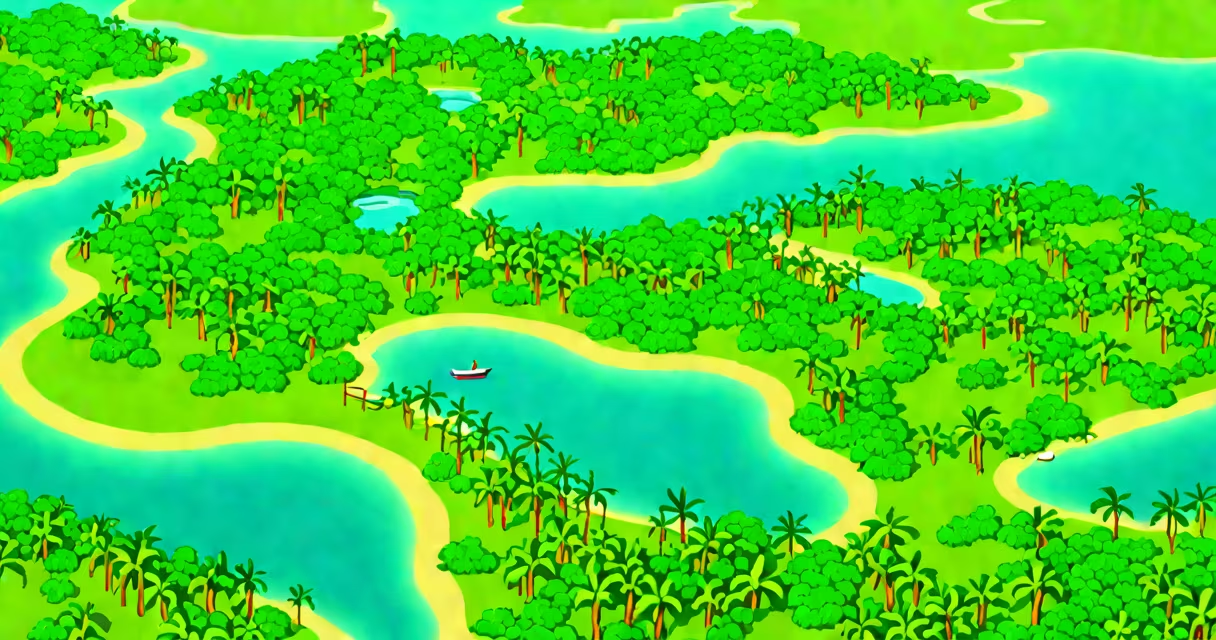
Belize is a sovereign nation located in Central America, bordered by Mexico to the north and Guatemala to the south and west. It has a coastline along the Caribbean Sea and is recognized internationally as an independent country. The United Nations lists Belize as a member state, and it maintains diplomatic relations with over 160 countries.
Belize became independent from the United Kingdom on September 21, 1981, after decades of colonial rule under British Honduras. Since then, it has operated as a parliamentary democracy with a constitutional monarchy, where the British monarch is represented by a governor-general. The country holds regular elections and has a functioning judiciary and legislature.
The term "country" implies sovereignty, territorial integrity, and international recognition-all attributes Belize meets. It is a member of the Commonwealth of Nations, the Organization of American States, and the United Nations. Its capital, Belmopan, lies inland, while the largest city, Belize City, sits on the eastern coast.
Belize operates under a Westminster-style parliamentary system. The prime minister, elected by the majority party in the House of Representatives, serves as head of government. The president, who is the ceremonial head of state, is chosen by the National Assembly. This structure ensures separation of powers and accountability.
The country's constitution, adopted in 1981, outlines fundamental rights, including freedom of speech, religion, and assembly. The judiciary is independent, and the Supreme Court serves as the highest court. Belize also has a national flag, anthem, currency (Belize dollar), and passport-all standard markers of statehood.
Belize's economy relies heavily on agriculture, forestry, fishing, and tourism. It produces timber, bananas, sugar, and seafood, and attracts visitors with its coral reefs, Maya ruins, and biodiversity. In 2022, tourism contributed about 25% of GDP, according to the World Bank.
While many small nations adopt similar governance models, Belize stands out due to its blend of British legal tradition and Latin American cultural influences. Unlike most Central American states, which are republics with elected presidents, Belize retains a constitutional monarchy.
| Feature | Belize | Neighboring Republics |
|---|---|---|
| Head of State | Governor-General (representing UK monarch) | Elected President |
| Head of Government | Prime Minister | President |
| Legal System | Common law (UK-derived) | Civil law (Spanish-derived) |
| Official Language | English | Spanish (Guatemala), Spanish/English (El Salvador) |
This hybrid model reflects Belize's unique history. It was a British colony until 1981, but its population includes Mestizo, Garifuna, Maya, Creole, and Mennonite communities with diverse linguistic and ethnic roots.
Belize is often cited in discussions about small island and developing states. It is a key player in regional environmental policy, particularly in marine conservation. The Belize Barrier Reef Reserve System, a UNESCO World Heritage Site, spans over 900 square kilometers and supports 700 species of fish.
International organizations such as the Inter-American Development Bank and the World Health Organization regularly report on Belize's development indicators. For example, in 2023, Belize had a life expectancy of 74.2 years and a literacy rate of 95%, according to the World Bank and UNICEF.
Despite its size-about 22,966 square kilometers (slightly smaller than Connecticut)-Belize plays a disproportionate role in regional diplomacy. It hosted the 2023 Summit of the Americas' preparatory meeting and advocates for climate resilience among small island states.
Some people assume Belize is part of Mexico or Guatemala due to its geographic proximity. Others confuse it with Belize City, the largest urban center, mistaking the city for the entire nation. These errors stem from limited exposure to Central American geography.
A less obvious confusion arises from the name itself. "Belize" shares a phonetic similarity with "Belgium," leading to occasional mix-ups in travel planning or news reporting. However, Belize is not in Europe-it lies entirely within Central America.
Another misconception is that Belize lacks political stability. In reality, it has held free and fair elections since independence. The 2020 general election saw a peaceful transfer of power from the People's United Party to the United Democratic Party, confirmed by both domestic and international observers.
In 2022, I spent a week in Belize City during the annual Independence Festival. I walked through the bustling Central Market, where vendors sold fresh mangoes, cassava bread, and handmade hammocks. I attended a performance by the Belize National Dance Company, featuring traditional Garifuna drumming and Mayan-inspired movements.
At the National Museum, I viewed artifacts from the ancient Maya site of Lamanai, including carved stelae and jade beads. The museum staff emphasized that Belize is home to over 100 documented Maya archaeological sites, more than any other Central American country.
That evening, I dined at a seaside restaurant in the historic district. The menu listed "bile up" (a local dish of boiled green bananas and pork) and "ceviche de camarones" (shrimp ceviche). The waiter explained that Belize's cuisine blends African, Indigenous, European, and Asian influences-a direct result of its colonial past and diverse population.
Yes, Belize is a country. It meets all criteria for statehood under international law: permanent population, defined territory, government, and capacity to enter into relations with other states. The United Nations recognizes it as a member state, and it participates in global forums such as the UN General Assembly and the COP climate summits.
For travelers, researchers, or policymakers, understanding that Belize is a country matters. It enables accurate mapping, proper visa procedures, and informed engagement with its policies. When asking "is Belize a country," the answer is not debatable-it is confirmed by legal, historical, and geopolitical evidence.