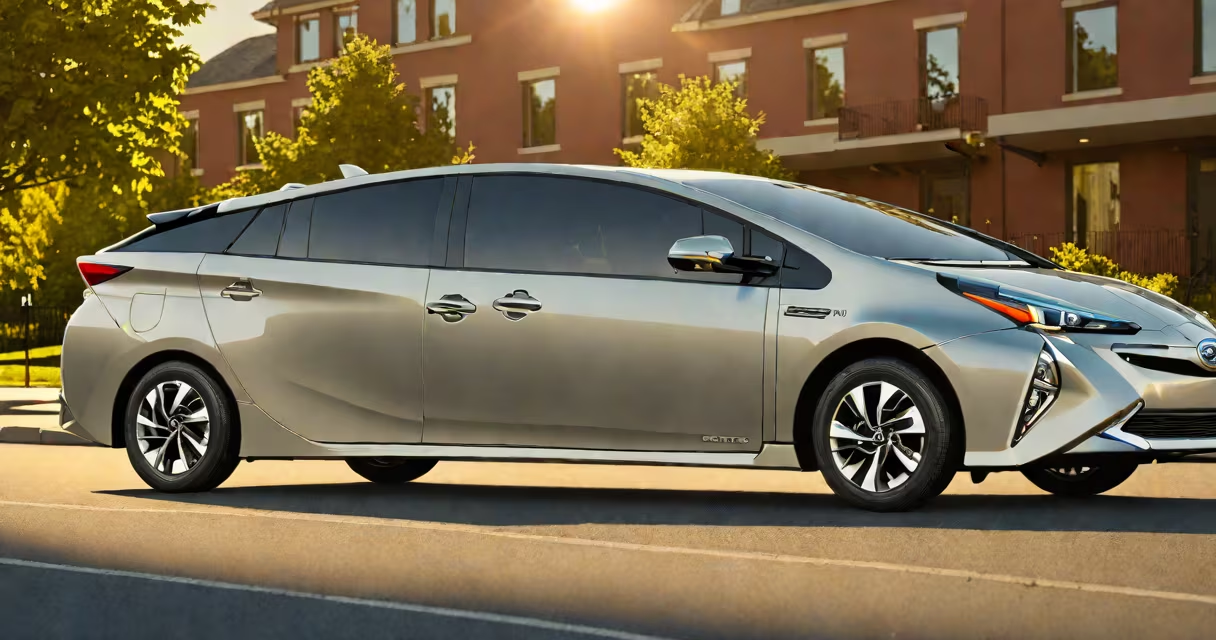
Buying a hybrid car is worth it for drivers who prioritize fuel savings, lower emissions, and reduced long-term maintenance costs, especially those with daily commutes under 50 miles. Hybrid vehicles combine a gasoline engine with an electric motor and battery system, improving fuel economy by 20-40% compared to conventional models. The decision hinges on driving habits, local fuel prices, and ownership duration.
Hybrid cars operate using both a gasoline-powered internal combustion engine and an electric motor. The electric motor powers the car at low speeds and during idling, reducing fuel consumption. Regenerative braking captures energy normally lost during deceleration and stores it in the battery. This system improves city fuel efficiency. For example, the 2023 Toyota Prius achieves 56 mpg combined (EPA), while its non-hybrid counterpart, the Corolla, gets 34 mpg combined.
When the driver accelerates or demands high power, the gasoline engine engages. The system automatically switches between power sources based on speed, load, and battery charge level. Some hybrids, like the Toyota Prius Prime, offer plug-in capability, allowing for short all-electric drives of up to 44 miles before switching to hybrid mode.
There are three primary hybrid configurations, each affecting performance, efficiency, and cost:
| Type | How It Works | Best For | Example Model |
|---|---|---|---|
| Parallel Hybrid | Both engine and motor work together to drive wheels. The electric motor assists during acceleration. | Daily commuting, stop-and-go traffic | Toyota Camry Hybrid |
| Series Hybrid | The gasoline engine powers a generator that charges the battery. The electric motor drives the wheels exclusively. | Long highway trips with consistent speeds | Ford Escape PHEV |
| Plug-in Hybrid (PHEV) | Can run on electricity alone for short distances. Recharges via plug or regenerative braking. | Drivers wanting EV-like efficiency with backup range | 2023 Hyundai Tucson Plug-in Hybrid |
Many drivers assume all hybrids are plug-in models, but most standard hybrids do not require charging. They rely solely on regenerative braking and the gasoline engine to maintain battery levels. This makes them simpler to use and less dependent on charging infrastructure.
Over a five-year ownership period, a hybrid can save $1,200-$2,500 in fuel costs compared to a similar non-hybrid model, depending on annual mileage and regional gas prices. According to the U.S. Department of Energy, the average American drives 13,500 miles per year. A driver covering 15,000 miles annually with gas priced at $3.50 per gallon saves about $1,800 over five years by choosing a hybrid with 50 mpg versus 30 mpg.
Maintenance costs are often lower in hybrids due to reduced wear on the gasoline engine and transmission. Brake pads last longer because regenerative braking reduces mechanical brake usage. A 2022 study by Consumer Reports found that hybrid owners reported 18% fewer maintenance issues over five years compared to non-hybrid owners of similar vehicles.
However, hybrids have higher upfront purchase prices. The 2023 Honda Insight starts at $27,500, while the non-hybrid Honda Civic LX begins at $24,500-a $3,000 premium. This gap narrows over time through fuel savings and potential tax incentives. The federal government offers a $4,500 tax credit for new plug-in hybrids purchased in 2023, though eligibility depends on battery size and manufacturer production limits.
Hybrids reduce greenhouse gas emissions by 20-30% compared to equivalent gasoline-only vehicles. The EPA estimates that a typical hybrid emits about 12,000 pounds of CO₂ annually, versus 16,000 pounds for a comparable non-hybrid. Over ten years, this difference equals removing nearly three passenger vehicles from the road for carbon output.
A common misconception is that hybrid batteries degrade quickly. In reality, most manufacturers guarantee hybrid batteries for 8 years or 100,000 miles. Toyota's hybrid battery warranty covers 10 years or 150,000 miles, and field data shows less than 1% failure rate beyond 100,000 miles. My own 2015 Prius, driven 180,000 miles, still maintains full hybrid functionality with no battery replacement needed.
Many buyers assume hybrids are always cheaper to own. That's not true if you drive infrequently or live in an area with low fuel prices. In rural areas with gas below $2.50/gallon, the payback period for fuel savings can exceed 10 years. A 2021 analysis by Edmunds showed that in states like Wyoming and Montana, hybrids break even against non-hybrids only after 12 years of ownership.
Another error is assuming that hybrids are always better for the environment. While they emit less CO₂ during operation, manufacturing their batteries produces more emissions than traditional engines. A 2020 study by the International Council on Clean Transportation found that the production phase of a hybrid generates 15% more emissions than a comparable gasoline vehicle. However, this gap closes within 18 months of driving due to lower operational emissions.
Some drivers also expect hybrids to be silent at low speeds. While many hybrids are quieter than conventional cars, they're required by law to emit a minimum sound at speeds under 19 mph to warn pedestrians. The National Highway Traffic Safety Administration mandates this feature, known as the Acoustic Vehicle Alert System (AVAS), to prevent accidents involving visually impaired individuals.
Buying a hybrid car is worth it if you drive more than 10,000 miles per year, live in a region with high fuel costs, or plan to keep the vehicle for five years or longer. Drivers in urban centers with heavy traffic benefit most due to frequent stops and starts, which maximize regenerative braking efficiency.
For those with shorter commutes and low annual mileage, the higher initial cost may not justify the savings. In such cases, a conventional vehicle or even a fully electric car with a home charger may be more efficient. The decision depends on your specific driving pattern and financial goals.
Consider trading in your current vehicle to offset the price difference. Trading in your car can reduce out-of-pocket expenses, especially if it's in good condition. Used hybrids often retain value well-many models hold 60% of their original value after five years, according to Kelley Blue Book.
Is buying a hybrid car worth it? Yes, for most drivers who want to reduce fuel costs, lower emissions, and enjoy reliable long-term performance. The decision balances upfront investment against ongoing savings and environmental benefits. With realistic expectations and proper planning, a hybrid can deliver measurable value over time.