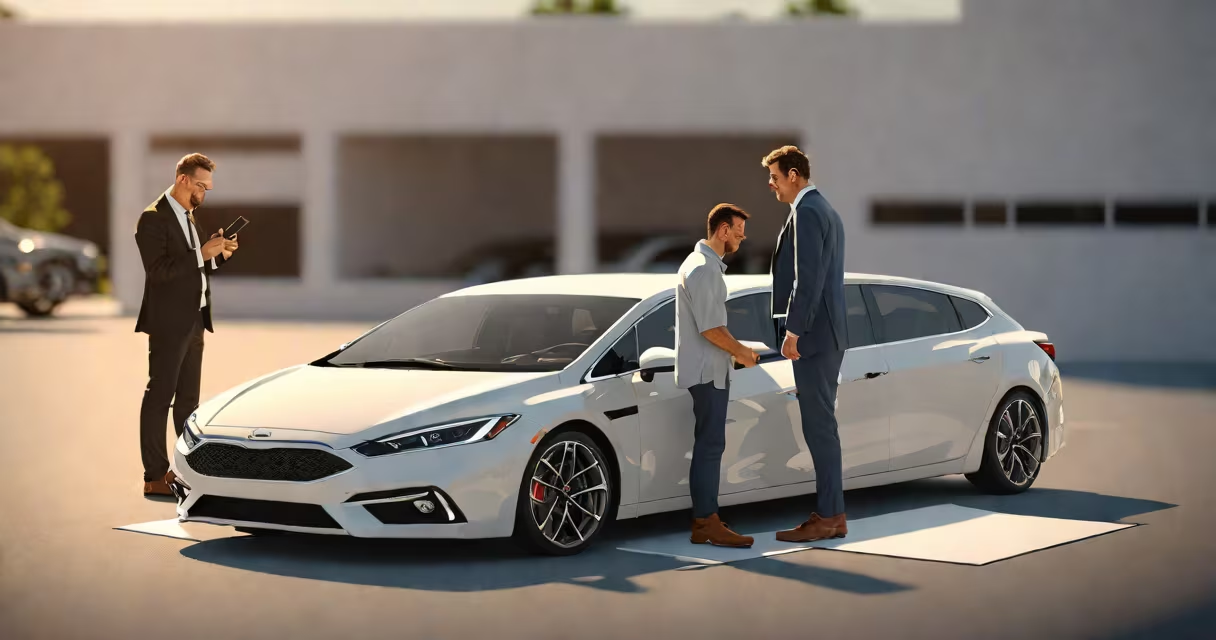
Trading in your car typically offers less value than selling it privately, especially if the vehicle is in good condition or has high residual value. Dealerships pay below market price to cover their profit margin and risk, while private buyers pay closer to current wholesale and retail prices.
Most consumers assume trade-ins are convenient and fair. But dealerships buy cars at wholesale rates-typically 10% to 20% below the average private sale price. This gap exists because dealers need room to resell vehicles at a markup, cover repair costs, and manage inventory risk. A 2023 study by Edmunds found that trade-ins averaged $1,200 less than private sales for similar-model sedans in the $15,000-$25,000 range.
The decision hinges on timing, condition, and personal preference. If you need a quick replacement, want to avoid paperwork, or have negative equity, trading in may reduce stress-even if it costs money. But if your car is worth more than $10,000 and runs well, selling privately usually nets more cash.
Dealers use automated systems like Kelley Blue Book (KBB) and Black Book to assign trade-in values. These tools analyze make, model, year, mileage, trim level, and regional demand. The system applies a discount-usually 10% to 25%-to the private sale value to account for dealer overhead and resale risk.
For example, a 2020 Toyota Camry LE with 45,000 miles in Texas might have a private sale value of $18,500 according to KBB. The dealership's trade-in offer would likely be around $15,700-about 15% lower. That difference covers the cost of cleaning, inspecting, and preparing the car for resale.
Some dealers apply additional discounts for older models or high-mileage vehicles. A 2015 Honda Accord with 120,000 miles might see a 30% discount off the private sale value due to higher repair risk and lower buyer interest.
Not all trade-ins are equal. Outcomes depend on replacing a vehicle. The table below compares common scenarios:
| Scenario | Typical Trade-In Value | Private Sale Value | Net Difference |
|---|---|---|---|
| Upgrading from a 2018 sedan to a 2024 SUV | ~$12,000 | ~$14,500 | $2,500 loss |
| Selling a 2016 car with low mileage (50k) | ~$8,200 | ~$10,100 | $1,900 loss |
| Downsizing from a 2021 luxury sedan to a 2020 compact | ~$10,800 | ~$11,500 | $700 loss |
These numbers reflect averages from Edmunds' 2023 trade-in report. The losses are consistent across brands and regions. Even when dealers offer "bonus" incentives, the net gain rarely exceeds $500.
A key factor most people overlook: trade-in offers are negotiable. Dealers often start low to create room for negotiation. If you have a private sale quote, bring it to the dealer. You can ask them to match or beat it. In many cases, they'll adjust the offer-especially if you're ready to sign.
Trading in is worth it when convenience outweighs financial loss. This includes situations where:
I once traded in a 2014 Subaru Outback with 140,000 miles. The engine had a minor oil leak, and the interior was worn. After researching private sale prices, I found I'd lose about $2,000 if I sold it myself. The dealership offered $4,800. I accepted-it saved me time, avoided advertising, and covered part of my down payment on a new car.
Another scenario: if you're leasing a car and want to switch models, dealers often allow trade-ins even if the vehicle is worth less than the lease payoff. They absorb the loss as part of the deal structure. This reduces upfront costs and simplifies the process.
Many people think trade-in offers are fair because they're "instant." But speed comes at a cost. Dealers don't pay market value-they pay what they can resell the car for after repairs and prep. A 2022 J.D. Power study found that 68% of customers who traded in their cars didn't realize they were losing money compared to private sale.
Another mistake: assuming trade-in value equals private sale value. They're not. The trade-in value is always lower. Some dealers advertise "up to $X" trade-in offers, which are maximums for perfect-condition vehicles. Most customers receive less.
Also, trade-in offers are not guaranteed until you sign the contract. A dealer might give a verbal estimate, then revise it after inspection. Always get the final number in writing before committing.
If you want to maximize value, consider selling privately. Platforms like Facebook Marketplace, Craigslist, and Autotrader allow direct contact with buyers. You control the timeline, set the price, and avoid dealer markups.
For example, a 2019 Ford Escape with 75,000 miles sold for $16,200 on Facebook Marketplace in May 2023. The same vehicle was offered at $13,800 by a local dealership. That's a $2,400 difference-enough to cover a year of insurance or a full tank of gas.
Trading in your car is worth it only when you prioritize speed, simplicity, or financing ease over maximum financial return. For most vehicles above $10,000 in value, selling privately yields more cash. The average consumer loses $1,500 to $2,500 by trading in instead of selling directly.
Use trade-ins only when you have a clear reason-such as avoiding negative equity, needing a quick replacement, or lacking time to list and meet buyers. Always compare the offer to a private sale quote. If the dealer won't match it, walk away.
is trading in your car worth it depends on your goals. If you want the most money, sell it yourself. If you want the easiest path, trade it in-but expect to pay a premium for convenience.