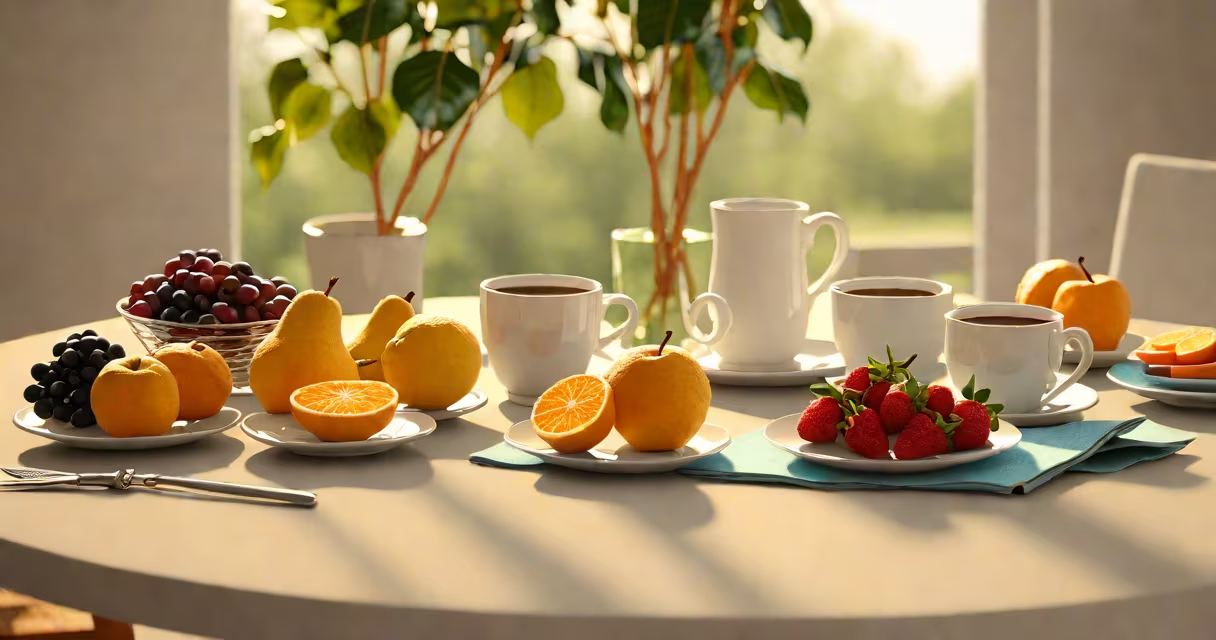
Life is full of goodies means that meaningful happiness exists in ordinary moments - a warm meal, a shared laugh, sunlight through a window - not just in grand achievements.
This phrase captures a mindset: joy isn't reserved for milestone events. It lives in the texture of daily existence - the scent of rain on pavement, a friend's unexpected message, the comfort of a favorite sweater. These aren't rare. They're constant. The trick isn't finding them - it's noticing them.
Psychologists call this "micro-moments of well-being." Research from the University of California, Berkeley shows people who pause to acknowledge small positives report higher long-term life satisfaction than those chasing big wins. A 2021 study published in Journal of Positive Psychology found participants who logged three small pleasant events daily for two weeks reported reduced stress and improved mood compared to control groups.
Neuroscience confirms that brief positive experiences trigger dopamine release, even when they're subtle. Unlike major achievements, which create temporary spikes, micro-pleasures build resilience over time. They train the brain to scan for good rather than danger.
For example, walking to work and noticing birdsong activates the prefrontal cortex - the area linked to emotional regulation. Over time, this rewires attention patterns. You start seeing more good, not because the world changed, but because your focus did.
One study tracked 120 adults over six months. Those who practiced "goodness journaling" - writing down three small positive events each day - showed a 25% increase in self-reported well-being. The events weren't dramatic: a stranger holding a door, a perfect cup of tea, a child's drawing left on the fridge.
Goodies aren't limited to emotions. They come in sensory, social, and personal forms. Here's how they break down:
| Type | Examples | Why it matters |
|---|---|---|
| Sensory | Warm socks, fresh bread smell, rain on leaves | Engages the nervous system directly; triggers memory and calm |
| Emotional | A joke that lands, a hug, a compliment | Strengthens social bonds; boosts oxytocin |
| Personal achievement | Finished a task, learned a word, tidied a drawer | Builds self-efficacy; reduces anxiety about the future |
| Nature-based | Seeing a squirrel, sunlight through trees, a blooming flower | Reduces cortisol levels; improves focus |
These aren't luxuries. They're foundational. The American Psychological Association notes that consistent exposure to small positive stimuli lowers baseline stress hormones. This isn't about indulgence - it's about biological balance.
Life is full of goodies appears in self-help books, mindfulness apps, and therapy frameworks. It's central to Acceptance and Commitment Therapy (ACT), where therapists teach patients to "notice the good" as part of psychological flexibility.
For example, a client struggling with anxiety might be asked to name three small pleasures from their morning. Not "I'm happy," but "The toast was golden. My cat curled up on my lap. The light hit the wall just right." This shifts focus from internal distress to external reality - a proven method for reducing rumination.
It's also common in design. Companies like Apple and Google embed "goodies" into user experience - the satisfying click of a button, the smooth animation of a menu. These aren't accidental. They're intentional micro-rewards that make interaction feel rewarding.
People often confuse life is full of goodies with toxic positivity. That's a mistake. This concept doesn't deny hardship. It acknowledges pain while insisting that joy persists alongside it.
One study from Stanford found that individuals who reported high levels of daily goodness were not less aware of suffering - they were more likely to describe both pain and pleasure in the same day. They didn't ignore problems. They simply refused to let them erase everything else.
Another error: thinking good things must be expensive. A 2022 survey by the National Endowment for the Arts found that 78% of Americans who reported feeling joyful in a typical week cited free or low-cost activities - listening to music, walking, sharing stories.
I tested this during a period of burnout. I committed to five minutes of noticing good things each day - no longer. I sat by my window, watched pigeons fight over crumbs, felt the sun on my arms, listened to a neighbor's radio playing jazz. I wrote one sentence: "Today, the light was yellow."
After seven days, I noticed something odd: my mind stopped scanning for threats. I caught myself smiling at nothing. I started saying "yes" to invitations I'd have declined. By day 14, I wasn't just surviving - I was curious again.
That's the power of life is full of goodies. It's not about changing your life. It's about changing your attention.
Life is full of goodies isn't a slogan for consumerism. It's not about buying more. It's not about chasing novelty. It's about presence. It's about training awareness to catch what's already here.
Some brands misuse the phrase to sell products - "Life is full of goodies! Buy our artisanal soap!" But the original meaning is anti-consumerist. It values what's already available: time, light, connection, breath.
True good things don't require a receipt. They don't come in boxes. They arrive unannounced, in silence, in the space between heartbeats.
When you stop waiting for the big moment, you begin to see that life is full of goodies - not as a promise, but as a fact. And that changes everything.