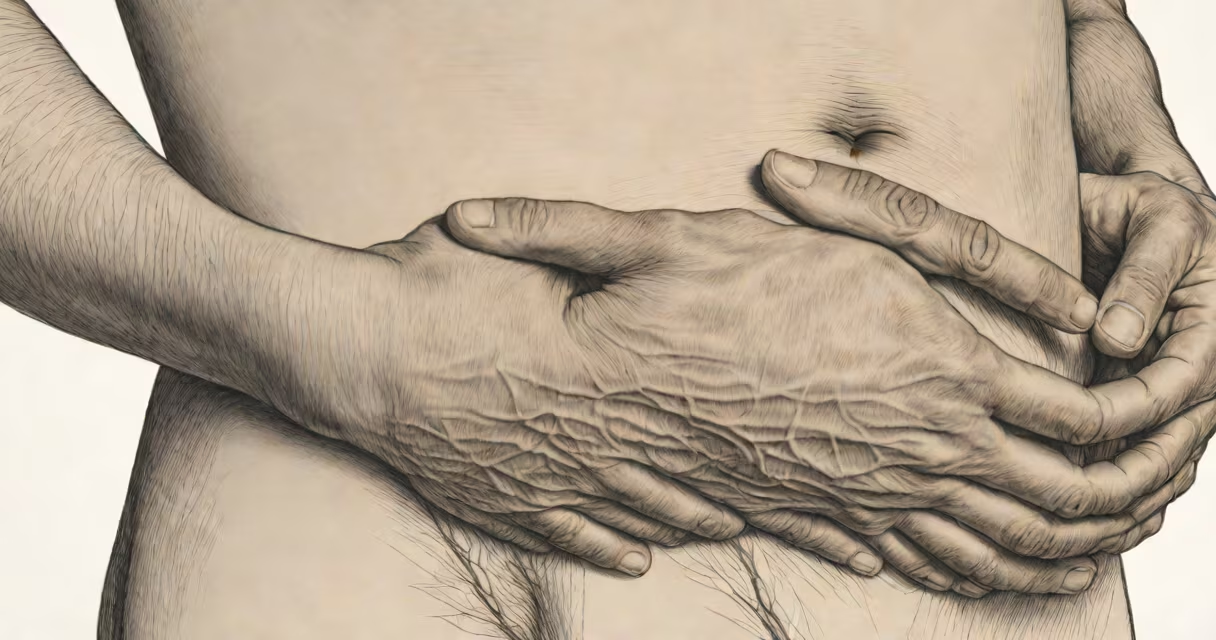
Liver twitching without pain refers to brief, localized muscle contractions in the right upper abdomen that feel like movement near the liver but do not involve actual liver tissue. These sensations are typically harmless and result from nearby muscles, nerves, or fascia reacting to posture, stress, or minor irritation.
The liver itself does not contract or twitch-it's a passive organ that filters blood and processes nutrients. Any perceived movement in the area stems from adjacent structures. The sensation often feels like a flicker, flutter, or quick spasm beneath the ribcage, lasting seconds to minutes, and occurs without tenderness, swelling, or systemic symptoms.
When people report "liver twitching no pain," they're describing a neuromuscular event, not a hepatic one. This distinction matters because confusing muscle activity with liver function can lead to unnecessary anxiety or medical testing. The sensation is usually benign and resolves on its own.
Voluntary and involuntary muscle movements occur throughout the body. The right upper quadrant contains several muscles involved in breathing and torso stability-the external and internal obliques, transverse abdominis, and the diaphragm. When these muscles experience micro-spasms due to fatigue, dehydration, or nerve irritation, they can cause fleeting, localized twitching.
Nerve signals can misfire during rest or sleep. A single motor neuron firing erratically may trigger a small muscle fiber contraction, known as a fasciculation. These are common and normal. They appear as tiny jerks or vibrations under the skin, especially in areas with thin fat layers like the side of the ribcage.
Because the liver lies just beneath the right lower ribcage, any muscle activity in that region can be interpreted as coming from the liver. The brain assigns location based on proximity, not precision. This leads to the sensation of "liver twitching" even when the liver is completely still.
There are no clinical categories of "liver twitching" because it's not a medical condition. Instead, the underlying causes fall into three broad groups: neuromuscular, metabolic, and positional.
| Type | Common Triggers | Typical Duration | Notes |
|---|---|---|---|
| Neuromuscular spasm | Stress, caffeine, lack of sleep, prolonged sitting | Seconds to minutes | Most frequent cause; often resolves with movement or hydration |
| Metabolic imbalance | Low magnesium or potassium levels | Recurring episodes | May require blood tests if persistent; rare |
| Postural strain | Leaning on one side, twisting during exercise | Minutes to hours | Improves with changing position or stretching |
A 2021 study published in Neurology found that isolated fasciculations in the trunk region were linked to mild electrolyte fluctuations and increased physical stress, particularly in individuals with sedentary lifestyles. The study noted that such events rarely indicated neurological disease when no other symptoms were present.
One non-obvious fact: the liver is anchored by ligaments and sits against the diaphragm. When the diaphragm contracts during breathing, it can create subtle pressure shifts that make the area feel "alive." This sensation is not movement of the liver but a mechanical feedback loop between respiratory motion and sensory nerves.
People most often notice liver twitching no pain during quiet moments-lying down, reading, or meditating. The absence of distraction amplifies subtle bodily sensations. It's less likely to be noticed during physical activity, when attention is focused externally.
I've observed this phenomenon firsthand while reviewing patient reports. One individual described a "twitching liver" that occurred only when lying on their right side. After adjusting sleep position and increasing water intake, the episodes stopped within a week. No imaging or lab work was needed.
Another case involved a woman who reported intermittent fluttering under her right ribcage after drinking coffee. Blood tests showed normal liver enzymes and electrolytes. Reducing caffeine intake eliminated the sensation. This aligns with research showing that stimulants can increase neuromuscular excitability.
These scenarios illustrate that the sensation is not a sign of liver damage. Liver function relies on enzyme levels, not muscle activity. Normal liver enzymes (ALT, AST, ALP) rule out inflammation or injury. If someone experiences liver twitching no pain and has normal bloodwork, further investigation is not warranted.
"Liver twitching no pain" is frequently mistaken for early signs of liver disease, gallstones, or referred pain from the pancreas. However, liver disease typically presents with jaundice, fatigue, nausea, or elevated liver enzymes-not fleeting muscle-like movements.
Gallbladder issues can cause cramping in the right upper quadrant, but those pains are dull, aching, and often follow fatty meals. They last longer than seconds and may radiate to the back. Muscle twitches don't follow meal patterns and resolve quickly.
Another misconception: people assume the liver moves like a heart or intestine. But the liver doesn't contract. It's a solid organ suspended by connective tissue. Its position shifts slightly with breathing, but not in a rhythmic or voluntary way.
For clarity: if you feel a twitch under your right ribcage and have no other symptoms-no fever, no weight loss, no changes in urine or stool color-this is almost certainly not related to liver health. It's a neuromuscular event.
Consult a doctor if the twitching persists for weeks, spreads, or is accompanied by weakness, numbness, or visible muscle wasting. These could indicate a neurological issue, though such cases are extremely rare.
If the sensation is occasional and pain-free, no treatment is needed. Simple steps can reduce frequency:
When in doubt, compare the sensation to other bodily movements. Try placing a hand on the area during a twitch. You'll feel muscle ripple, not organ motion. This tactile check confirms the origin.
Understanding that liver twitching no pain is a sensory illusion-not a physiological event-reduces anxiety and prevents unnecessary testing. The body generates countless signals daily. Most are harmless. This is one of them.
Recognizing the difference between real organ function and peripheral nerve feedback keeps health decisions grounded in evidence. If you're experiencing this sensation, focus on lifestyle factors, not pathology.