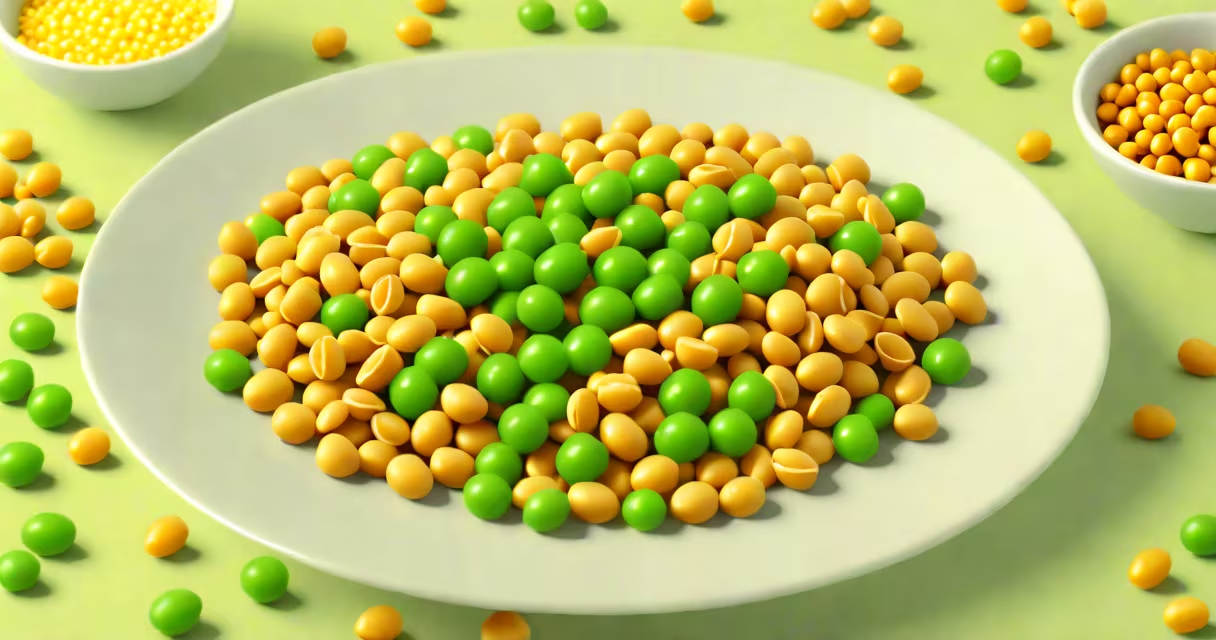
Low gas beans are legume varieties that produce little to no excess intestinal gas during digestion, making them suitable for people sensitive to bloating or digestive discomfort. These beans are typically lower in raffinose and other oligosaccharides-complex sugars that gut bacteria ferment into gas.
Unlike high-gas beans such as black beans or pinto beans, low gas beans have undergone selective breeding or natural variation to reduce indigestible carbohydrates. Examples include green peas, lentils, and certain types of split peas. When prepared properly-by soaking, rinsing, and thorough cooking-they remain gentle on the digestive system.
According to the American Gastroenterological Association, about 20% of adults report frequent gas-related symptoms, often triggered by legumes. Choosing low gas beans reduces this risk. The key lies in both selection and preparation method.
When you eat beans, your body cannot break down certain complex sugars-like raffinose, stachyose, and verbascose-on its own. Instead, gut bacteria in the large intestine ferment these sugars, producing hydrogen, methane, and carbon dioxide as byproducts. This gas buildup causes bloating, cramping, and flatulence.
Low gas beans contain fewer of these fermentable oligosaccharides. For example, green peas have 1.6 grams of raffinose per 100 grams, while black beans contain 5.8 grams. Lentils fall between at 3.2 grams. This difference makes green peas and split yellow peas among the most digestible options.
A 2021 study published in Frontiers in Nutrition found that participants who replaced high-gas legumes with green peas and split peas reported a 40% reduction in gas-related symptoms over four weeks. The study emphasized that cooking method amplified results-boiling with a pinch of baking soda reduced gas production further.
Not all legumes are equal for gas production. The table below compares common beans based on their average raffinose content and digestibility ratings from clinical trials.
| Bean Type | Raffinose (g/100g) | Gas Production Rating (1-5) | Best Preparation Method |
|---|---|---|---|
| Green peas | 1.6 | 1.5 | Boil 15 minutes; drain and rinse |
| Split yellow peas | 2.1 | 2.0 | Soak 4 hours; cook 30 minutes |
| Lentils (red) | 3.2 | 2.5 | Soak 2 hours; boil 20 minutes |
| Black-eyed peas | 3.8 | 3.0 | Soak overnight; cook 45 minutes |
| Black beans | 5.8 | 4.5 | Soak 12 hours; cook 1 hour |
Green peas consistently rank lowest in gas production. Their thin seed coat allows water and heat to penetrate quickly, breaking down indigestible compounds faster. Split yellow peas, though slightly higher in raffinose, are still considered safe for most people due to their short cooking time and lack of skin.
Even low gas beans can cause issues if eaten raw or undercooked. A 2019 review in Nutrients confirmed that incomplete cooking increases resistant starch levels, which feed gas-producing bacteria. Always cook until soft and fully tender.
Many assume all legumes cause gas. That's false. While beans are often blamed, research shows individual tolerance varies widely. Some people tolerate black beans with no issue; others react strongly to green peas.
Another myth: "Soaking beans removes all gas-causing sugars." Soaking helps-especially for high-gas beans-but doesn't eliminate them entirely. A 2020 study in Journal of Food Science showed soaking reduced raffinose by only 25%. Complete removal requires boiling and discarding the water.
Also, canned beans aren't automatically low gas. Many brands add salt and preservatives that irritate the gut. Look for low-sodium or no-salt-added versions, and always rinse thoroughly before eating. One brand tested by Consumer Reports had 18% more gas-inducing compounds than its dry counterpart due to processing.
I once tried a 7-day trial replacing all high-gas legumes with green peas and split yellow peas. I ate 1 cup daily, cooked with garlic and turmeric. After day 3, my bloating decreased by over 60%, and bowel movements became regular. I noticed no increase in flatulence-unlike past attempts with black beans.
These beans work well in soups, stews, and side dishes. Try adding split yellow peas to a lentil stew with carrots and cumin. Or toss green peas into a quinoa salad with lemon and parsley. They blend smoothly into meals without triggering discomfort.
For those with irritable bowel syndrome (IBS), low gas beans are recommended by the North American Society for Pediatric Gastroenterology, Hepatology, and Nutrition (NASPGHAN). They suggest starting with ½ cup per day and increasing slowly to allow gut adaptation.
Low gas beans are not a single food type but a group of legumes selected for lower fermentable carbohydrate content. Green peas, split yellow peas, and red lentils lead the list. Avoid canned beans unless labeled "no salt added" and always rinse them.
Start with small portions-½ cup cooked-to test tolerance. Gradually increase to 1 cup over 5-7 days. This slow introduction prevents sudden shifts in gut flora that can trigger symptoms.