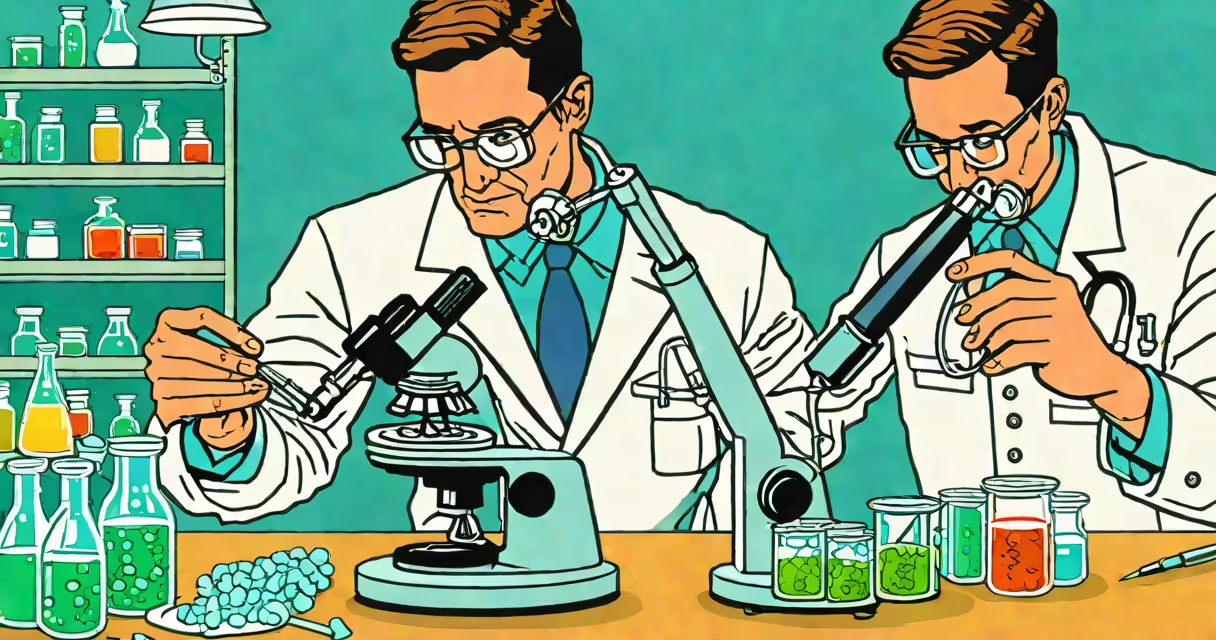
A masters in microbiology is a graduate-level academic program focused on the study of microorganisms such as bacteria, viruses, fungi, and protozoa. The degree trains students in laboratory techniques, experimental design, and the application of microbiological principles to fields like medicine, environmental science, and biotechnology.
Students typically complete 30-36 credit hours over two years, combining coursework in immunology, virology, microbial metabolism, and genetic engineering with hands-on research. Many programs require a thesis or capstone project, which involves designing and executing original experiments. Graduates often pursue roles in pharmaceutical development, food safety testing, or further study toward a PhD.
The degree is distinct from related fields such as molecular biology or biochemistry, though it shares foundational concepts. While a masters in microbiology emphasizes organism-level behavior and interactions with hosts and environments, molecular biology focuses on DNA, RNA, and protein mechanisms at the cellular level. A masters in microbiology also differs from applied degrees like a master's in public health or clinical laboratory science, which prioritize diagnostics and policy over basic research.
Most programs begin with core courses covering microbial physiology, microbial pathogenesis, and advanced lab methods. Students learn to culture bacteria, perform PCR amplification, analyze microbial communities using sequencing, and interpret results from assays like ELISA or Western blotting. These skills are essential for identifying pathogens, understanding antibiotic resistance, and developing new treatments.
Research components vary. Some programs offer a thesis track where students work under a faculty advisor on a single project, such as studying how *Pseudomonas aeruginosa* develops resistance in hospital settings. Others follow a non-thesis route with additional electives in areas like bioinformatics or industrial microbiology. Non-thesis tracks may include a practicum in a clinical lab or industry setting.
Admission requires a bachelor's degree in biology, chemistry, or a related field, with prerequisites in organic chemistry, cell biology, and calculus. GRE scores are sometimes required, though many schools have dropped them due to concerns about bias. Letters of recommendation and a personal statement outlining research interests are standard.
Programs fall into two main categories: research-focused and professional/clinical. Research-focused programs prepare students for doctoral study or lab-based careers in academia or biotech. Professional programs emphasize practical skills for jobs in regulatory affairs, quality control, or clinical microbiology labs.
| Type | Focus | Typical Duration | Career Path |
|---|---|---|---|
| Thesis Track | Original research, lab independence | 2 years | PhD preparation, research scientist |
| Non-Thesis Track | Coursework, internships, certifications | 1.5-2 years | Clinical lab tech, QA specialist |
| Hybrid Programs | Combines research and applied training | 2 years | Biotech R&D, government agencies |
For example, the University of California, San Diego offers a thesis-based masters in microbiology with a focus on host-pathogen interactions. Students work in labs studying *Salmonella* infection mechanisms in human intestinal cells. In contrast, the University of Texas at Austin's non-thesis option includes rotations through hospital microbiology labs and certification prep for ASCP (American Society for Clinical Pathology) exams.
Graduates work in diverse sectors. Pharmaceutical companies hire microbiologists to test drug efficacy against resistant strains. Environmental agencies use them to monitor water quality and assess bioremediation potential. Public health departments rely on them during outbreaks to identify causative agents and trace transmission routes.
During the 2020-2022 SARS-CoV-2 pandemic, microbiologists played a central role in sequencing viral genomes, tracking variants, and validating diagnostic tests. The CDC's National Center for Emerging and Zoonotic Infectious Diseases employed hundreds of microbiologists to support surveillance and response efforts. Their work directly informed vaccine development timelines and public health policies.
One non-obvious distinction: not all microbiology roles require a masters. Clinical microbiologists in hospitals often hold a bachelor's degree and certification. However, a masters enhances career mobility and salary potential. According to the U.S. Bureau of Labor Statistics, microbiologists with a master's earn a median annual wage of $80,000, compared to $62,000 for those with only a bachelor's.
Many assume a masters in microbiology leads directly to medical school or clinical practice. This is incorrect. The degree does not qualify graduates to prescribe medication or perform patient care. Those goals require a MD or DO degree. Instead, microbiologists contribute indirectly through research, diagnostics, and public health interventions.
Another misconception is that all microbiology research involves dangerous pathogens. While some labs study high-containment organisms like Ebola virus, most work occurs in biosafety level 1 or 2 facilities with common microbes such as *Escherichia coli* or *Saccharomyces cerevisiae*. Safety protocols are standardized and enforced by institutional biosafety committees.
I once observed a student in a microbiology lab at Johns Hopkins University spend six months isolating a novel bacterium from soil samples collected near a decommissioned landfill. The strain showed promise in breaking down plastic waste. The project was published in *Environmental Microbiology* and later licensed to a startup focused on biodegradable packaging. This illustrates how fundamental research in microbiology can lead to real-world applications beyond medicine.
A masters in microbiology equips individuals with the tools to investigate unseen worlds, solve complex problems, and contribute to global health and environmental resilience. It is not a pathway to becoming a doctor, but it is essential to the discovery of new medicines, safer food systems, and better understanding of life at the microscopic scale.