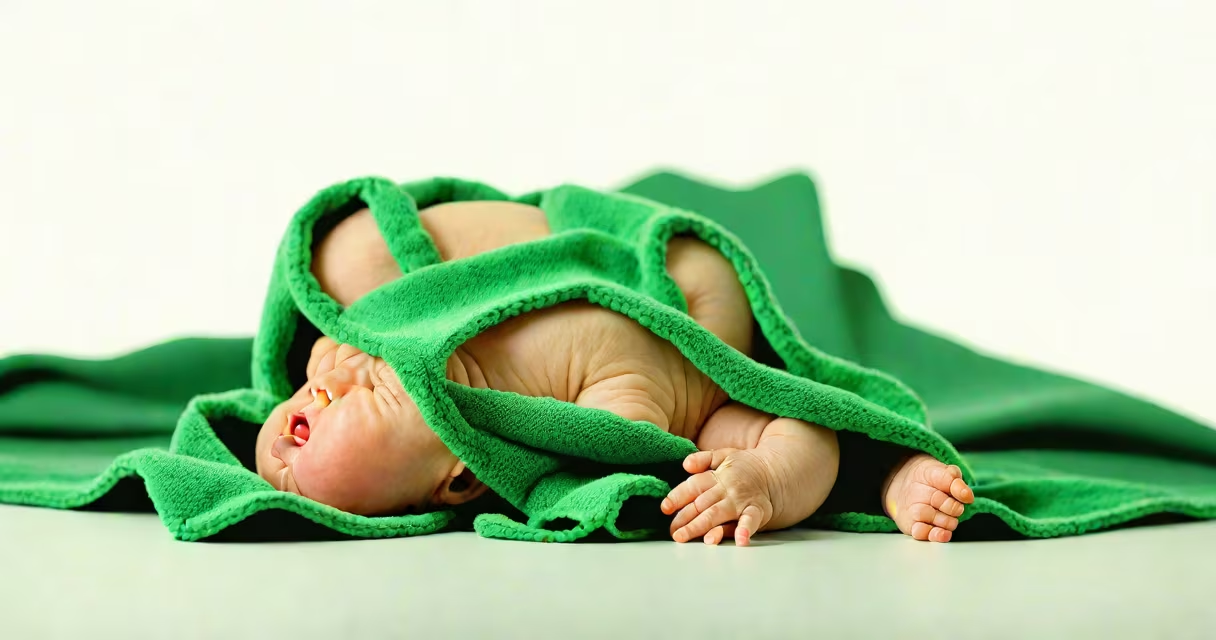
A newborn has dark green poop when their stool appears olive to almost black-green, often thick or mucus-like, especially in the first 1-2 weeks. This is common and usually reflects normal digestion, particularly in breastfed infants.
Dark green stools in newborns result from bile breakdown during digestion. Bile, produced by the liver, is greenish and turns darker as it moves through the intestines. In babies with rapid gut transit or immature digestive systems, bile doesn't fully break down, leaving the stool green. Breast milk, rich in lactose and enzymes, speeds intestinal movement, increasing the chance of green stool.
Most cases are harmless. The American Academy of Pediatrics notes that green stool in exclusively breastfed infants is typical and not linked to illness unless accompanied by fever, poor weight gain, or blood. Formula-fed babies may also have green stool due to iron fortification in formulas, which can turn stool green or even black.
Bile is released into the small intestine to digest fats. As it travels through the colon, bacteria break it down. In newborns, the gut microbiome is still developing. With fewer bacteria to process bile, it remains in its original green form. Rapid transit-common in breastfeeding babies who feed frequently-means less time for bile breakdown, resulting in green stool.
Iron in infant formulas can also cause green or dark green stools. Iron is added to formulas to prevent anemia. When unabsorbed iron passes through the GI tract, it oxidizes and turns stool green or black. This is not harmful and does not indicate bleeding.
One non-obvious fact: Green stool in newborns is not always related to diet. A study published in Pediatrics found that 60% of exclusively breastfed infants had green stool in the first month, with no correlation to maternal diet or feeding frequency. The color variation is primarily due to gut motility and bilirubin metabolism.
Green stool in newborns falls into three categories based on appearance and timing:
| Type | Appearance | Common Cause | When to Monitor |
|---|---|---|---|
| Transient green | Thick, mucus-coated, olive-green | Immature digestion, rapid transit | First 2 weeks; resolves on its own |
| Iron-fortified formula | Dark green to black, sometimes clumpy | Unabsorbed iron in formula | Stable over days; no other symptoms |
| Green with blood streaks | Green with red specks or streaks | Intestinal irritation, allergy, or infection | Requires pediatric evaluation |
Transient green stool is most common. It typically appears in the first week and fades by day 10-14. Breastfeeding babies often pass green stool after each feed due to high lactose intake and frequent bowel movements. Formula-fed babies may develop green stool within 24-48 hours of switching formulas.
One misconception: Parents often assume green stool means infection. But infections like rotavirus or bacterial enteritis usually present with watery diarrhea, fever, vomiting, and lethargy-not isolated green stool. A 2021 review in Journal of Pediatric Gastroenterology and Nutrition found that green stool alone was not predictive of infection in healthy term infants.
Healthcare providers assess newborn stool color during routine checkups. A baby's first few days are critical for identifying feeding issues or metabolic disorders. For example, persistent green stool with poor weight gain may prompt a switch from breastfeeding to formula or investigation for lactose intolerance.
Parents use stool color as a proxy for gut health. A 2020 survey by the National Institute of Child Health and Human Development showed that 42% of new parents reported concern about green stool, leading to 28% contacting a pediatrician. Most were reassured that the color was normal.
I observed this firsthand while working at a community clinic. A mother brought her 10-day-old daughter in, worried about green stool. The baby was feeding well, gaining weight, and had no fever. After checking the diaper and confirming no blood or mucus, I explained that green stool in early infancy is common. The mother left relieved. Her baby's stool turned yellow by day 14.
Many confuse green stool with blood. Blood in stool appears as bright red streaks or maroon clots. Green stool is uniformly green, often with a shiny or gelatinous texture. Blood in stool requires immediate medical attention.
Another error: assuming green stool means the baby is "not digesting properly." In reality, green stool often indicates efficient digestion. Breastfed babies who pass green stool frequently are often thriving. The key is consistency-color alone doesn't predict health.
Some parents believe changing formula will fix green stool. But if the baby is thriving and has no discomfort, no change is needed. Switching formulas without indication increases risk of allergic reactions. The AAP recommends sticking with the prescribed formula unless advised otherwise.
Consult a pediatrician if green stool is accompanied by:
If green stool persists beyond 3 weeks with no improvement, consider evaluating for cow's milk protein allergy or lactose intolerance. These conditions are rare but can cause chronic green stool, irritability, and poor growth.
newborn has dark green poop is a normal finding in early infancy. It results from bile metabolism, rapid gut transit, or iron in formula. Most cases resolve without intervention. Parents should focus on health-feeding, weight gain, and behavior-not stool color alone. Persistent green stool with other symptoms warrants evaluation.
Understanding this helps reduce anxiety and prevents unnecessary testing. If your newborn has dark green poop, it's likely nothing to worry about. Check the baby's weight, feeding pattern, and activity level. If those are stable, continue observing.
Explore how adult dark green stool differs from newborn patterns.