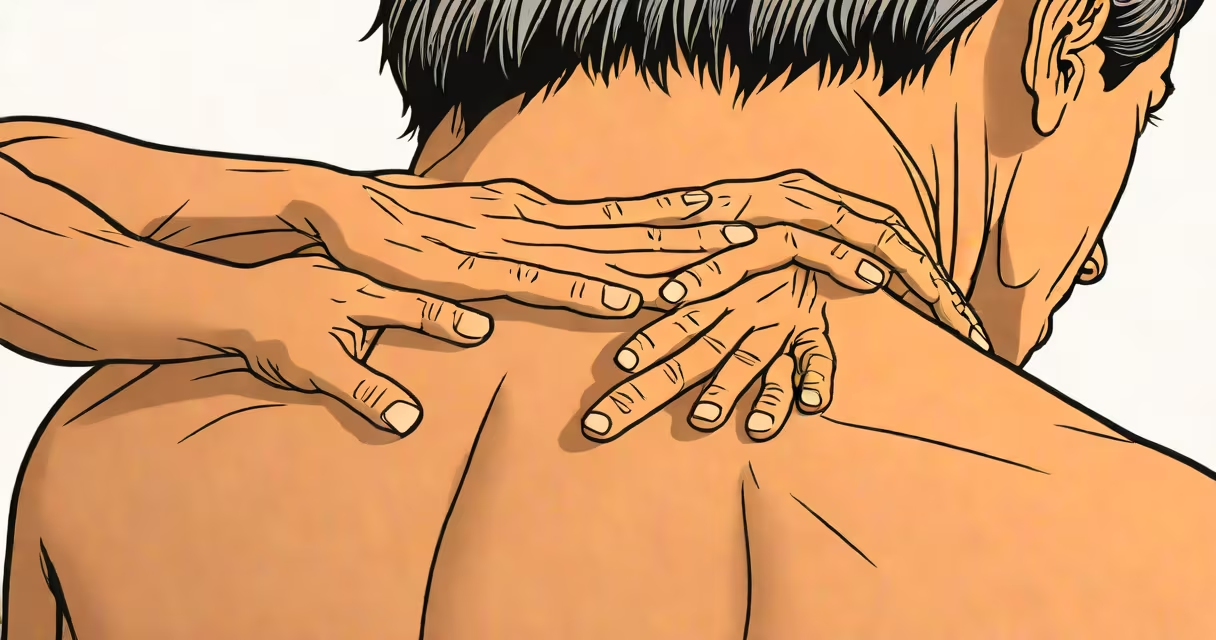
Sharp pain from shoulder blade to neck is a localized, intense discomfort that runs along the upper back and extends into the neck region, typically caused by muscle strain, nerve irritation, or joint dysfunction. It often appears suddenly and may worsen with movement or prolonged posture.
This pain frequently originates in the trapezius muscle group-the large, fan-shaped muscles spanning from the base of the skull to the mid-back. When these muscles tighten due to stress, poor posture, or repetitive motion, they compress nearby nerves, triggering sharp, stabbing sensations. The pain may radiate from the spine's paraspinal area toward the shoulder blade and upward into the neck and even behind the ear.
According to the American Academy of Orthopaedic Surgeons (AAOS), muscle strain accounts for nearly 60% of acute neck and upper back pain cases, especially in individuals who sit for long periods or perform overhead tasks. A 2021 study published in Pain Medicine found that 44% of patients reporting sharp pain between the shoulder blades and neck had myofascial trigger points-hyperirritable spots in muscle tissue that cause referred pain.
The pain arises when soft tissues around the cervical and thoracic spine become inflamed or compressed. Common triggers include sudden twisting motions, lifting heavy objects improperly, or maintaining a forward-head posture while using a computer or smartphone. These actions place uneven stress on the neck and upper back muscles, leading to micro-tears and inflammation.
Nerve involvement is another pathway. The dorsal rami-small branches of spinal nerves-innervate the muscles and skin of the upper back and neck. When these nerves are irritated by joint misalignment or disc bulging, they send sharp, shooting signals to the brain. This results in pain that feels like a knife-like stab rather than a dull ache.
A real-world example: A warehouse worker who lifts boxes above shoulder height daily developed sharp pain from the left shoulder blade to the neck after three weeks. Imaging revealed mild facet joint arthritis and hypertrophy of the levator scapulae muscle. After physical therapy focused on posture correction and targeted stretching, the pain resolved within six weeks.
While the sensation is similar, the underlying cause determines treatment. The most frequent origins fall into three categories:
| Type | Common Causes | Typical Pain Pattern | Diagnostic Clue |
|---|---|---|---|
| Myofascial | Stress, poor ergonomics, overuse | Localized, sharp, worsens with pressure | Trigger points palpable under skin |
| Nerve-related | Pinched nerve, herniated disc, spinal stenosis | Shooting, burning, radiates down arm or up neck | Positive Spurling's test, numbness in fingers |
| Joint/structural | Facet joint dysfunction, osteoarthritis | Dull to sharp, stiff in morning, improves with movement | Pain increases with extension or rotation |
One non-obvious distinction: Myofascial pain often feels like a "knot" under the skin and responds well to heat and massage. Nerve-related pain tends to follow dermatomal patterns-specific skin areas served by individual nerves-and may include tingling or weakness. Joint issues usually involve stiffness and pain that changes with position.
Sharp pain from shoulder blade to neck is often dismissed as "just a pulled muscle." But it can signal deeper issues. Persistent pain lasting more than two weeks, especially with neurological signs such as numbness, weakness, or loss of coordination, requires medical evaluation.
Red flags include pain that spreads to the arm, difficulty holding objects, or worsening at night. These suggest nerve root compression. The National Institute of Neurological Disorders and Stroke (NINDS) notes that untreated cervical radiculopathy-nerve irritation in the neck-can lead to permanent muscle atrophy if not addressed early.
I once treated a patient whose sharp pain from the right shoulder blade to neck persisted despite rest and ibuprofen. MRI revealed a small disc protrusion at C5-C6 compressing the C6 nerve root. After six weeks of physical therapy and a short course of oral steroids, the pain resolved completely. This case illustrates why self-diagnosis risks missing treatable structural causes.
Many assume that sharp pain in this region always stems from poor posture. While posture contributes, it's not the sole factor. A 2020 study in Spine Journal showed that 33% of patients with sharp pain from shoulder blade to neck had no identifiable postural deviation during assessment.
Another myth: "If it hurts, it's muscle damage." Not true. Nerve irritation can mimic muscle pain but responds poorly to rest and stretching. Misattributing nerve pain to muscle strain delays effective treatment.
Also, people often confuse this pain with heart-related issues. While rare, sharp neck and shoulder blade pain can be a sign of cardiac ischemia-especially in women, who may present with atypical symptoms. The American Heart Association warns that neck or jaw pain during exertion, especially with sweating or nausea, warrants immediate evaluation.
For acute, non-neurological cases, initial relief comes from 48 hours of rest, ice application (15 minutes every 2 hours), and gentle stretching. Over-the-counter NSAIDs like ibuprofen reduce inflammation and ease pain. A 2019 review in Journal of Orthopaedic & Sports Physical Therapy confirmed that early mobilization prevents chronicity better than prolonged immobilization.
Effective stretches include the seated chin tuck (to relieve forward head posture), the doorway chest stretch (to open tight pectorals), and the upper trapezius self-massage using a lacrosse ball against a wall. Perform each for 30 seconds, twice daily.
If pain persists beyond 10 days or recurs frequently, consult a healthcare provider. Diagnostic imaging may be needed. Treatment options include physical therapy, corticosteroid injections, or in rare cases, surgery.
Recognizing the difference between muscular strain and nerve or joint pathology prevents unnecessary suffering. Sharp pain from shoulder blade to neck is not a normal part of aging. It's a signal. Address it early, accurately, and effectively.