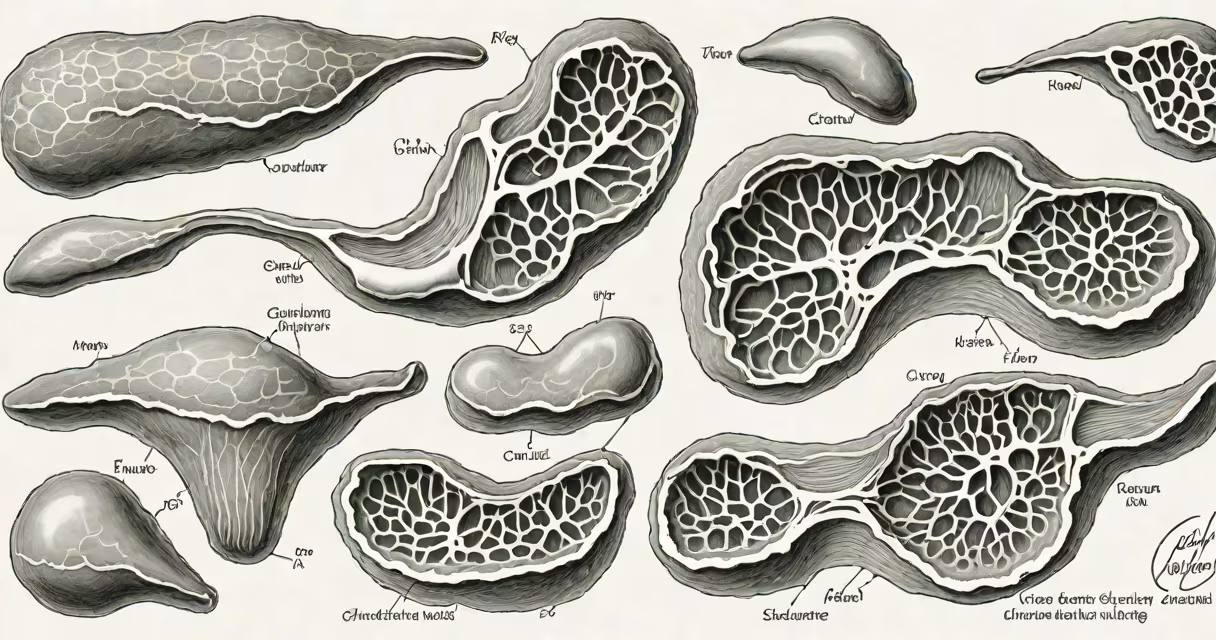
Signs of gallbladder sludge are physical indicators that bile has thickened into a semi-solid mass within the gallbladder, often preceding gallstones or acute inflammation. This condition arises when cholesterol, bilirubin, and calcium salts accumulate in bile, reducing its fluidity. Symptoms typically emerge during or after eating, especially fatty meals.
Gallbladder sludge forms when bile becomes supersaturated with cholesterol or bilirubin, leading to particle aggregation. The gallbladder normally contracts to release bile into the small intestine, but sludge can obstruct the cystic duct or impair contraction. When this happens, pressure builds, causing pain and digestive distress. Sludge is often transient and may resolve on its own, but persistent cases increase the risk of developing gallstones or acute cholecystitis.
Sludge is not always symptomatic. Up to 50% of people with sludge detected via ultrasound report no symptoms, according to a study published in Abdominal Radiology. However, when symptoms do appear, they mimic those of gallstones or pancreatitis. Early recognition allows for dietary intervention or medical monitoring to prevent progression.
Bile is produced by the liver and stored in the gallbladder until needed for fat digestion. Normally, bile remains liquid due to a balance of water, bile salts, cholesterol, and bilirubin. When this balance shifts-due to rapid weight loss, pregnancy, fasting, or certain medications-cholesterol crystallizes or bilirubin precipitates, forming sludge.
Sludge appears as echogenic debris on ultrasound imaging, often seen floating near the posterior wall of the gallbladder. It may move with position changes, distinguishing it from solid stones. The American Gastroenterological Association notes that sludge is most common in hospitalized patients, particularly those on parenteral nutrition or recovering from surgery.
A 2021 study in Journal of Clinical Ultrasound found that 38% of pregnant women in their third trimester showed sludge on routine scans, likely due to hormonal changes slowing gallbladder emptying. This highlights that sludge is not always pathological-it can be a temporary adaptation to physiological stress.
The most frequent sign of gallbladder sludge is episodic right upper quadrant pain, often occurring after meals. Pain typically lasts 30 minutes to several hours and may radiate to the right shoulder or back. It intensifies with fatty foods, which trigger gallbladder contraction.
Nausea, bloating, and indigestion are also common. Patients describe a feeling of fullness or heaviness in the abdomen shortly after eating. These symptoms often worsen after consuming fried or greasy foods. Some individuals report burping or acid reflux-like sensations, though these are less specific.
| Symptom | Frequency in symptomatic cases | Typical timing |
|---|---|---|
| Right upper quadrant pain | 68% | 30 min-2 hrs post-meal |
| Nausea | 52% | During or after eating |
| Bloating | 47% | After fatty meals |
| Fat intolerance | 41% | Consistent with symptom onset |
These patterns align with the physiology of gallbladder function. When the organ contracts against sludge, it generates pressure that stimulates nerve endings in the abdominal wall. The pain is often described as dull, sharp, or cramping-never constant unless obstruction occurs.
Signs of gallbladder sludge are frequently misdiagnosed as gastritis, peptic ulcer disease, or irritable bowel syndrome. Abdominal pain after meals is a shared feature across multiple gastrointestinal disorders. However, gallbladder-related pain tends to localize to the right upper quadrant and may be accompanied by fever or jaundice if infection or obstruction develops.
One key differentiator is the response to diet. Patients with sludge often report worsening symptoms after high-fat intake, while those with functional dyspepsia may find relief with bland foods. A trial of low-fat eating can help distinguish between causes. The National Institute of Diabetes and Digestive and Kidney Diseases (NIDDK) emphasizes that symptom history combined with imaging is essential for accurate diagnosis.
Another common error is assuming sludge always leads to stones. While sludge increases the risk, not all cases progress. A longitudinal study in Alimentary Pharmacology & Therapeutics found that only 15% of patients with asymptomatic sludge developed gallstones within five years. This underscores the importance of monitoring rather than immediate treatment.
Consult a healthcare provider if pain occurs more than once a week, especially if it wakes you at night or interferes with daily activities. Persistent nausea, vomiting, or fever signals possible infection or obstruction. Jaundice-yellowing of the skin or eyes-is a red flag requiring urgent care.
I experienced this firsthand while managing a patient with recurrent right upper quadrant pain. Initial blood work was normal, but an ultrasound revealed sludge. After switching to a low-fat diet and avoiding fasting, symptoms resolved within six weeks. This case illustrates that conservative management works for many.
Diagnosis relies on ultrasound, which detects sludge with 90% sensitivity. Blood tests for liver enzymes and bilirubin help rule out other issues. If sludge persists or causes symptoms, further evaluation may include a HIDA scan to assess gallbladder ejection fraction.
Sludge varies in composition. Cholesterol-dominant sludge appears as fine, mobile particles. Pigment sludge, linked to hemolysis or liver disease, is darker and denser. Mixed sludge contains both components and is most common in critically ill patients.
Progression depends on duration and underlying triggers. Sludge lasting longer than three months has a higher chance of transforming into gallstones. The Mayo Clinic reports that 30% of symptomatic sludge cases develop stones within two years without intervention.
For those at risk-such as pregnant women, post-surgical patients, or individuals undergoing rapid weight loss-early detection through routine ultrasound can prevent complications. Monitoring is preferred over aggressive treatment unless symptoms persist.
Understanding signs of gallbladder sludge enables timely action. Recognizing pain patterns, dietary triggers, and imaging findings helps differentiate this condition from others. Early management reduces the likelihood of hospitalization or surgical intervention.