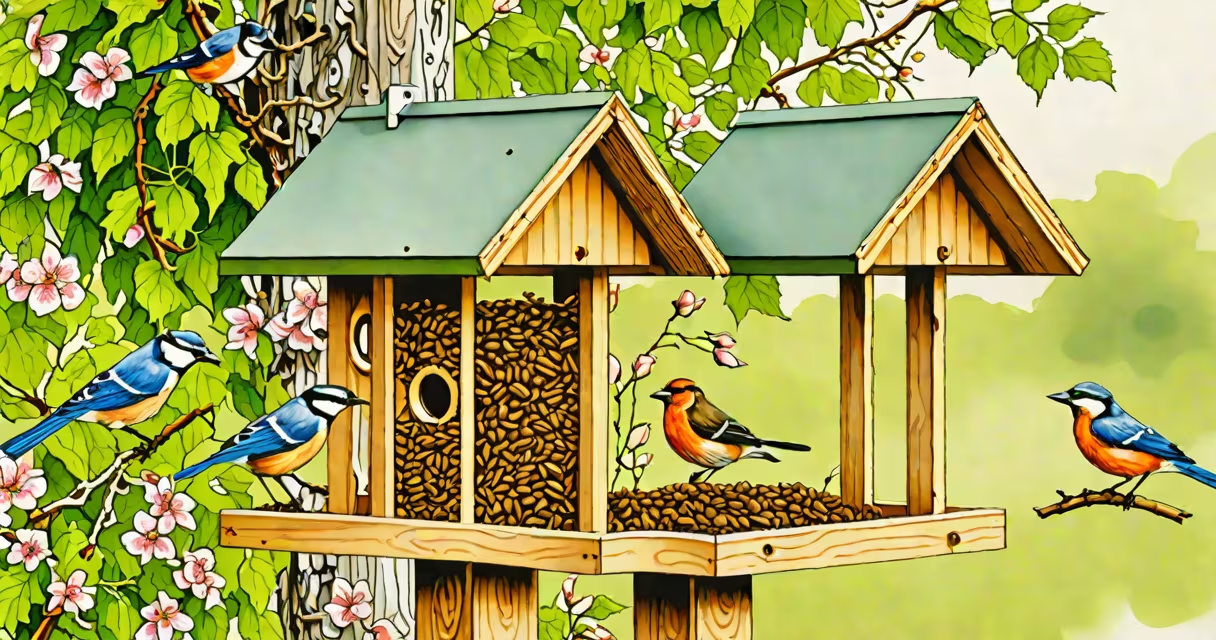
How to build a bird feeder involves constructing a small, weather-resistant structure from untreated wood to hold birdseed and attract wild birds to your yard. The design typically includes a roof, sides, base, and a tray or platform to hold food. A properly built feeder keeps seeds dry and accessible to small birds like finches, chickadees, and nuthatches.
Most effective bird feeders use ¾-inch exterior-grade plywood or cedar boards. These materials resist rot and don't leach harmful chemicals into seed. Avoid pressure-treated lumber-it contains preservatives toxic to birds. The simplest version uses four side panels, a bottom, and a sloped roof. Mounting options include a post, wall bracket, or hanging wire.
For success, place the feeder within 5 feet of shrubs or trees. Birds feel safer when they can quickly escape predators. Position it away from windows to reduce collisions. Feeders near busy areas may attract squirrels, which can be deterred with baffles or elevated mounts.
A bird feeder functions by offering a stable, sheltered space to store birdseed. The roof prevents rain from soaking the food. Sides keep seeds from blowing away. Open-bottom designs allow birds to perch and access seed while minimizing waste. Some models have perches; others rely on birds landing directly on the tray.
Feeding stations work best when filled regularly. Seed should be replaced every 3-5 days in humid climates to prevent mold. Clean the feeder monthly with a vinegar-water solution (1 part vinegar, 3 parts water) to remove bacteria and fungi. Failure to clean increases disease risk among visiting birds.
Research from the Cornell Lab of Ornithology shows that consistent feeding reduces stress in winter-flying birds. A study published in *The Condor* found that birds using feeders had higher survival rates during harsh winters compared to those relying solely on natural sources.
Common materials include untreated pine, cedar, or recycled plastic. Cedar resists moisture and insects better than pine. Plastic feeders are lightweight and easy to clean but degrade faster in sunlight. Metal feeders are durable but can heat up in direct sun, scalding birds' feet.
| Type | Best For | Pros | Cons |
|---|---|---|---|
| Platform feeder | Finches, juncos, doves | Easy to fill, large surface area | Squirrels often raid it |
| Hopper feeder | Chickadees, nuthatches, cardinals | Stores 2-3 lbs of seed, weatherproof | Can trap seed if not cleaned |
| Tube feeder | Small birds like goldfinches | Perches limit larger birds | Requires regular cleaning |
| Window feeder | Backyard observation | Close-up views, minimal space needed | High risk of window strikes |
Open-platform feeders attract more species but are vulnerable to pests. Tube feeders with small ports exclude larger birds and squirrels. Hopper feeders offer capacity and durability. Window feeders provide viewing pleasure but require careful placement to avoid bird collisions.
Place feeders 5-6 feet above ground, away from dense brush. This height balances visibility for birds and protection from cats. Mount on a pole with a baffle-a cone-shaped barrier that blocks climbing animals. Squirrel baffles reduce seed theft by up to 90%, according to the National Audubon Society.
Use a 12-inch diameter baffle for poles. Install it 4 feet above the ground. If mounting on a tree, wrap the trunk with metal flashing to prevent climbing. Avoid placing feeders near glass. Birds often fly into windows at high speed. Use decals or netting to break up reflections.
I built a cedar hopper feeder last fall using ¾-inch Baltic birch plywood. I cut six pieces: two 6×6 inch sides, two 4×6 inch ends, a 4×4 inch base, and a 6×6 inch roof with a 2-inch overhang. I drilled ½-inch holes in the roof for drainage. After sanding edges, I applied a food-safe linseed oil finish. Within two weeks, chickadees and nuthatches visited daily.
Many assume feeders harm birds by making them dependent. This is false. Wild birds use feeders as supplements, not replacements. Data from Project FeederWatch shows that 78% of birds visiting feeders still forage naturally. Feeders extend survival during poor food years but don't alter migration patterns.
Another myth is that suet attracts bears. In most U.S. regions, bears avoid feeders unless they're in bear country. Even then, suet is safe if hung 10 feet high and 4 feet from any support. The USDA Forest Service confirms that properly placed feeders pose no significant bear risk.
Some think feeders must be complex. A simple platform with a roof and a few nails works. The key is consistency-not aesthetics. A well-maintained, unadorned feeder outperforms a decorative one left empty.
How to build a bird feeder begins with choosing a simple, functional design. Use untreated wood, maintain cleanliness, and position the feeder for safety and accessibility. With proper care, it becomes a reliable source of food and a window into local bird behavior.